
Tesla launched its Robotaxi service in Austin one year ago with about ten vehicles, human safety monitors in every car, and a USD 4.20 flat fare. Twelve months later, the fleet covers the Austin metro area without monitors but still numbers in the dozens, not the thousands. An economic look at what year one actually proved and how Tesla compares to the operating leader, Waymo.
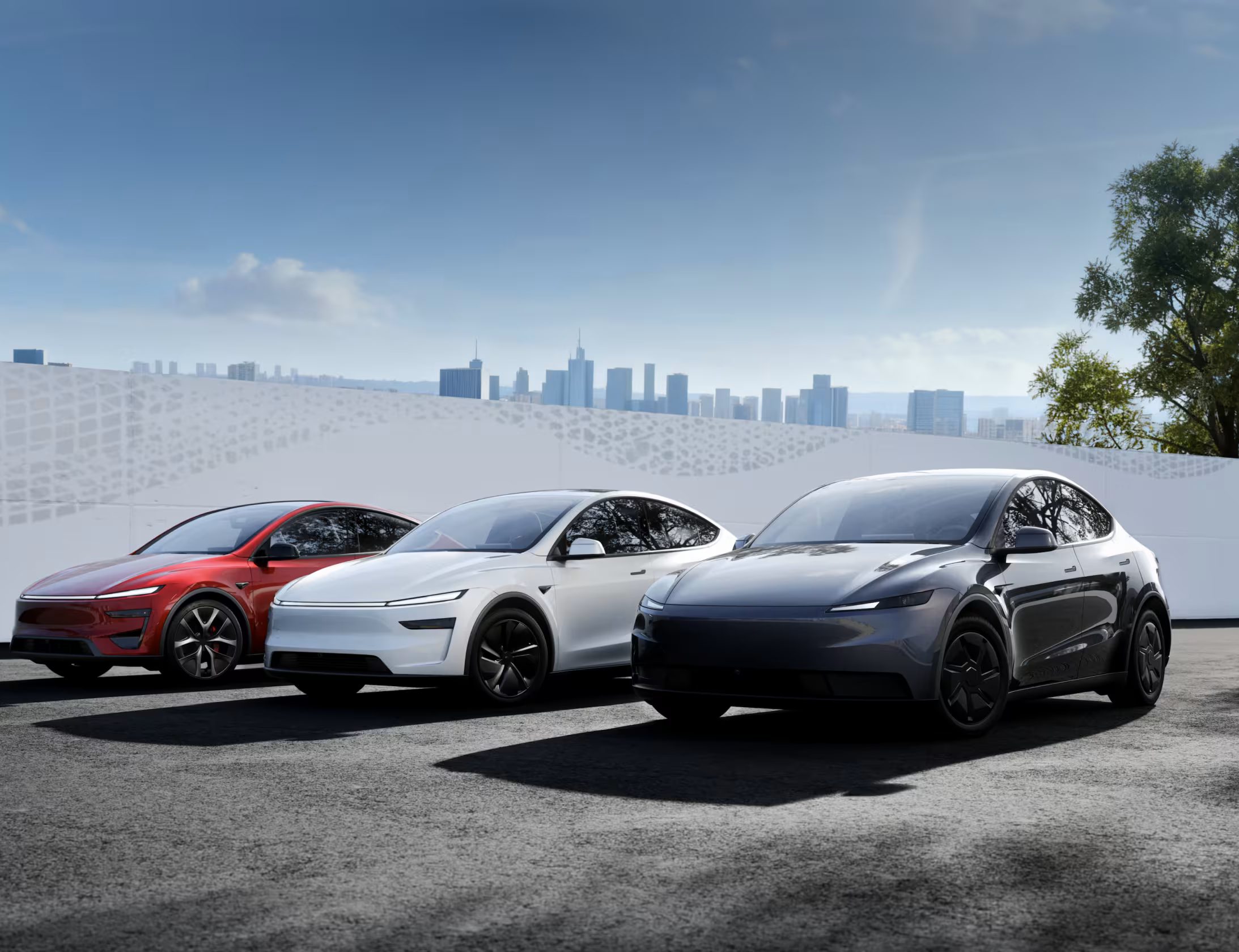
On June 22, 2025, Tesla picked up its first paying Robotaxi passengers in Austin, Texas. The fleet that day was a handful of modified Model Y crossovers running on Full Self-Driving Unsupervised software, with a Tesla Safety Monitor sitting in the front passenger seat. Rides cost a flat USD 4.20. The launch came more than a decade after chief executive Elon Musk first publicly pitched the idea (Not a Tesla App, 2026).
The first-year arc is now a matter of record. The safety monitors are gone in Austin. The geofence has grown from roughly 91 square miles at launch to approximately 245 square miles, an expansion of more than ten times the original operating area. The service has reached Dallas and Houston in addition to the original Austin market (Batman Garage, 2026; TeslaNorth, 2026).
The headline-grabbing milestone, repeated by Tesla supporters and skeptics alike, is that Tesla went from a supervised pilot to fully unsupervised metro-wide operation in 12 months, a timeline that took Waymo roughly six years on its own path. The harder question is what that milestone is actually worth in commercial terms, and what year one really demonstrated about scale, safety, and the underlying technology.
The 12-month timeline
The year unfolded in five distinct phases.
June 2025 launch. Tesla put approximately 8 to 10 modified Model Y crossovers on Austin streets on June 22, 2025. The original geofence covered roughly 91 square miles inside central and south Austin. Every car had a Tesla Safety Monitor in the front passenger seat. The flat USD 4.20 promotional fare ran for a few weeks before increasing to USD 6.90 and then transitioning to dynamic pricing in late July (Not a Tesla App, 2026; analysis posted June 22, 2026).
August to December 2025. Tesla expanded the Austin geofence twice, reaching roughly 173 square miles within two months. The fleet grew incrementally. Crash reports filed with the National Highway Traffic Safety Administration accumulated, all during the supervised phase (analysis posted June 22, 2026).
January 22, 2026. Tesla began limited unsupervised rides in Austin. The change initially affected only a tightly defined corridor and a small subset of the fleet. Tesla’s own AI lead, Ashok Elluswamy, told analysts that only “a few unsupervised vehicles” were initially mixed into the broader fleet (Kavout, 2026).
April to May 2026. Limited unsupervised service expanded into Dallas and Houston, each with smaller initial geofences. As of late April and early May 2026, the total confirmed unsupervised Robotaxi fleet across the three Texas cities was 25 vehicles: 19 in Austin, 3 in Dallas, and 3 in Houston (AnIntent citing Electric Vehicles, 2026).
June 3, 2026. Tesla’s official Robotaxi X account confirmed a full Austin metro rollout, removing safety monitors from the remainder of the fleet and extending coverage to Pflugerville, Manor, the I-35 corridors, Gigafactory Texas, and Austin-Bergstrom International Airport. The geofence reached approximately 245 square miles in the Austin metro area (Tesery, 2026).
What the operating data shows
The most authoritative recent fleet count comes from the Texas Department of Motor Vehicles, which began publishing a database of every company authorized for driverless operation when a new Texas law took effect on May 28, 2026. As of June 16, 2026, the database listed 69 Tesla vehicles authorized for driverless operation in Texas. Waymo led the state with 620 vehicles, followed by AVRide with 317, Nuro with 47, and Zoox with 35. Bank of America Global Research, summarizing those figures, found Tesla running roughly one-ninth of Waymo’s Texas fleet (Yahoo Finance citing BofA, 2026).
The active fleet is smaller than the authorization count. The Robotaxi Tracker independent dashboard, which counts vehicles seen on public roads in the past seven days, recorded 31 active Tesla Robotaxi vehicles across all markets as of mid-June 2026, with only 14 operating unsupervised. The remainder still ran with a human safety monitor on board (Electrek, 2026; Robotaxi Tracker, 2026).
Pricing is where Tesla holds an advantage. The BofA pricing study sampled 10 routes and found Tesla’s average fare at USD 10.90 per ride, compared with USD 13.70 for Waymo, Lyft, and Uber. That is a fare roughly 20 percent lower than competitors. The trade-off is wait time. Tesla averages approximately 10 minutes; competitors average 2 to 3 minutes (Yahoo Finance citing BofA, 2026).
Tesla does not publicly disclose paid rides per week. Waymo crossed 500,000 paid rides per week in March 2026, a tenfold increase in less than two years, across 10 United States metro areas (Morningstar, 2026). Waymo logged more than 100 million fully autonomous miles and more than 10 million trips cumulatively as of its June expansion to Nashville (Road to Autonomy Indices, 2026).
The economic context. Tesla’s market valuation reflects a future-state robotaxi business that is meaningfully larger than today’s reality. Tesla closed at USD 393.85 on the morning of June 23, 2026, putting market capitalization above USD 1.6 trillion. A USD 1,000 investment made the morning after the Austin launch had grown to USD 1,202.40 by the one-year mark, a 20.24 percent return. Over the same period, the operating gap between Tesla and Waymo has widened, not narrowed (Finbold, 2026).
The safety question
Safety data has been the most contested element of Tesla’s first year. Two competing readings of the same NHTSA Standing General Order data have circulated, each technically accurate but pointing in opposite directions.
The pro-Tesla reading is that the Robotaxi fleet has gone four months from February through May 2026 without a single at-fault collision attributable to FSD software. NHTSA filings show Tesla’s total ADS incident count at 18 since the June 2025 launch. Of the 17 incident narratives Tesla unredacted in May 2026, the majority involved Tesla vehicles being struck by other drivers, often while stopped at lights or stop signs (TeslaNorth, 2026; Asianet Newsable, 2026).
The skeptical reading is that the absence of at-fault crashes coincides with an active fleet that is dramatically smaller than the headline figures suggest. Electrek calculated that the Austin fleet logged roughly one crash every 57,000 miles over the first 800,000 miles of operation, which works out to approximately four times the average American driver’s incident rate of one minor crash per 229,000 miles. Other analyses citing the same NHTSA data have reached similar conclusions (The Next Web, 2026; Electrek, 2026).
Two specific incidents involved Tesla remote operators rather than the autonomous system. In July 2025 in Austin, a teleoperator assumed control after the ADS stalled, then mounted a curb and struck a metal fence. In January 2026, a teleoperator took control while the vehicle was stationary and drove forward into a temporary construction barricade at approximately 9 miles per hour, scraping the front-left fender. Tesla confirmed to lawmakers that teleoperators are authorized to control vehicles remotely only at speeds below 10 miles per hour, and only for repositioning (ECIKS, 2026).
A separate dimension came on May 28, 2026 when Reuters published an investigation finding that Tesla’s headline FSD safety statistics use a methodology that differs from NHTSA’s. Tesla counts a crash as FSD-involved only if FSD was active at the time of the crash or within five seconds before; NHTSA’s Standing General Order uses a 30-second window. Tesla also compares its own airbag-deployment crash counts to federal crash data tracking vehicles towed from the scene, a broader category. Senator Edward Markey wrote to NHTSA on June 16, 2026, requesting that the agency examine Tesla’s safety claims and citing the Reuters findings (Reuters, 2026; Senator Markey letter to NHTSA, 2026).
Waymo’s safety case rests on different evidence. The company published a 2025 study using 56.7 million rider-only miles that found statistically significant reductions versus human benchmarks in several serious crash categories. By March 2026, Waymo had completed more than 170 million fully autonomous miles, with serious-injury crashes reduced by 92 percent and at-fault injury crashes reduced by 82 percent relative to human-driven benchmarks in the same operating areas (Autonomous Driving Industry News, 2026; Waymo blog, 2026).
The Austin angle
Austin is unusual in being the only city where Tesla’s geofence is larger than Waymo’s. Tesla covers approximately 245 square miles in the Austin metro area, while Waymo covers roughly 139 square miles in Austin. Tesla’s overall coverage area across all of its operating cities runs larger than Waymo’s coverage in the same cities, even though Waymo runs many more rides on those routes (analysis posted June 22, 2026).
The Austin metro Tesla now serves represents roughly 2 million residents. The Austin-Bergstrom International Airport route in particular is notable because airport runs are typically longer, higher-revenue trips than urban hops, and an autonomous airport service places Tesla in direct competition with Lyft and Uber for one of the most profitable ride-hailing categories (BASENOR, 2026).
However, Bloomberg’s reporting on the same Austin operation noted that wait times frequently exceed 15 minutes, the app sometimes bars users from booking during periods of high service demand, and a Texas Department of Motor Vehicles permit limit of 42 Tesla vehicles meant the fleet had ceiling capacity even before active operations were counted. The active fleet has been considerably smaller than the permit count throughout the spring (Off the Kuff citing Bloomberg, 2026).
What Tesla has and has not delivered against its own promises
Tesla announced specific Robotaxi targets that can now be checked against outcomes.
Musk publicly stated in 2024 that Tesla would have 500 cars in Austin by the end of 2025. The verified Austin fleet at the end of 2025 was approximately 25 to 30 vehicles, less than 6 percent of that target (Kavout, 2026).
Musk also stated in 2024 that fully autonomous rides with no one in the car would be available by June 2025. The fully unsupervised operation across the metro arrived on June 3, 2026, approximately 12 months after the original target (Kavout, 2026).
Musk targeted seven Tesla Robotaxi cities by mid-2026. As of mid-June 2026, Tesla operates limited driverless service in three Texas cities, Austin, Dallas, and Houston. The remaining target cities, Phoenix, Miami, Orlando, Tampa, and Las Vegas, have not begun service (Tech Daily, 2026).
Tesla’s purpose-built Cybercab has reached EPA certification and is in production at Gigafactory Texas. Independent observers have spotted as many as 150 Cybercabs driving or parked at the Giga Texas site, although none are yet in commercial Robotaxi service (Batman Garage, 2026; analysis posted June 26, 2026).
The Road to Autonomy Robotaxi Index, an industry tracking tool, currently ranks Tesla at number five. Analyst Grayson Brulte forecasts the Austin fleet could reach 300 vehicles by mid-2026, plus or minus 50, including some Cybercabs if NHTSA exemptions are granted (Road to Autonomy Indices, 2026).
The two readings of year one
The data supports two competing, internally consistent assessments.
The first reading credits Tesla with executing the fastest unsupervised robotaxi rollout in the United States. Going from a supervised pilot to fully unsupervised metro-wide service in 12 months compresses a process that took Waymo approximately six years. Tesla uses production hardware that has been in millions of driveways for years, which means the marginal cost of expanding the Robotaxi fleet, once software is ready, is small. The FSD system globally has now crossed 10 billion miles of accumulated driving data, with approximately 1 million additional miles added each day from the broader Tesla fleet. The pieces of a scaled platform exist. The Cybercab is in production. The geofence is the largest of any Robotaxi operator in Austin. The fare is approximately 20 percent lower than competitors. Under this reading, year one was the proof-of-concept phase, and the next 12 months are the scale phase.
The second reading frames year one as marketing leading reality by a significant margin. The unsupervised active fleet remains approximately 14 to 25 vehicles, depending on the day, against permits for 42. Tesla has missed every specific operational target Musk announced for the year. The active fleet is shrinking even as the geofence grows. The safety record is favorable largely because the fleet barely runs; only 14 unsupervised vehicles across all of Texas does not generate enough miles to test the system at meaningful scale. The Reuters investigation and the Markey letter to NHTSA raise the additional question of whether Tesla’s safety statistics are comparable to industry standards at all. Under this reading, year one demonstrated that Tesla can produce a small driverless operation in friendly states and that its commercial pace remains far behind Waymo.
Both readings are supported by the same NHTSA filings, the same Texas DMV registrations, and the same BofA research. The disagreement is about whether to weight technological speed, marketing claims, regulatory scrutiny, or operating evidence more heavily.
What to watch over year two
Four data points will determine which reading holds up.
First, the active fleet count. The Robotaxi Tracker, Texas DMV registrations, and any voluntary Tesla disclosure will reveal whether the active fleet crosses 100, then 300, then 1,000 vehicles. Tesla has set no public targets for that progression, but Brulte’s 300-vehicle forecast for mid-2026 provides one near-term test.
Second, Cybercab deployment. The transition from spotting 150 Cybercabs at Giga Texas to deploying them in commercial service is the most concrete operational change Tesla has indicated for year two. NHTSA exemptions, which Cybercab requires because it has no steering wheel or pedals, are the bottleneck.
Third, additional city launches. The five cities Tesla still has not entered, Phoenix, Miami, Orlando, Tampa, and Las Vegas, were targets that have slipped by approximately six months. Each launch will require state regulatory approval and partnership with local entities.
Fourth, the NHTSA response to the Markey letter. Markey’s questions are due to be answered by July 6, 2026. Any change in NHTSA reporting requirements, particularly mandatory disclosure of vehicle miles traveled, the number of deployed vehicles, and the methodology underlying public safety claims, will change how Tesla and its competitors are measured against each other.
The bottom line. Tesla’s Robotaxi service ends year one with verifiable progress on the technology front, the largest Robotaxi geofence in Austin, and a fare structure that undercuts competitors by 20 percent. It also ends with an active fleet approximately one-ninth of Waymo’s in Texas, a missed 500-car target by 95 percent, paid-rides disclosure that is not happening, and safety statistics that are under federal regulatory review. The same data supports both a story of remarkable technological speed and a story of commercial under-delivery. The verdict on which reading is closer to right will come from a fleet count, a city count, and an NHTSA letter over the next 90 days, not from social media.
References
AnIntent. (2026, May 30). Tesla Robotaxi unsupervised: Dallas and Houston live. https://anintent.com/blog/tesla-robotaxi-unsupervised-dallas-houston-launch/
Asianet Newsable. (2026, June 16). Tesla Robotaxi rear-ended while stopped at stop sign, NHTSA filing shows. https://newsable.asianetnews.com/markets/tesla-robotaxi-rear-ended-while-stopped-at-stop-sign-nhtsa-filing-shows-articleshow-mv1ovym
BASENOR. (2026, June 22). Tesla Austin Robotaxi fleet goes fully unsupervised at one year. https://www.basenor.com/blogs/news/tesla-austin-robotaxi-fleet-goes-fully-unsupervised-at-one-year
Batman Garage. (2026, June 21). Tesla Robotaxi and Cybercab: Inside the 2026 rollout. https://www.batmangarage.com/news/tesla-robotaxi-cybercab.html
ECIKS. (2026, May 29). Tesla Robotaxis tied to two collisions: remote operators called in. https://eciks.org/6452-tesla-robotaxis-tied-to-two-collisions-remote-operators-called-in
Electrek. (2026, June 16). Tesla Robotaxis are not crashing because they are not running. https://electrek.co/2026/06/16/tesla-robotaxi-clean-crash-record-barely-running/
Finbold. (2026, June 23). USD 1,000 invested in Tesla stock when Robotaxi launched a year ago is now worth. https://finbold.com/1000-invested-in-tesla-stock-when-robotaxi-launched-a-year-ago-is-now-worth/
Kavout. (2026, June 24). Tesla’s crossroads: can autonomy drive growth amidst an EV slowdown? https://www.kavout.com/market-lens/tesla-s-crossroads-can-autonomy-drive-growth-amidst-an-ev-slowdown
Markey, E. (2026, June 16). Letter to NHTSA Administrator Morrison on Tesla FSD safety statistics. https://www.markey.senate.gov/imo/media/doc/tesla_data_nhtsa_letter.pdf
Morningstar. (2026, June 25). Tesla and Waymo duel in the robotaxi race, but the company spending the most builds no cars at all. https://www.morningstar.com/news/marketwatch/20260625165/tesla-and-waymo-duel-in-the-robotaxi-race-but-the-company-spending-the-most-builds-no-cars-at-all
Not a Tesla App. (2026, June 22). Recapping year one of Tesla’s Robotaxi service. https://www.notateslaapp.com/news/4336/recapping-year-one-of-teslas-robotaxi-service
Off the Kuff citing Bloomberg. (2026, June 20). Where are the Tesla Robotaxis? https://www.offthekuff.com/wp/?p=123769
Reuters. (2026, May 28). Why Tesla’s AI trainers don’t trust its self-driving tech or its safety stats. https://www.reuters.com/investigations/why-teslas-ai-trainers-dont-trust-its-self-driving-tech-or-its-safety-stats-2026-05-28/
Road to Autonomy Indices. (2026, June 25). Waymo accelerates multi-city rollout and targets 1M weekly rides. https://www.roadtoautonomy.com/waymo-accelerates-multi-city-rollout/
Road to Autonomy Indices. (2026, June 26). Tesla’s Robotaxi scale plan: Nvidia’s autonomy ambitions. https://www.roadtoautonomy.com/transcript-tesla-robotaxi-scale-plan/
Robotaxi Tracker. (2026, June 22). Unsupervised monitor: active vehicles and reported rides. https://robotaxitracker.com
Tech Daily. (2026, May 27). Robotaxi wars heat up: why Waymo’s winning right now. https://www.techdailynews.org/p/the-robotaxi-war-just-hit-a-tipping-point-and-waymo-is-quietly-winning/
Tesery. (2026, June 4). Your Tesla as a money machine: what Austin’s Robotaxi expansion really means for owners. https://www.tesery.com/blogs/news/your-tesla-as-a-money-machine-what-austins-robotaxi-expansion-really-means-for-owners
TeslaNorth. (2026, June 15). Tesla Robotaxi fleet goes 4 months without an at-fault FSD crash. https://teslanorth.com/2026/06/15/tesla-robotaxi-fsd-four-months-no-at-fault-crash/
TeslaNorth. (2026, June 22). Tesla’s Robotaxi turns 1: here’s how far it’s actually come. https://teslanorth.com/2026/06/22/tesla-robotaxi-one-year-anniversary/
The Next Web. (2026, June 11). Tesla FSD acid test versus Austin robotaxi crash reality. https://thenextweb.com/news/tesla-fsd-acid-test-sleep-car-musk-robotaxi-reality
Waymo Blog. (2026, June 11). Waypoint: our progress and safety framework. https://waymo.com/blog/?p=t
Yahoo Finance citing BofA Global Research. (2026, June 21). Tesla has only 69 robotaxis in Texas, but they are cheap. https://finance.yahoo.com/technology/articles/tesla-only-69-robotaxis-texas-153145920.html