
The Arctic Island at the Center of a Geopolitical Storm
Abstract
This paper examines Greenland’s renewed prominence in international political discourse through a neutral, fact-based analysis of its geography, history, economy, and strategic significance. By synthesizing reputable governmental, academic, and policy sources, the study contextualizes recent political attention within long-term structural trends shaping the Arctic region. The analysis demonstrates that Greenland’s importance is rooted in enduring geographic and environmental realities rather than short-term political initiatives, while emphasizing Greenland’s political autonomy and role within Arctic governance.
Keywords: Greenland; Arctic geopolitics; rare earth elements; self-rule; climate change
Recent Political Developments Surrounding Greenland
Greenland, the world’s largest island and an autonomous territory within the Kingdom of Denmark, has become the subject of significant international attention. On January 18, 2026, President Donald Trump announced that the United States would impose a 10% tariff on eight European countries: Denmark, Norway, Sweden, France, Germany, the United Kingdom, the Netherlands, and Finland, effective February 1, 2026. These tariffs would increase to 25% by June 1 unless “a Deal is reached for the Complete and Total purchase of Greenland” by the United States (Al Jazeera, 2026; NPR, 2026).
European leaders responded collectively, characterizing the proposed tariffs as unacceptable and expressing concern that such measures could undermine transatlantic cooperation. Statements issued by European governments emphasized principles of sovereignty, territorial integrity, and respect for Greenland’s autonomous status. The European Union subsequently convened emergency consultations to assess potential responses and to reaffirm solidarity with Denmark and Greenland. European Commission President Ursula von der Leyen warned that tariffs would undermine transatlantic relations and risk a dangerous downward spiral (Al Jazeera, 2026).
Greenland’s own political leadership rejected external pressure related to its status, reiterating that decisions regarding the island’s future rest with its population and elected institutions. Public demonstrations in both Greenland and Denmark reflected heightened domestic engagement with the issue, underscoring the sensitivity surrounding questions of sovereignty and self-determination (Al Jazeera, 2026).
The threatened tariffs were never implemented. On January 21, 2026, following a meeting with NATO Secretary General Mark Rutte at the World Economic Forum in Davos, President Trump announced that the United States had formed the “framework of a future deal” concerning Greenland and the wider Arctic, and stated that he would not impose the tariffs scheduled to take effect on February 1 (NBC News, 2026; CNBC, 2026). NATO characterized the framework as focused on Arctic security cooperation among allied states rather than on any transfer of sovereignty, and officials familiar with the discussions indicated that no agreement had been formally concluded (CNBC, 2026).
Negotiations among the United States, Denmark, and Greenland have continued through 2026, with reporting indicating that discussions have centered on expanding the 1951 United States–Denmark defense agreement governing military access to the island. Danish officials have consistently maintained that security, investment, and economic cooperation are negotiable while sovereignty is not. This episode therefore illustrates the analytical point developed below: political attention to Greenland fluctuates sharply in the short term, while the underlying geographic, resource, and security factors that generate that attention remain stable.
While these events marked a significant escalation in political rhetoric, analysts have noted that international interest in Greenland predates this episode by more than a century. The developments of 2026 are therefore best understood as part of a longer continuum of strategic engagement rather than an isolated departure from historical patterns.
Why Greenland? Strategic Interest in Context
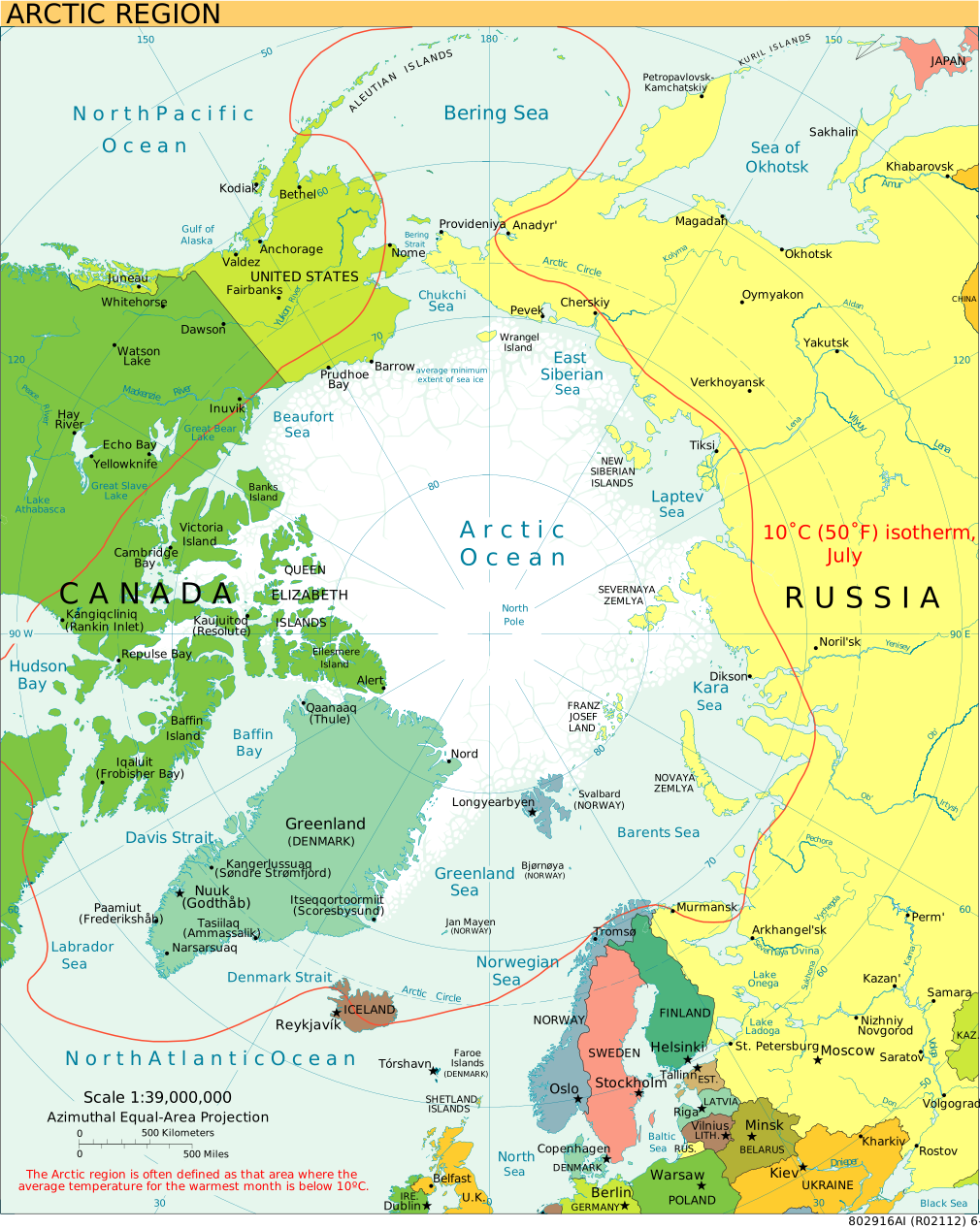
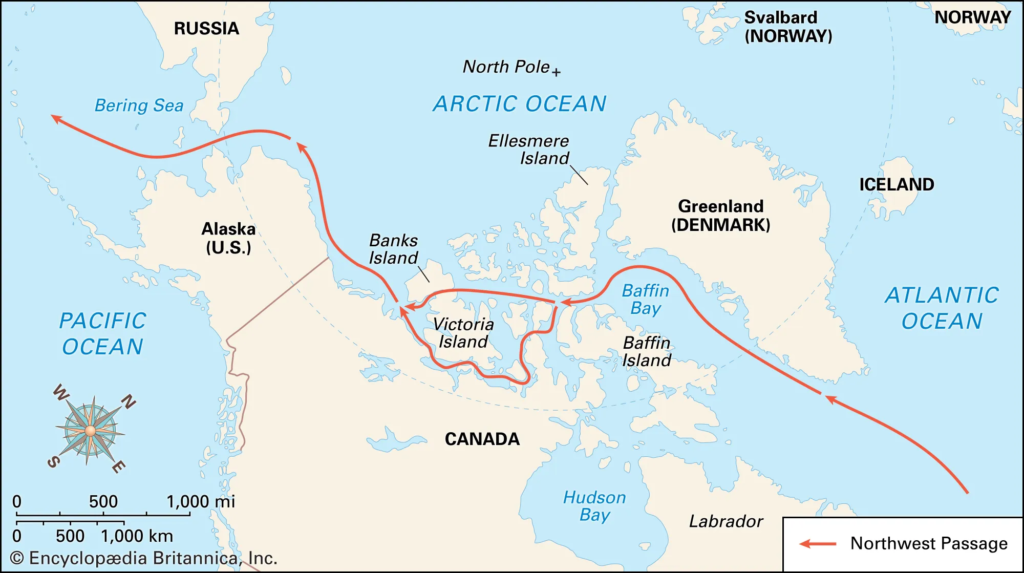
Greenland’s strategic relevance is best understood through a convergence of geographic, environmental, and security-related factors rather than isolated political initiatives. Situated between North America and Europe, Greenland occupies a critical location along emerging Arctic corridors that may become increasingly navigable as polar ice coverage diminishes.
Beyond commercial considerations, Greenland has long held military significance. During World War II and the Cold War, the island supported early warning systems and airbase infrastructure. This legacy continues through modern missile warning, space surveillance, and Arctic monitoring activities, reinforcing Greenland’s role in North Atlantic and Arctic security architectures.
Greenland also serves as a critical site for climate and environmental research. Its ice sheet is a major indicator of global climate trends, contributing to scientific understanding of sea-level rise and atmospheric change. These scientific functions intersect with geopolitical concerns as Arctic states integrate climate data into long-term planning and security strategies.
Geography and Historical Background of Greenland
Greenland is the world’s largest island that is not classified as a continent, covering approximately 2.16 million square kilometers. Roughly four-fifths of its surface is covered by the Greenland Ice Sheet, leaving only a narrow coastal zone suitable for permanent human settlement. These geographic conditions have shaped population distribution, economic activity, and transportation patterns, with most communities located along the western and southwestern coasts (Encyclopaedia Britannica, 2024).

Human habitation in Greenland extends back more than four millennia. Early Arctic cultures migrated from the North American mainland, followed by the arrival of the Thule people, ancestors of today’s Inuit population, around the late first millennium CE. These societies developed technologies adapted to Arctic conditions, forming the cultural foundation of modern Greenlandic society (National Museum of Denmark, 2022).
Norse settlement began in the late 10th century under the leadership of Erik the Red, who established farming communities in southern Greenland after traveling from Iceland. Medieval sources indicate that the name “Greenland” was deliberately chosen to encourage settlement. Norse communities persisted for several centuries before disappearing in the 15th century, likely due to climatic cooling, economic isolation, and shifting trade patterns.
Danish governance was reestablished in the early 18th century and evolved over time into modern arrangements of autonomy. Greenland transitioned from colonial status to home rule in 1979 and later to self-rule in 2009, granting extensive authority over internal affairs while remaining within the Kingdom of Denmark. These developments reflect a gradual political evolution rather than abrupt change.
The Economy of Greenland and Its Resource Potential
Greenland’s economy is characterized by a narrow production base and a high degree of public-sector involvement. Fishing and seafood processing account for the majority of export earnings, while government activity represents a substantial share of employment. Financial transfers from Denmark, provided through an annual block grant, constitute a significant portion of public revenue and contribute to Greenland’s comparatively high GDP per capita despite structural economic constraints (Statistics Greenland, 2026).
At the same time, Greenland possesses notable mineral resource potential. Studies by the European Commission and the U.S. Geological Survey indicate that the island contains a wide range of minerals classified as critical to modern economies, including rare earth elements, zinc, graphite, and lithium. These assessments emphasize that while geological potential is substantial, economically recoverable reserves remain uncertain and dependent on market conditions, infrastructure investment, and regulatory frameworks (European Commission, 2023; USGS, 2026).
Rare earth elements have attracted particular attention due to their importance in renewable energy technologies, advanced manufacturing, and defense systems. Greenland is estimated to rank among the world’s top jurisdictions in terms of rare earth resources, although commercial production has not yet been realized. Development has been constrained by environmental regulations, limited transportation infrastructure, and domestic political considerations, including restrictions on uranium-related activities.
Analysts consistently note that the presence of mineral resources does not guarantee rapid economic transformation. Any expansion of Greenland’s extractive industries would require long-term investment, regulatory stability, and careful management of environmental and social impacts. As a result, Greenland’s resource endowment is best viewed as a long-term strategic factor rather than an immediate driver of economic change.
V. Conclusion
Greenland’s prominence in international discourse reflects the convergence of long-standing geographic, historical, and environmental factors rather than the ambitions of any single external actor. Its location within the Arctic and North Atlantic, combined with evolving climatic conditions, has increased its relevance to discussions of security, trade, and scientific research.
The global transition toward low-carbon energy systems has further intensified attention on Greenland due to documented mineral resources associated with renewable technologies and advanced manufacturing. At the same time, changing security dynamics in the Arctic, including increased military activity and expanded commercial engagement, have contributed to greater strategic scrutiny of the region as a whole.
These developments interact with Greenland’s distinct political status as a self-governing territory within the Kingdom of Denmark. Decisions regarding economic development, environmental protection, and political future remain subject to Greenlandic democratic processes and institutional frameworks. Consequently, Greenland is best understood as an active participant within Arctic systems rather than a passive object of geopolitical competition.
As global conditions continue to evolve, Greenland’s future will likely be shaped by how it balances economic opportunity, environmental stewardship, and political autonomy within an increasingly interconnected Arctic environment.
References
- Al Jazeera. (2026, January 18). Trump announces new tariffs over Greenland: How have EU allies responded? https://www.aljazeera.com/news/2026/1/18/trump-announces-new-tariffs-over-greenland-how-have-eu-allies-responded
- Al Jazeera. (2019, August 19). Danish PM: Trump’s idea of buying Greenland is absurd. https://www.aljazeera.com/news/2019/8/19/danish-pm-trumps-idea-of-buying-greenland-is-absurd
- Arctic Council. (n.d.). About the Arctic Council. https://arctic-council.org/about/
- CNBC. (2026, January 21). Trump says he reached Greenland deal ‘framework’ with NATO, backs off Europe tariffs. https://www.cnbc.com/2026/01/21/trump-tariffs-nato-greenland-davos.html
- Council on Foreign Relations. (2023, August 10). What would Greenland’s independence mean for the Arctic? https://www.cfr.org/in-brief/what-would-greenlands-independence-mean-arctic
- Encyclopaedia Britannica. (2024). Greenland. https://www.britannica.com/place/Greenland
- European Commission. (2023, November 30). EU and Greenland sign strategic partnership on sustainable raw materials value chains (Press release IP/23/6166). https://ec.europa.eu/commission/presscorner/detail/en/ip_23_6166
- European Commission & Government of Greenland. (2023). Memorandum of understanding on a strategic partnership on sustainable raw materials value chains. https://single-market-economy.ec.europa.eu/system/files/2023-12/MoU%20EU-GREENLAND%20FINAL%20EN.pdf
- European Parliament, EPRS. (2025). EU-Greenland relations in fisheries (Briefing PE 769.534). https://www.europarl.europa.eu/thinktank/en/document/EPRS_BRI(2025)769534
- Government of Denmark, Prime Minister’s Office. (2009). Act no. 473 of 12 June 2009: Act on Greenland Self-Government. https://english.stm.dk/media/4vgewyoh/gl-selvstyrelov-uk.pdf
- Government of Greenland (Naalakkersuisut). (2025). Greenland mineral resources strategy 2025–2029. https://naalakkersuisut.gl/-/media/nyheder/2025/01/3101_ny_raastofstrategi/eng_greenland-mineral-resources-strategy-2025-2029.pdf
- National Museum of Denmark. (n.d.). Thule: Prehistory of Greenland. https://natmus.dk/organisation/forskning-og-kulturarv/nyere-tid-og-verdens-kulturer/etnografisk-samling/arktisk-forskning/prehistory-of-greenland/thule/
- NBC News. (2026, January 21). Trump pauses Greenland-linked tariffs on 8 European countries. https://www.nbcnews.com/business/economy/trump-pauses-greenland-tariffs-rcna255270
- NPR. (2026, January 17). Trump says 8 EU countries to be charged 10% tariff for opposing US control of Greenland. https://www.npr.org/2026/01/17/nx-s1-5680839/trump-eu-greenland-tariffs
- National Snow and Ice Data Center. (n.d.). Ice sheets. https://nsidc.org/learn/parts-cryosphere/ice-sheets
- National Snow and Ice Data Center. (n.d.). Ice Sheets Today: Greenland and Antarctic surface melt analyses. https://nsidc.org/ice-sheets-today
- Statistics Greenland. (2026). Greenland in figures 2026. https://stat.gl/publ/en/GF/2026/pdf/Greenland%20in%20Figures%202026.pdf
- U.S. Department of Defense. (2024). 2024 Arctic strategy. https://permanent.fdlp.gov/gpo247765/DOD-ARCTIC-STRATEGY-2024.pdf
- U.S. Department of State. (2025). 2025 investment climate statements: Kingdom of Denmark. https://www.state.gov/reports/2025-investment-climate-statements/denmark
- U.S. Geological Survey. (2026). Mineral commodity summaries 2026: Rare earths. https://pubs.usgs.gov/periodicals/mcs2026/mcs2026-rare-earths.pdf