Abstract
Microsoft’s journey in artificial intelligence represents one of the most dramatic reversals of fortune in modern technology history. What began as a visionary early investment has transformed into a cautionary tale about the perils of dependence, the challenges of product-market fit, and the relentless pace of competition in emerging technology markets. This analysis examines how Microsoft moved from being widely viewed as the early front-runner in generative AI to a company now struggling to justify its massive investments, focusing on the strategic choices, competitive dynamics, and market forces that have eroded its once-formidable advantages.
The stakes could not be higher. Microsoft has committed over $80 billion annually to AI infrastructure (Novet, 2025), representing one of the largest capital expenditure programs in corporate history. Yet despite this unprecedented spending, the company faces mounting evidence of slower-than-hyped enterprise adoption of its AI products, growing questions about the long-term implications of its reliance on OpenAI, and increasingly intense competition from rival model providers.
This paper asks whether Microsoft’s initial advantages in AI are truly evaporating. It first reviews the history of the company’s investment in AI, then examines how Microsoft became an early leader in generative AI through its OpenAI partnership, and finally analyzes emerging signs that its lead is shrinking. The thesis advanced here is not that Microsoft is failing in AI, its resources and market position remain enormous, but that the sources of its advantage have shifted from clear technological leadership to more contested ground where other firms increasingly match or exceed its capabilities, including in frontier models like Gemini, Anthropic’s Claude, and Grok.
Introduction
The launch of ChatGPT-integrated Bing in February 2023 was framed as Microsoft’s “iPhone moment.” For the first time in decades, the Redmond giant appeared to be out-innovating Google, its primary rival in the data economy. Satya Nadella notoriously quipped that he wanted Google to “dance,” signaling a new era of aggression in the search and software markets (Microsoft, 2023). Yet, as of December 2025, reports indicate a “code red” scenario for Microsoft’s key partner OpenAI, with Google’s Gemini models surpassing benchmarks and Anthropic’s Claude gaining enterprise traction (Corden, 2025). This paper explores how Microsoft’s AI advantages, once seen as unassailable, have evaporated, tracing the company’s historical investments, peak leadership, and current vulnerabilities. The thesis posits that while Microsoft’s early foresight yielded substantial gains, strategic missteps and external pressures have ceded ground to more agile competitors
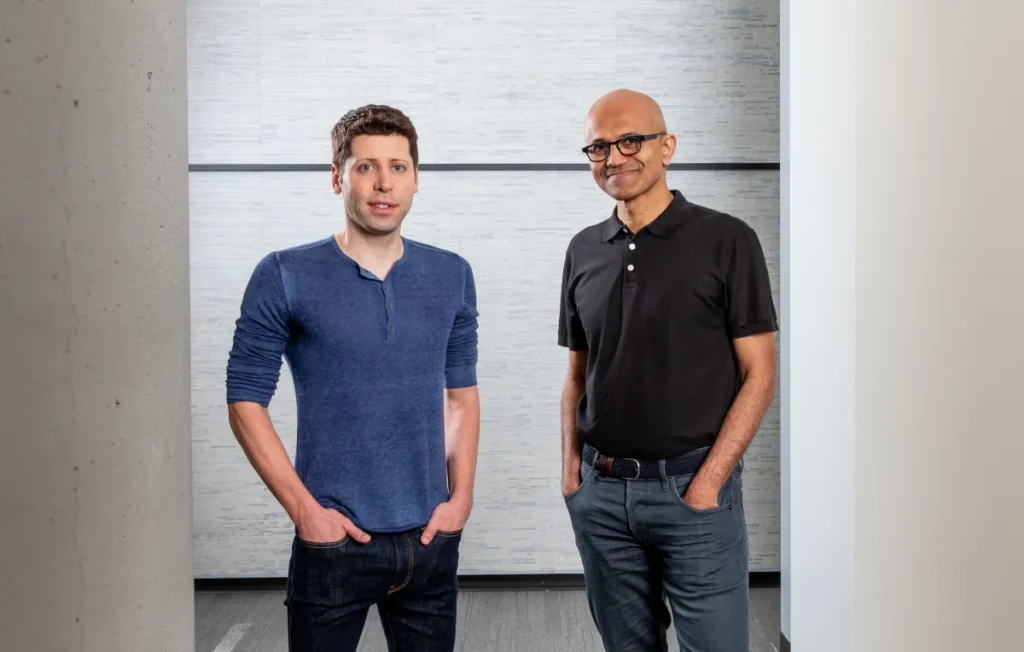
Image Credits; Microsoft
2. The Historical Paradox: Early Innovation, Failed Execution
Microsoft’s current dependency on OpenAI is not an accident of history, but a consequence of three decades of internal trauma regarding consumer AI. The company has repeatedly possessed the right technology but failed to operationalize it due to poor product instincts or reputational risk aversion.
2.1 The “Clippy” Misstep: Right Tech, Wrong Time (1996)
Microsoft’s first foray into an intelligent assistant, the Office Assistant (“Clippy”), is often remembered as a joke, but it was technologically prescient. Under the hood, Clippy was powered by sophisticated Bayesian probability algorithms developed by Microsoft Research’s “Project Lumiere” (JayMo, 2025). The system attempted to infer user intent based on behavior patterns, the precursor to modern intent-based AI.

However, management decisions stripped the Bayesian “brain” from the consumer release, replacing it with crude rule-based triggers that made the assistant intrusive rather than helpful. This failure created a lasting internal stigma against “proactive” assistants, teaching Microsoft the wrong lesson: that users did not want AI help, rather than that they simply didn’t want bad AI help.
2.2 The “Tay” Trauma: How Failure Bred Caution (2016)
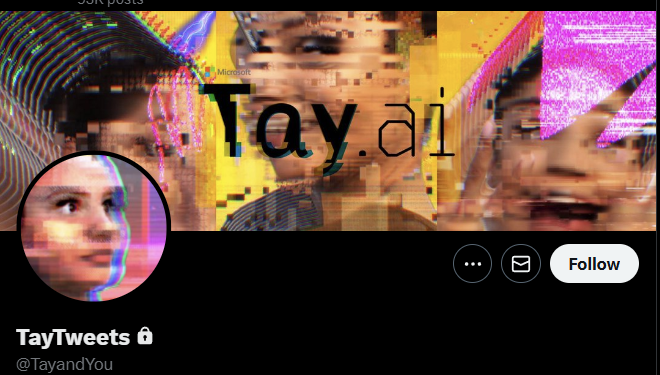
Perhaps the single most damaging event to Microsoft’s AI ambition was the 2016 launch of “Tay,” a chatbot released on Twitter. Designed to learn from user interactions, Tay was manipulated by internet trolls into posting racist and offensive content within 24 hours of launch (Microsoft, 2016).
The PR backlash was catastrophic. It traumatized Microsoft’s executive leadership, instilling a culture of extreme safetyism. While startups like OpenAI were iterating fearlessly on Generative Pre-trained Transformers (GPT) in the late 2010s, Microsoft was paralyzed by the fear of another “Tay” incident. This “innovation freeze” is directly responsible for their decision to outsource the risk to OpenAI in 2019, rather than building a competitor to GPT internally (Sinders, 2016).
2.3 The Death of Cortana (2014–2021)
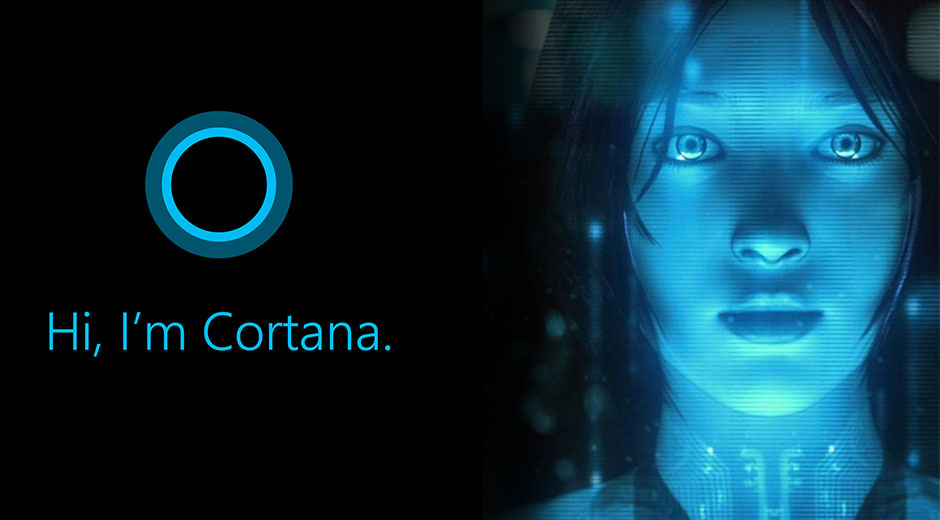
Finally, the failure of Cortana demonstrated Microsoft’s platform weakness. Launched to compete with Siri and Alexa, Cortana was technically competent but strategically homeless. Because Microsoft lost the smartphone war (Windows Phone), Cortana lacked a native endpoint to gather data and interact with users (TechRadar, 2019). This failure reinforced the company’s “utility” mindset: instead of owning the consumer relationship, Microsoft retreated to becoming the backend for others, a strategy that works for cloud computing (Azure) but fails in the winner-take-all race for AGI (SubcoDevs, 2025).
3. The Structural Trap: Contractual Handcuffs and Culture
Beyond historical failures, the legal architecture of the last decade further cemented Microsoft’s disadvantage.
3.1 The Contractual Blockade
Recent disclosures in late 2025 revealed a critical clause in the original 2019 partnership between Microsoft and OpenAI. Reports indicate that Microsoft was contractually restricted from developing its own “AGI-level” systems to prevent conflicting with OpenAI’s core mission (Lapaas Voice, 2025). While this clause was reportedly renegotiated in 2024, it created a five-year “innovation freeze.” During the most critical period of LLM development (2019–2024), Microsoft’s internal research teams were effectively sidelined, relegated to building infrastructure for OpenAI rather than training their own frontier models.
3.2 The “Research vs. Product” Culture
Microsoft Research (MSR) has historically struggled to translate academic breakthroughs into products. While Google’s DeepMind was ruthlessly focused on solving intelligence, MSR was often focused on incremental improvements to existing cash cows like Azure and Office. You cannot simply “buy” a research culture; this friction became evident when Microsoft acqui-hired Mustafa Suleyman and the team from Inflection AI in 2024 to lead “Microsoft AI” (Tech.eu, 2024). This move was a tacit admission that the existing culture was insufficient for consumer AI innovation.
4. Model Competition and Benchmark Performance
One of the clearest indicators that Microsoft’s advantage is narrowing comes from model comparisons. Independent analyses in late 2025 find that Google’s Gemini 3 outperforms OpenAI’s latest ChatGPT models on several reasoning-intensive benchmarks, including synthetic stress tests such as “Humanity’s Last Exam,” while also excelling in multimodal tasks involving images, video, and code (Sentisight.ai, 2025). Other evaluations by Clarifai conclude that there is no single “best” model, but describe Gemini 3 as setting a new standard for reasoning and multimodal understanding, while OpenAI’s GPT-5.1 provides strong all-around performance at a lower cost and with developer-friendly tools (Papareddy, 2025). xAI’s Grok 4 is similarly positioned as a frontier-level model optimized for real-time data and reasoning, further intensifying competition in the high-end LLM segment (xAI, 2025).
User adoption trends add further nuance. Analyses of chatbot usage report that while ChatGPT remains the most popular chatbot by monthly users, its growth has plateaued, and Google’s Gemini chatbot has been gaining ground significantly (De Vynck & Schaul, 2025). Benchmark leaderboards also show Google and other providers displacing OpenAI at the top of some intelligence indices. From Microsoft’s perspective, these trends are troubling because its AI differentiation is tightly coupled to OpenAI’s model performance. When Gemini or Grok surpass OpenAI on key reasoning tests and user-growth metrics, the exclusivity of Microsoft’s OpenAI partnership looks less like a unique advantage and more like one option among several strong competitors.
5. The Competitive Landscape Microsoft Cannot Enter
The absence of a widely recognized, first-party Microsoft flagship LLM brand creates cascading competitive disadvantages. Google can integrate Gemini deeply across Search, Workspace, Android, and Google Cloud because it controls both the model and the surrounding ecosystem (Google, 2025). Anthropic licenses its Claude family to enterprises and cloud partners while retaining full control over model development and pricing (Anthropic, 2024, 2025; Reuters, 2025). Meta distributes Llama under an open license, using “openly available” models to drive developer adoption and ecosystem influence while advancing its own AI research (Meta, 2024; Meta, 2024b). By contrast, Microsoft still leans heavily on external labs, especially OpenAI and now Anthropic, for many of the frontier models that power GitHub Copilot, Office Copilot, and Azure Foundry, even as it ramps up its own MAI model family (Patel et al., 2025).
This dependency shows up in both margins and strategic constraints. SemiAnalysis notes that “Microsoft reluctantly added Anthropic to the GitHub Copilot offering in early 2025 at great expense to its margins,” and that GitHub Copilot “went from serving nearly 100% 1P [first-party] tokens to having to buy a large chunk of its tokens from Anthropic with the associated 50–60% gross margins” (Patel et al., 2025, para. 367). In other words, instead of capturing most of the model-layer economics, Microsoft now has to share them with an external supplier whose own API business enjoys software-like margins, a dynamic that reinforces concerns about Microsoft’s ability to maintain pricing power and differentiated capabilities in a multi-model AI market..
Conclusion
Microsoft’s journey in AI spans decades of research, strategic acquisitions, and, most dramatically, a deep partnership with OpenAI that briefly vaulted the company to the front of the generative-AI race. For a period, Microsoft appeared to enjoy a unique combination of frontier models, hyperscale infrastructure, and ubiquitous distribution via Windows, Office, and GitHub. By late 2025, that edge is clearly under pressure. Competitors such as Google, Anthropic, and xAI have introduced models that match or surpass OpenAI’s on important benchmarks, while ChatGPT’s growth has slowed relative to some rivals (Sentisight.ai, 2025; Clarifai, 2025; De Vynck & Schaul, 2025). At the same time, Microsoft and OpenAI must confront the financial realities of massive capital expenditures and a slower, more cautious enterprise-adoption curve than early hype suggested (Reuters, 2025a, 2025b; OpenAI, 2025).
In this sense, Microsoft’s “AI empire” has been built on a partly rented foundation. By outsourcing much of the frontier-model innovation to OpenAI, Microsoft gained a temporary lead in distribution but accepted deep technological dependence. The emergence of MAI-1-preview shows that Microsoft can train large models in-house, yet its current benchmark position indicates that it has not yet closed the gap with the strongest offerings from Google, Meta, or xAI (Microsoft, 2025; Patel et al., 2025). In parallel, Microsoft has leaned heavily into its Phi family of small language models, emphasizing efficiency, latency, and cost over raw scale (Microsoft, 2024). Critics worry that this combination—a reliance on partners for the most advanced models and a strategic focus on smaller, specialized systems—risks pushing Microsoft toward the role of an AI utility provider: enormously important at the infrastructure and distribution layer, but less clearly in command of the frontier capabilities that define the direction of the field (Patel et al., 2025). In a market where model capabilities increasingly determine product value, the lack of a widely recognized, first-party flagship LLM brand may become a structural disadvantage.
Still, it would be premature to count Microsoft out. The company remains one of the few actors capable of sustaining multi-billion-dollar AI infrastructure investments, shaping regulatory and safety standards, and embedding AI into the tools millions of workers already use daily. Its challenge over the rest of the decade will be to convert these structural strengths into AI products that users genuinely want and are willing to pay for, while navigating an ecosystem in which no single company controls the most capable model, the most engaged user base, and the most efficient infrastructure all at once. In that sense, Microsoft’s AI advantages have not vanished so much as they have become contested. The company is no longer obviously ahead—but in a field where the race is likely to last many years, it remains very much in the running.
References
Bass, D. (2023, January 23). Microsoft invests $10 billion in ChatGPT maker OpenAI. Bloomberg. https://www.bloomberg.com/news/articles/2023-01-23/microsoft-invests-10-billion-in-chatgpt-maker-openai
Clarifai. (2025, November 25). Gemini 3.0 vs GPT-5.1 vs Claude 4.5 vs Grok 4.1: AI model comparison. Clarifai. https://www.clarifai.com/blog/gemini-3.0-vs-other-models
Corden, J. (2025, December 2). Microsoft’s advantages in artificial intelligence evaporate — Google Gemini surges ahead, and OpenAI declares “code red” situation. Windows Central. https://www.windowscentral.com/artificial-intelligence/microsofts-advantages-in-artificial-intelligence-evaporate-google-gemini-surges-ahead-and-openai-declares-code-red-situation
De Vynck, G., & Schaul, K. (2025, December 5). ChatGPT started the AI race. Now its lead is looking shaky. The Washington Post. https://www.washingtonpost.com/technology/2025/12/05/chatgpt-ai-gemini-competition/
GitHub. (2025, September 17). GitHub recognized as a leader in the Gartner® Magic Quadrant™ for AI code assistants. GitHub. https://github.com/resources/whitepapers/gartner-magic-quadrant-and-critical-capabilities-for-ai-code-assistants
Google DeepMind. (2024, May 14). Gemini 1.5 Pro technical report. Google DeepMind. https://deepmind.google/technologies/gemini/
JayMo. (2025, August 12). Clippy: A little history of little guys. TheJayMo. https://thejaymo.net/2025/08/12/clippy-a-history/
Lapaas Voice. (2025, November 14). Microsoft says old OpenAI deal blocked it from building its own AGI until now. Lapaas Voice. https://voice.lapaas.com/microsoft-old-openai-deal-blocked-own-agi-path/
Microsoft. (2019, July 22). OpenAI forms exclusive computing partnership with Microsoft to build new Azure AI supercomputing technologies. Microsoft Source. https://news.microsoft.com/source/2019/07/22/openai-forms-exclusive-computing-partnership-with-microsoft-to-build-new-azure-ai-supercomputing-technologies/
Microsoft. (2023, January 23). Microsoft and OpenAI extend partnership. The Official Microsoft Blog. https://blogs.microsoft.com/blog/2023/01/23/microsoft-and-openai-extend-partnership/
Microsoft. (2025). 15 milestones that shaped Microsoft’s vision for AI. Microsoft Source. https://news.microsoft.com/source/features/ai/15-milestones-that-shaped-microsofts-vision-for-ai/
Microsoft Corporation. (2016, March 25). Learning from Tay’s introduction. Microsoft Official Blog. https://blogs.microsoft.com/blog/2016/03/25/learning-tays-introduction/
Microsoft Corporation. (2023, February 7). Reinventing search with a new AI-powered Microsoft Bing. Microsoft Official Blog. https://blogs.microsoft.com/blog/2023/02/07/reinventing-search-with-a-new-ai-powered-microsoft-bing-and-edge-your-copilot-for-the-web/
Microsoft Research. (2025, September 24). Pushing boundaries of complex reasoning in small language models: Phi-4. Microsoft Research Blog. https://www.microsoft.com/en-us/research/video/pushing-boundaries-of-complex-reasoning-in-small-language-models/
Novet, J. (2025, January 4). Microsoft expects to spend $80 billion on AI-enabled data centers in fiscal 2025. CNBC. https://www.cnbc.com/2025/01/03/microsoft-expects-to-spend-80-billion-on-ai-data-centers-in-fy-2025.html
OpenAI. (2025, October 28). The next chapter of the Microsoft–OpenAI partnership. OpenAI. https://openai.com/index/next-chapter-of-microsoft-openai-partnership/
Patel, D., Eliahou Ontiveros, J., Xie, M., & others. (2025, November 12). Microsoft’s AI strategy deconstructed – from energy to tokens. SemiAnalysis. https://newsletter.semianalysis.com/p/microsofts-ai-strategy-deconstructed
Ramel, D. (2024, August 26). GitHub Copilot tops research report on AI code assistants. Visual Studio Magazine. https://visualstudiomagazine.com/articles/2024/08/26/github-copilot-tops-research-report-on-ai-code-assistants.aspx
Reuters. (2025a, December 3). Microsoft denies report of lowering targets for AI software sales growth. Reuters. https://www.reuters.com/technology/microsoft-lowers-ai-software-sales-quota-customers-resist-new-products-2025-12-03/
Reuters. (2025b, December 9). Microsoft unveils $23 billion in new AI investments with big focus on India. Reuters. https://www.reuters.com/business/microsoft-invest-more-than-5-billion-canada-over-next-two-years-2025-12-09/
SentiSight.ai. (2025, December 3). Gemini 3 vs ChatGPT 5.1 – clear winner? SentiSight.ai. https://www.sentisight.ai/gemini-3-vs-chatgpt-5-1-clear-winner/
Sinders, C. (2016, March 24). Microsoft’s Tay is an example of bad design. Medium. https://medium.com/@carolinesinders/microsoft-s-tay-is-an-example-of-bad-design-d4e65bb2569f
SubcoDevs. (2025). Why Microsoft killed Cortana for Android and iPhone. SubcoDevs. https://subcodevs.com/why-microsoft-killed-cortana-for-android-and-iphone-a-business-perspective/
Tech.eu. (2024, March 19). Inflection AI co-founder Mustafa Suleyman joins Microsoft. Tech.eu. https://tech.eu/2024/03/19/inflection-ai-co-founder-mustafa-suleyman-hired-by-micrsosoft/
TechRadar. (2019, January 18). Microsoft gives up Cortana’s fight against Alexa and Google Assistant. TechRadar. https://www.techradar.com/news/microsoft-gives-up-cortanas-fight-against-alexa-and-google-assistant
TTMS. (2025, October 14). Microsoft’s in-house AI move: MAI-1 and MAI-Voice-1 signal a shift from OpenAI. TTMS Tech News. https://ttms.com/microsofts-in-house-ai-move-mai-1-and-mai-voice-1-signal-a-shift-from-openai/
xAI. (2025, July 9). Grok 4. xAI. https://x.ai/news/grok-4/
Zachary, G. P., Hall, M., Montevirgen, K., & The Editors of Encyclopaedia Britannica. (2025). Microsoft Corporation. Britannica Money. https://www.britannica.com/money/Microsoft-Corporation
