Technology & Security
-
How Anthropic Took the Throne: Inside the Valuation Arc That Made Series A Investors a Thousand Times Richer

Anthropic filed confidentially for an IPO on June 1, 2026, at a $965 billion private mark. The Series A investors who put $124 million in five years ago now hold paper positions worth over 1,000x their original cost basis. An economic analysis of who profits, how the throne changed hands, and what the IPO will… Continue reading
-
AI Is Rewriting the Cyber Threat Economy. Manufacturing, Healthcare, and Finance Are Bearing the Cost

For the first time in 19 years of the Verizon DBIR, vulnerability exploitation has overtaken stolen credentials as the top initial-access vector. AI is the reason. An economic analysis of which sectors are hit hardest, what experts recommend, and the five mitigations that actually work. Continue reading
AI cybersecurity, AI threat actors, Anthropic Mythos, CISO, critical infrastructure, CrowdStrike, cybersecurity, financial services security, Google Threat Intelligence, healthcare cybersecurity, KELA, Mandiant, manufacturing cybersecurity, Microsoft Digital Defense Report, phishing, ransomware, supply chain attacks, Verizon DBIR, vulnerability exploitation, zero-day -
Nvidia and Microsoft Just Reinvented the Windows PC. Intel, ARM, and Apple Should Pay Attention

Microsoft and Nvidia unveiled the Surface Laptop Ultra and RTX Spark superchip at Computex 2026: 1 petaflop of AI compute, 128 GB of unified memory, 6,144 CUDA cores. A direct economic threat to Intel, ARM, Apple, and AMD. Continue reading
-
China Just Hit Humanoid Factory Scale Before the US Did. Here’s What That Actually Means
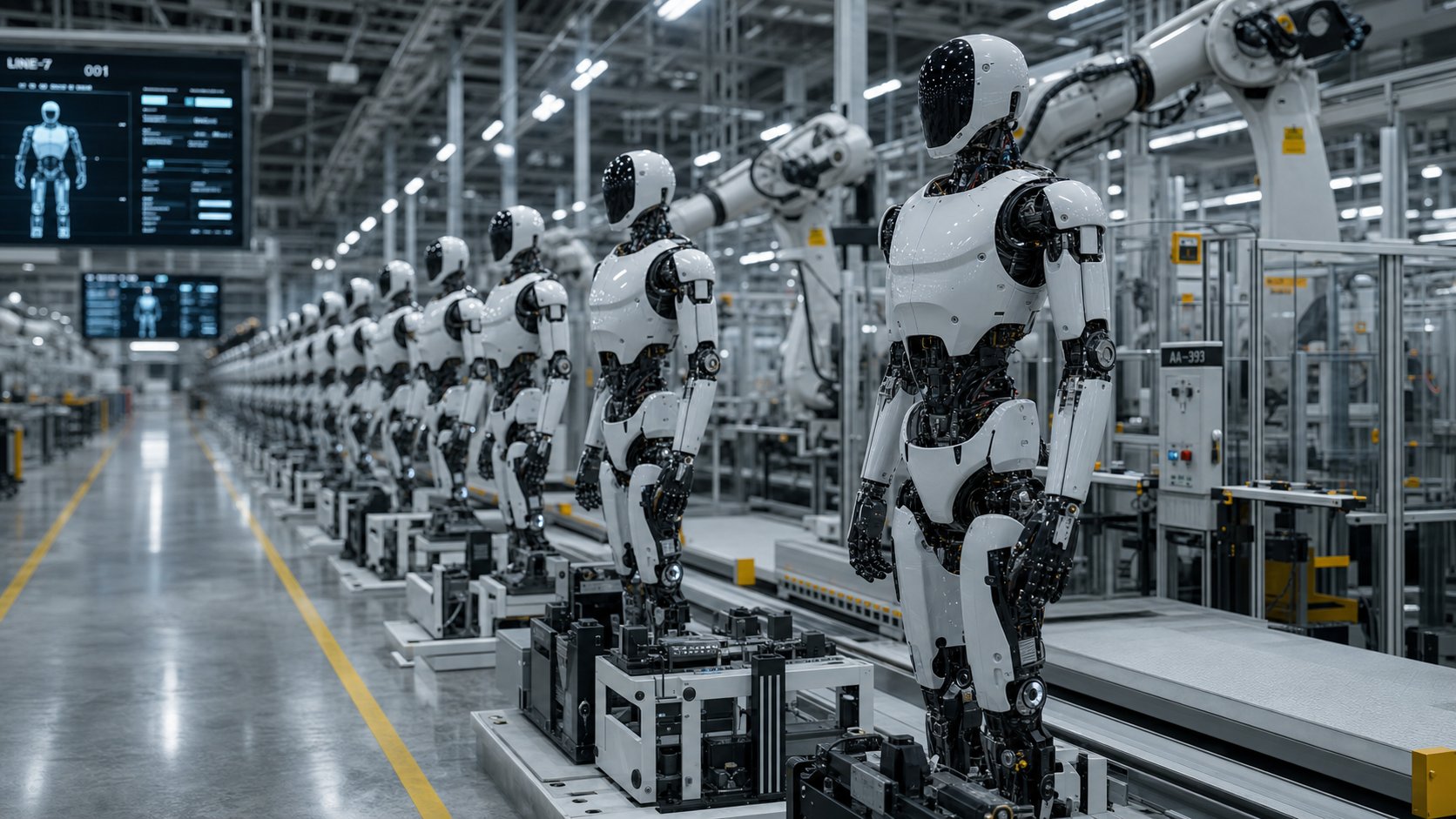
On May 29, a Chinese factory in Shenzhen began shipping a full-size humanoid robot every 15 minutes. The story is not who built the most impressive robot. It is who built a real assembly line first, and what that means for an industry that has spent a decade competing on demo videos. Continue reading
-
Are Data Centers Raising Your Electric Bill? Two New Reports Say Different Things
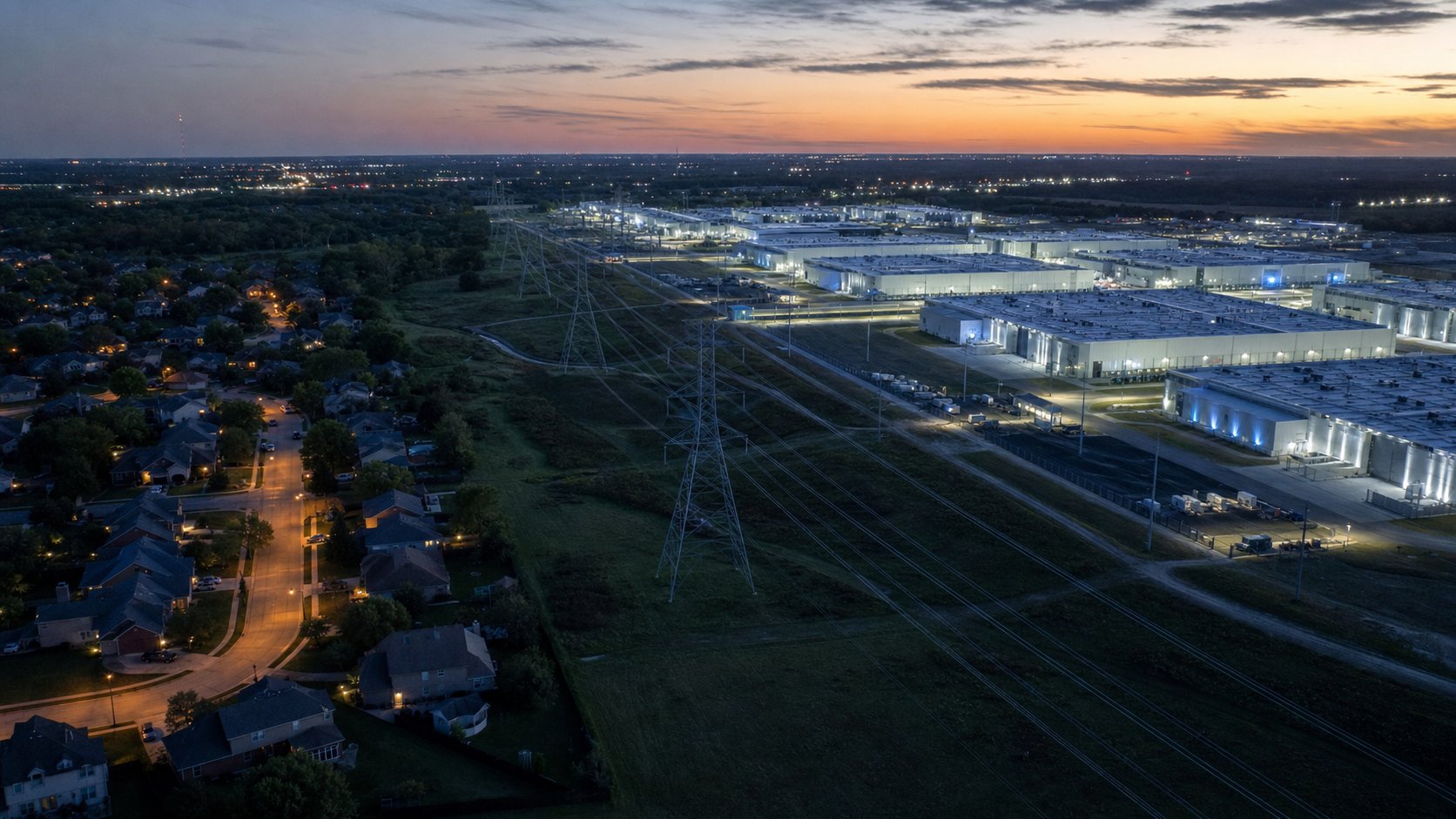
Two new reports released within 24 hours of each other reach opposite conclusions on whether the AI data center boom is raising household electric bills. The disagreement is real, the data behind both is real, and the answer depends on questions that ratepayers, regulators, and Congress are only now beginning to ask out loud. Continue reading
-
How Anthropic Passed OpenAI: A $965 Billion Bet, a Personal Feud, and Two Theories of AI

In May 2026, Anthropic disclosed a $65 billion Series H at a $965 billion valuation, surpassing OpenAI to become the highest-valued private AI company in the world. The path from $4 billion to $965 billion in three years runs through a personal feud, a public refusal to hold hands, and a fundamentally different theory of… Continue reading
-
Stanford’s 2026 AI Index Report: U.S.-China Gap Closes as AI Investment Surges
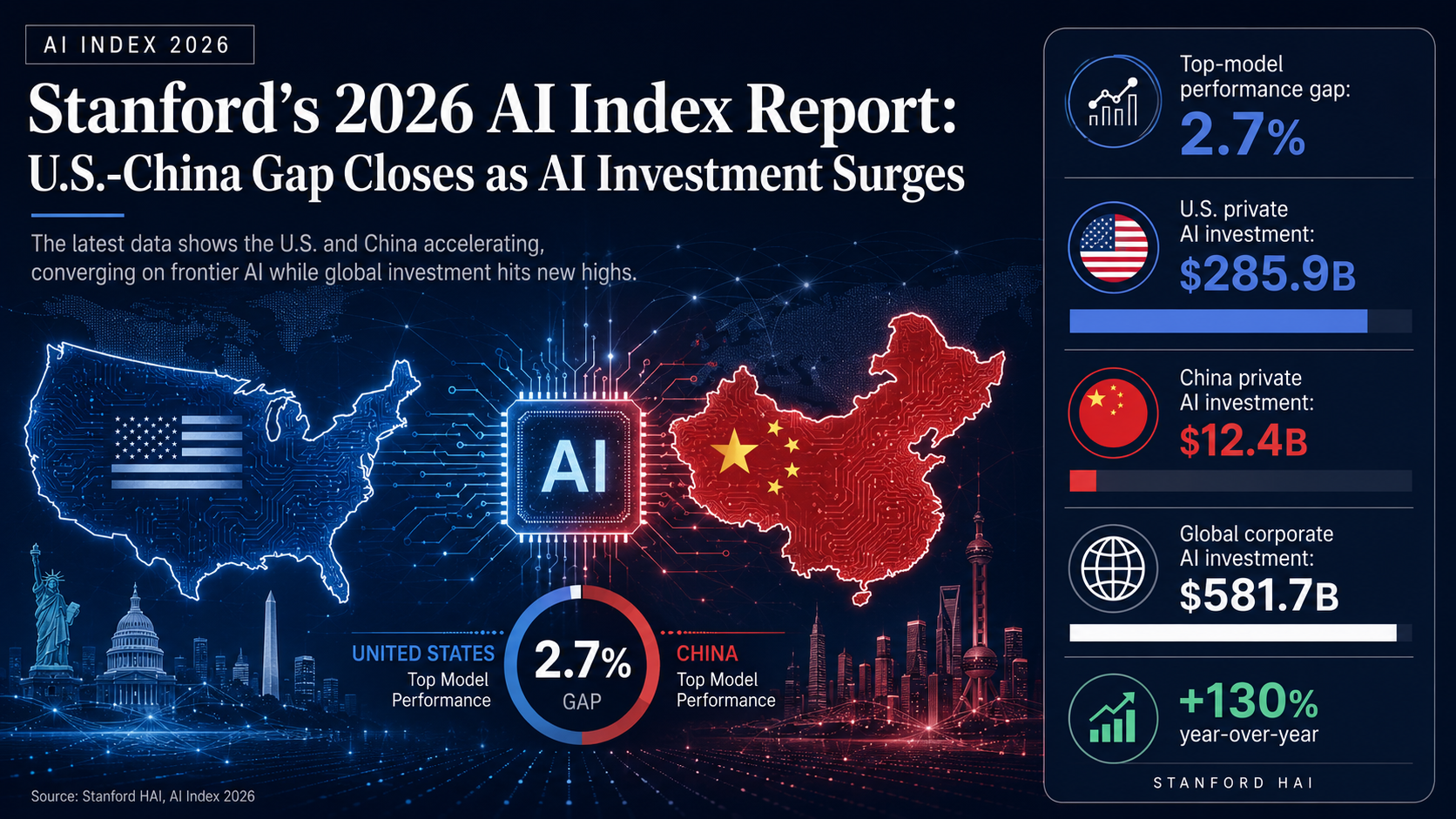
Stanford’s 2026 AI Index Report reveals the U.S.-China AI capability gap has effectively closed, private investment hit $285.9 billion, and global AI development has entered a new equilibrium. Continue reading
-
Trump Calls Off AI Executive Order Hours Before Planned White House Signing
President Trump cancelled a planned executive order on artificial intelligence hours before a White House signing ceremony, abandoning what appeared to be a centrepiece of his administration federal AI regulatory agenda. Continue reading
-
MIT Iceberg Index Reveals How AI Really Threatens American Jobs

An MIT research team has published the Iceberg Index, a comprehensive mapping of 923 occupations and 32,000 skills that reveals how AI capabilities overlap with the American workforce in ways that traditional automation studies miss. Continue reading
-
The Silver Bullet Excuse: Are AI Layoffs Justified, or Just the Most Convenient Narrative in Tech?

Tech CEOs are now framing every layoff as an AI decision. The economic case is real in some companies, threadbare in others, and politically convenient nearly everywhere. The data shows which is which. On May 20, 2026, Meta Platforms terminated approximately 8,000 employees, roughly 10 percent of its workforce. Chief executive Mark Zuckerberg framed the… Continue reading
-
AI Scans 400,000 Reddit Posts to Reveal Hidden GLP-1 Side Effects
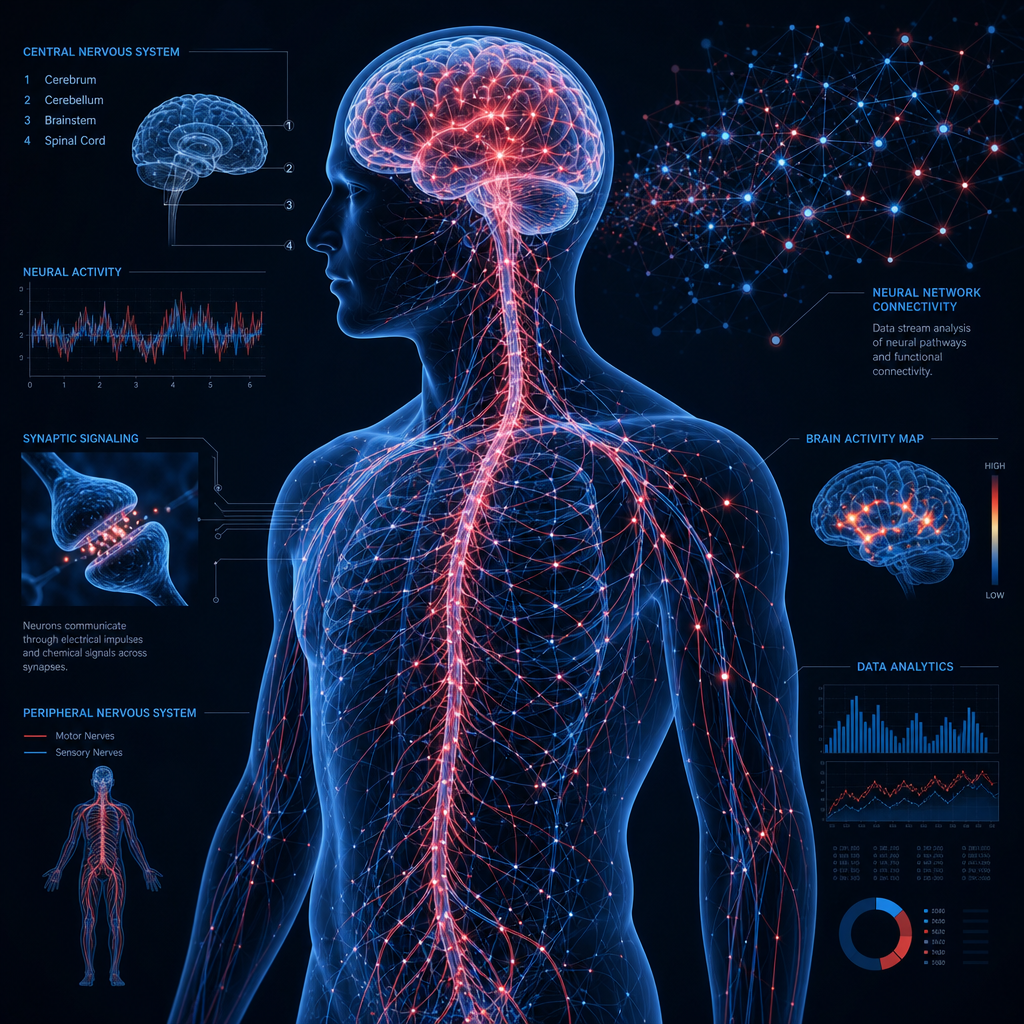
Researchers at the University of Pennsylvania used artificial intelligence to analyze hundreds of thousands of Reddit posts and uncovered symptoms linked to Ozempic and Mounjaro that clinical trials may have missed. Continue reading
-
The Model Too Dangerous to Release: Inside Claude Mythos
The Announcement That Changed Everything On April 7, 2026, Anthropic made a disclosure that sent shockwaves through Washington, Silicon Valley, and the cybersecurity community. The company had trained a large language model called Claude Mythos Preview that could autonomously discover and exploit previously unknown vulnerabilities in the world’s most critical software. The model found thousands… Continue reading
-
Q Day Is Closer Than You Think: How Quantum Computers Will Break Encryption, the Bitcoin Attack Window, and What Organizations Must Do Now

Most experts still place Q Day in the 2030s, but in twelve months, three research papers have reduced the quantum resources needed to break RSA-2048 by a factor of more than 200. Google has set its own internal deadline at 2029. The migration window may be shorter than anyone expected. “Q Day” is not a… Continue reading
-
When Productivity Punishes the Profession: AI Coding, Tech Layoffs, and the Software Engineering Labor Market in 2026

AI made coding easy for everyone. The labor market for software engineers has not adjusted gracefully. On the May 1, 2026 episode of Bloomberg’s Wall Street Week, host David Westin framed the central paradox of this technology cycle in a single sentence: “AI made coding easy for everyone, and that’s the best and worst thing… Continue reading
-
How a Five-Year-Old AI Lab Became Wall Street’s Partner, the Pentagon’s Adversary, and Washington’s Test Case

In ninety days, Anthropic released a model too dangerous to publish, sued the U.S. government over a Pentagon ban, and signed a $1.5 billion deal with Wall Street. The story of how a five-year-old AI startup got here, and what it means for the next phase of artificial intelligence. On May 4, 2026, three storylines… Continue reading
-
OpenAI’s Pre-IPO Stress Test: What WSJ’s Report on Missed Revenue and User Targets Really Means

The Wall Street Journal reported on April 27, 2026 that OpenAI has missed its own internal targets for both new user acquisition and revenue, with CFO Sarah Friar privately telling colleagues the company may not be able to fund its computing commitments if growth does not accelerate. The numbers behind the story reveal a startup… Continue reading
-
Rising Tides: MIT Study of 17,000 Worker Evaluations Reveals AI Is Coming for Every Job Simultaneously

A landmark MIT study of 17,000 worker evaluations across 3,000 real-world tasks reveals that AI is not replacing jobs in sudden waves of disruption. It is rising steadily across all occupations at once. By 2029, AI models will likely complete 80% to 95% of text-based work tasks at minimally sufficient quality. The implications for workers,… Continue reading
-
The Great Unbundling: Every Major AI Company Is Now Building Its Own Chips

With Anthropic now exploring custom silicon, every major AI company is building or planning its own chips. The question is no longer whether Nvidia’s monopoly will erode, but how fast and what it means for the $200 billion AI chip market. On April 9, 2026, Reuters reported that Anthropic, the creator of Claude and one… Continue reading
-
Google’s TurboQuant: The Algorithm That Shrinks AI Memory by 6x and Rattled the Semiconductor Market

Google Research has published a compression algorithm that reduces AI memory usage by 6x with zero accuracy loss. The internet is calling it “Pied Piper.” The semiconductor market lost billions in hours. Here is what TurboQuant actually does, why it matters, and what it changes. On March 25, 2026, Google Research published TurboQuant, a compression… Continue reading
-
The Cowgorithm: How Halter’s AI Collar Is Rewriting the Rules of Ranching
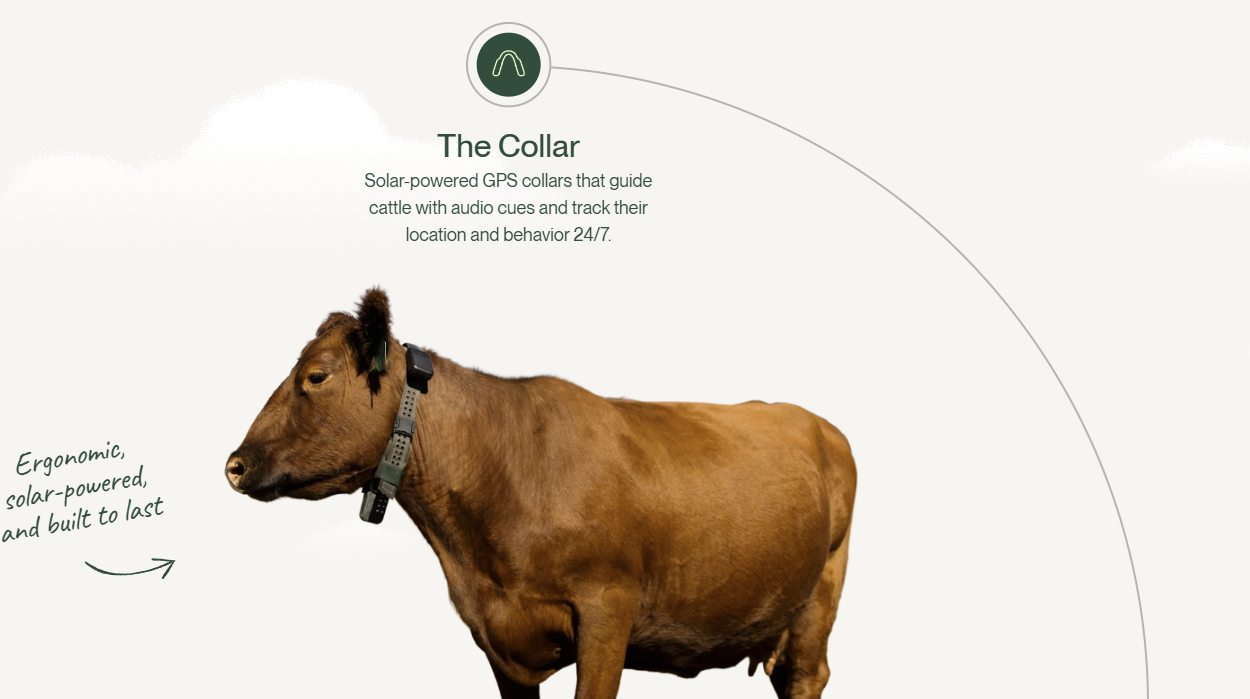
A New Zealand startup puts solar-powered AI collars on cows, replaces physical fences with algorithms, and just doubled its valuation to $2 billion with Peter Thiel’s Founders Fund leading the round. Halter’s 600,000 collars have created 11,000 miles of virtual fencing in the U.S. alone, saving an estimated $220 million in infrastructure costs. This is… Continue reading