Author: Janeleok | Discipline: Marketing, Business Strategy
Executive Summary
- Core Competency Underestimated: Amazon’s Private Label (PL) failure was not due to a lack of market access but a flawed strategy that undervalued PL as a cost-driven utility, not a core competency.
- The Strategic Fix (3-Pillars): Success requires shifting focus from cost-cutting to a new Quality, Brand, and Technology strategy, leveraging Amazon’s immense data advantage.
- The Tech Imperative: The unique advantage lies in mastering Virtual Try-On (VTO) and AI Styling, tools that transform the online shopping experience and provide a defensible barrier against competitors.
Abstract
Amazon’s Private Label (PL) business was once envisioned as a crucial means of controlling the supply chain and maximizing retail profitability. However, real-world performance (PL accounted for only 9% of Amazon’s apparel sales in 2020) and growing Antitrust scrutiny have forced Amazon to drastically streamline its PL portfolio (from over 90 to less than 20 brands). This study argues that this streamlining, while necessary for risk management, dangerously undervalues PL’s potential as a core competency in the long run (Papula & Volna, 2013). We propose that Amazon must pivot from a Quantity-driven to a Quality-focused strategy, repositioning its remaining PLs as Technology Experimentation Brands that leverage three pillars: Made-on-Demand (The Drop), AI-powered design, and Emotional/Minimalist Branding to secure a sustainable competitive edge in the 2026 e-commerce landscape (Glady Agnes et al, 2025).
- Amazon’s PL failure was not a lack of interest, but a flaw in core execution.
- The company must shift strategy from pure cost-cutting to focusing on Quality, Brand Equity, and leveraging its unique AR/VR Technology.
ANALYSIS OF THE FAILURE OF THE QUANTITY STRATEGY
The collapse of Amazon’s mass-market Private Label (PL) strategy serves as a prime case study in the tension between the company’s foundational principles and market realities.
The Financial and Regulatory Limits of Volume
Private Label brands reached a critical strategic inflection point, demonstrating that quantity without brand equity creates disproportionate financial and legal liabilities.
The initial assumption that PLs could serve as a low-cost volume driver to enhance Operational Excellence has failed when weighed against the costs of liability and subpar performance. Despite Amazon’s status as a top global retailer, its vast apparel PL portfolio contributed only 9% of total sales in the Clothing, Shoes & Accessories department in 2020 (Kaziukėnas, 2020). This performance justified the company’s decision to cut its portfolio from over 90 brands to fewer than 20 (Delesline, 2023b)
The strategic misstep was neglecting the principle of Brand Perception in favor of scale. This created two major vulnerabilities: a) weak brand loyalty due to generic positioning, and b) heightened Antitrust risk, as the existence of a high volume of copycat PLs fueled regulatory concerns about Amazon using its marketplace data to compete unfairly with third-party sellers (Morano, 2024).
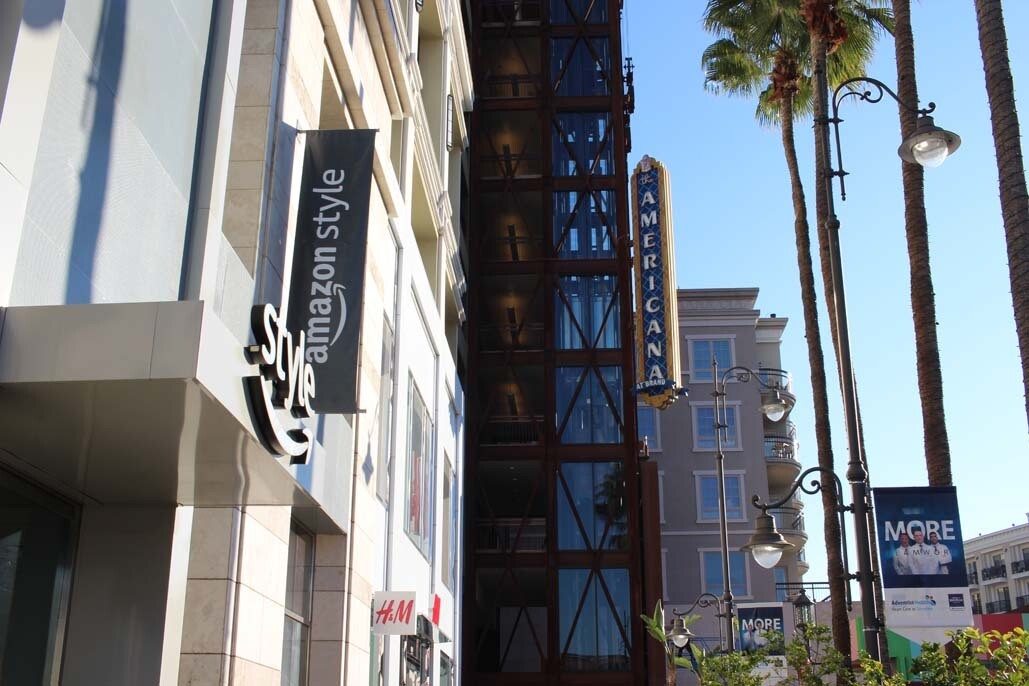
The most visible manifestation of this cost-reduction and risk-management pivot is the definitive closure of high-cost, high-touch physical retail experiments, such as the Amazon Style apparel stores (November 2023) and the elimination of the Try Before You Buy program (January 2025), with capital now focusing solely on scalable digital strengths (Lv, 2023).
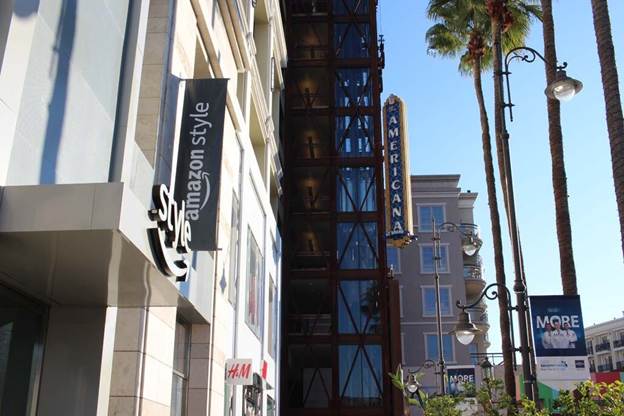
Note: Amazon Style is located in The Americana at Brand in Glendale, California. From “I went shopping at the Amazon Style store in Los Angeles and found an impossibly cool clothing selection and high‑tech fitting rooms,” by Jarrett, 2025 ( https://www.aboutamazon.com/news/retail/amazon-style-store-shopping-experience-los-angeles)
The Brand Perception Barrier in Fashion
The mass-market strategy failed because Amazon neglected the necessity of brand credibility in fashion, leaving its PLs perceived as functional commodities rather than desirable fashion items.
The failure of Amazon’s PLs stemmed from their inability to build the necessary Brand Perception and Emotional Branding required to thrive in the apparel category.
Retail analysts noted that the generic PLs were often “lost in a sea of other things on the website” (Ndure, 2023), reinforcing the notion that in the fashion segment, visibility is secondary to credibility. Furthermore, research proves that identical garments are perceived differently when sold on Amazon compared to a luxury platform, highlighting a massive perception barrier (Phillips, 2025).
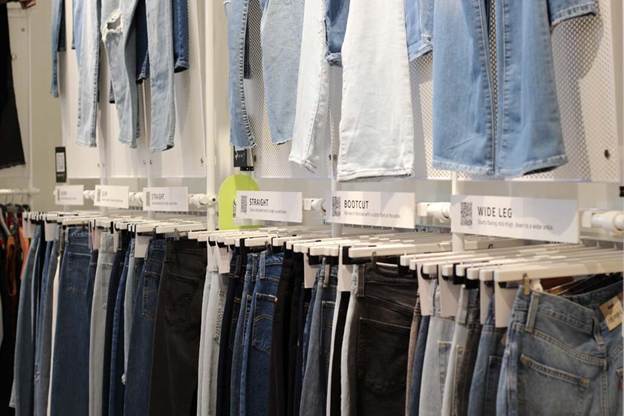
Note: Jeans Area in Amazon Style – Glendale, California. From “I went shopping at the Amazon Style store in Los Angeles and found an impossibly cool clothing selection and high‑tech fitting rooms,” by Jarrett, 2025 ( https://www.aboutamazon.com/news/retail/amazon-style-store-shopping-experience-los-angeles)
This relates directly to the tenets of Emotional Design, where consumers are influenced by the non-physical elements of the brand story (Kodzoman et al, 2023). Amazon’s strategy of low-price ubiquity clashed with modern consumer demands for authenticity, transparency, and ethical commitment. This credibility gap is why the company struggled to make significant inroads into the Luxury Fashion market, where high-touch service and brand heritage dominate (Wolff, 2022).
The market’s preference for authentic brand stories over sheer selection is highlighted by the rise of Digitally Native Brands (DNBs), which win on Amazon by focusing on niche communities and compelling narratives, a lesson Amazon’s broad PL strategy failed to internalize (Greesonbach,2018).
THE PROPOSAL FOR QUALITY-FOCUSED PRIVATE LABEL (Q-PL)
Amazon must recognize that the remaining PLs represent its most flexible tool for innovation. The goal must be to transform these select brands into pioneers of the next generation of retail, emphasizing Quality, Technology, and Brand Value.
Pillar 1: Leveraging AI to Replace Costly Manual Services
The future of Amazon’s Q-PL is inseparable from AI, which provides a scalable, low-friction solution to traditional retail challenges, thereby strengthening Amazon’s core technological competency.
The investment required for a Q-PL strategy should pivot from physical inventory and human services to data-driven AI, which demonstrably provides a superior return on investment for the modern shopper.
This strategic pivot is best evidenced by the company’s move to phase out the physical Try Before You Buy program because customers are “increasingly using our new AI-powered features like virtual try-on, personalized size recommendations” (Morris, 2025).
This transition aligns perfectly with the core principles of Digital Transformation and Operational Excellence. By substituting the high cost of reverse logistics (returns from Try Before You Buy) with AI-driven predictive modeling, Amazon is using technology (its genuine Core Competency) to drive both customer satisfaction and profitability (Njeri, 2025). The success of the AI shopping assistant, Rufus, which is expected to generate over $10 billion in additional annualized sales by increasing customer purchasing by 60%, confirms AI’s role as a driver of purchasing confidence (Eswaran, 2025).
This Q-PL focus should include utilizing AI-Powered Design tools, which Amazon has already explored. Algorithms using Generative Adversarial Networks (GANs) can learn fashion trends from images and automatically generate unique garment designs, allowing Q-PLs to be innovative trendsetters rather than slow followers (“Amazon could design fashion garments,” 2017).
Pillar 2: Building Credibility through Made-on-Demand and Brand Value
Q-PL must move beyond price leadership and adopt high-credibility models, such as “The Drop,” to build genuine brand equity and implicitly address consumer demand for sustainability.
The remaining PLs should be anchored to the Made-on-Demand model, specifically, the successful framework of The Drop, to inject scarcity, brand excitement, and long-term sustainability into the portfolio.
The Drop model, characterized by limited-edition, influencer-designed collections available for only 30 hours, operates on a made-on-demand basis to “eliminate excess inventory” (Clark, 2019).
This strategy is a form of Subtle Sustainability. Academic analysis confirms that the “Drop model… promotes more sustainable practices by eliminating overproduction” and has “long-term sustainability effects” (Johnson, 2022). By focusing on Minimalist Branding and honest product descriptions, Amazon can counter consumer skepticism toward Greenwashing, aligning its Q-PLs with the strict guidelines outlined in the FTC Green Guides (Basila, 2024).
Q-PLs should prioritize creating high-quality, functional basics (e.g., wrinkle-resistant, size-inclusive apparel) that integrate Emotional Design principles (Kodzoman, 2023). This investment in quality material integrity and design sophistication helps close the Perception Gap and justifies a higher margin than the generic bulk PLs that previously failed.
Pillar 3: Technology and the Virtual Frontier
The most defensible advantage Amazon possesses is its technological infrastructure, which can radically transform the online fashion buying experience. The strategic objective is to use technology to replicate (and surpass) the tactile experience of traditional retail.
The AI and Virtual Try-On (VTO) Imperative
Amazon must move beyond static imagery by making VTO a core component of its PL strategy.
- VTO as Utility: Advanced VTO, powered by generative AI, allows customers to visualize fit and drape with high accuracy, directly addressing the biggest pain point of online fashion: return rates due to poor sizing.
- AI Styling: AI-powered recommendation engines should evolve from simple cross-selling to becoming a personalized, high-engagement stylist, offering tailored outfit combinations based on the customer’s purchase history and local weather data.
Integrating Cybersecurity and Data Privacy (AcadeResearch Tech Angle): The successful deployment of VTO and AI Styling is inherently linked to advanced data processing, which introduces significant cybersecurity risks. Because VTO relies on collecting high-resolution body scans and sensitive personal dimensions, Amazon must ensure that this biometric data is anonymized, encrypted (data-in-transit and data-at-rest), and stored with strict compliance to global privacy regulations (e.g., GDPR, CCPA). The failure to secure this highly sensitive information could result in catastrophic brand damage, negating any technological advantage gained.
Conclusion: Repositioning PL for Long-Term Margin Protection
By investing deeply in a few Q-PLs, Amazon transforms a legal liability into a strategic asset that protects its future margins and secures its position as an innovation leader.
Q-PLs should be retained not for their overall sales volume, but for their ability to serve as high-margin Innovation Testbeds that ultimately benefit the entire marketplace.
While Amazon is aggressively cutting Referral Fees for third-party sellers on low-cost apparel (down to 5% for items under $15) to attract business from rivals like Shein ((Delesline, 2023a), this strategy will inevitably lower the overall average profit margin. Q-PLs are essential to counterbalance this by offering higher-margin products.
The greatest long-term value of Q-PLs is their ability to allow Amazon to test the boundaries of new technologies (AI-Design, Made-on-Demand logistics) in a controlled environment. The continuous pursuit of invention and the willingness to accept failure, a foundational cultural pillar of Amazon, dictate that these internal brands are kept as experimentation labs, rather than abandoned entirely (Straight, 2025).
Amazon, already recognized as one of the most innovative and trusted brands (Amazon Staff, 2025), must utilize Q-PL to establish clear quality and sustainability benchmarks, reinforcing its reputation as a technology leader that leverages its vast resources to address retail’s most pressing challenges.
References
Amazon could design fashion garments with artificial intelligence. (2017, August 25). Notimex.https://link.gale.com/apps/doc/A507310356/IFME?u=nhc_main&sid=ebsco&xid=05518b22
Amazon Staff. (2025, November 4). Amazon named among the most innovative, trusted brands by Axios Harris Poll and 3 other recent polls. About Amazon. https://www.aboutamazon.com/news/company-news/amazon-named-among-the-most-innovative-trusted-brands-in-4-recent-polls
Basila, S. (2024, December 1). The FTC Green Guides and recyclability. The Regulatory Review. https://www.theregreview.org/2024/12/01/basila-the-ftc-green-guides-and-recyclability/
Clark, E. (2019, June 5). Amazon’s first Drop comes from Paola Alberdi. WWD. https://wwd.com/fashion-news/fashion-scoops/feature/amazon-the-drop-paola-alberdi-influencer-1203151338/
Eswaran, S. (2025, May 27). Amazon.com (AMZN) dropped on guidance that fell short of market expectations. Yahoo Finance. https://finance.yahoo.com/news/amazon-com-amzn-dropped-guidance-135254299.html
Delesline III, N. (2023a). Amazon cuts referral fees for some apparel sellers. Supply Chain Dive, 1.
Delesline III, N. (2023b, August 11). Amazon to reduce its private label offering. Fashion Dive. https://www.fashiondive.com/news/amazon-reduce-private-label/69067
Glady Agnes, L., Manoj Prabhakar, M., Jemmima, L., & Raghavendra Babu, J. (2025). A conceptual study on Amazon’s use of AI to enhance transparency in its supply chain, ensuring sustainable and ethical sourcing and distribution. In V. K. Gunjan, A. Kumar, J. M. Zurada, & S. N. Singh (Eds.), Computational intelligence in machine learning (pp. 193–200). Springer. https://doi.org/10.1007/978-981-96-4391-2_21
Greesonbach, S. (2018). 5 reasons digitally native brands are winning on Amazon: And how your brand can too (One Click Retail Playbook). One Click Retail. https://b2bcontentstudio.com/wp-content/uploads/2018/09/OneClickRetailPlaybook-SarahGreesonbach.pdf
Iv, A. P. (2023). Amazon Will Shutter Its Apparel Stores – The Latest Of Its Brick And Mortar Closures. Forbes.Com, N.PAG.
Jarrett, C. (2025, December 9). I went shopping at the Amazon Style store in Los Angeles and found an impossibly cool clothing selection and high‑tech fitting rooms. About Amazon. https://www.aboutamazon.com/news/retail/amazon-style-store-shopping-experience-los-angeles
Johnson, T. (2022). Examining retail strategy and long‑term sustainability effects. Open Research Oklahoma. https://openresearch.okstate.edu/entities/publication/965399cf‑ad9e‑41aa‑89ee‑2ccc2a4fa540
Kaziukėnas, J. (2020, September 17). 9% of Amazon’s sales in clothing are from its private label brands. Marketplace Pulse. https://www.marketplacepulse.com/articles/9-of-amazons-sales-in-clothing-are-from-its-private-label-brands
Kodžoman, D., Čuden, A. P., & Čok, V. (2023). Emotions and fashion: how garments induce feelings to the sensory system. Industria Textila, 74(3), 346–355. https://doi.org/10.35530/IT.074.03.202253
Morano, H. (2024, June 5). In-depth study of all 92 Amazon private label brands. EcomCrew. https://www.ecomcrew.com/amazons-private-label-brands/
Morris, C. (2025). Amazon will no longer let clothes shoppers “try before you buy” after this month. Fortune.Com, N.PAG.
Ndure, I. (2023, August 11). Amazon own clothing brand cull signals struggle to outcompete fashion market. just-style.com. https://link.gale.com/apps/doc/A760501541/ITBC?u=nhc_main&sid=ebsco&xid=7084d08b
Njeri, S. (2025, September 14). Amazon’s core competency that fuels unstoppable growth. Smart Academic Writing. https://smartacademicwriting.com/amazons-core-competency/
Papula, J., & Volná, J. (2013). Core Competence for Sustainable Competitive Advantage. Proceedings of the Multidisciplinary Academic Conference, 1–7.
Phillips, N. (2025, May 12). Overcoming perception: Can an online retailer successfully break into the high fashion market? University of Rhode Island. https://www.uri.edu/news/2025/05/overcoming-perception-can-an-online-retailer-successfully-break-into-the-high-fashion-market/
Straight, B. (2025, February 13). Is Amazon’s secret to revolutionizing logistics the willingness to say yes. Supply Chain Management Review. https://www.scmr.com/article/is-amazons-secret-to-revolutionizing-logistics-the-willingness-to-say-yes
Wolff, R. (2022, June 10). Amazon’s fashion ambitions extend beyond being the top US apparel retailer. eMarketer. https://www.emarketer.com/content/amazon-s-fashion-ambitions-extend-beyond-being-top-us-apparel-retailer
Suggested Citation (APA 7th Edition):
Leok, J. (2025, December 12). Amazon’s Private Label in Fashion: An Underestimated Core Competency and the Proposed Shift to a Quality, Brand, and Technology Strategy. AcadeResearch. https://acaderesearch.com/amazons-private-label-in-fashion-an-underestimated-core-competency-and-the-proposed-shift-to-a-quality-brand-and-technology-strategy/
