INTEL CORPORATION
From CPU Pioneer to Identity Crisis
A Comprehensive Analysis of Rise, Fall, and the Road Ahead
Keywords: Intel Inside, Identity Crisis, National Champion, Market Capitalization Erosion, “Intel Not Inside”, Apple Divorce, Generative AI Revolution, Nvidia Dominance.
I: The Fall of a Titan
Intel Inside. For three decades, these two words represented perhaps the most successful ingredient branding campaign in corporate history. The familiar blue sticker adorned billions of personal computers worldwide, and the iconic five-note jingle became synonymous with computing itself. By 1995, brand awareness among PC buyers had soared from 24% to 94%, transforming an invisible component manufacturer into a household name (Intel, 2024). At its peak in August 2000, Intel commanded a market capitalization of $509 billion, making it the most valuable public company in the world.
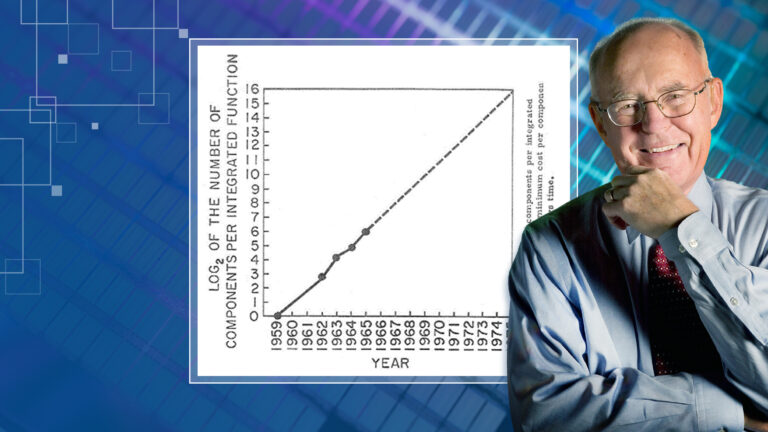
Image credit: Intel
Today, the company that defined Moore’s Law and powered the digital revolution finds itself in the throes of an existential crisis. By April 2025, Intel’s market capitalization had plummeted to approximately $90 billion, representing a staggering 82% decline from its peak and erasing over $413 billion in shareholder value (IndMoney, 2025). In the third quarter of 2024, Intel posted the largest quarterly loss in its 57-year history: $16.6 billion (ACM, 2024). The company has announced plans to eliminate over 24,000 jobs by the end of 2025, one of the most significant workforce reductions in technology industry history (Intellizence, 2025).
The symbolism is stark. In November 2024, Intel was removed from the Dow Jones Industrial Average and replaced by NVIDIA, a company whose market capitalization now exceeds $3 trillion, dwarfing Intel’s by more than thirtyfold (TechTarget, 2025). The torch had been passed, not merely from one semiconductor company to another, but from one era of computing to the next.
What happened to the company that invented the microprocessor, defined the x86 architecture, and rode the PC revolution to global dominance? How did the pioneer of Moore’s Law fall so far behind in the very industry it created? And can Intel mount a comeback, or has its moment passed irrevocably? This analysis examines Intel’s journey from Silicon Valley startup to global icon to struggling giant, identifying the strategic missteps, competitive threats, and potential paths forward for one of technology’s most storied companies.
II: The Making of a Giant – Intel’s History
Founding and Early Innovation (1968-1980)
Intel Corporation was founded on July 18, 1968, by Robert Noyce and Gordon Moore, two semiconductor pioneers who had previously co-founded Fairchild Semiconductor (Intel, 2024a). Noyce had co-invented the integrated circuit, while Moore had articulated what would become known as Moore’s Law, the observation that the number of transistors on an integrated circuit doubles approximately every two years. Together with investor Arthur Rock and joined shortly thereafter by Andy Grove, they created a company dedicated to continuous innovation.
The company’s name, a portmanteau of “integrated electronics,” reflected its ambitious vision. Intel initially focused on semiconductor memory, introducing the world’s first commercially available SRAM chip (the 3101) in 1969 and pioneering DRAM technology with the 1103 chip in 1970, which became the best-selling semiconductor memory chip by 1972 (Intel, 2024a).
In 1971, Intel made what would prove to be its most consequential contribution to computing: the invention of the commercial microprocessor. The Intel 4004, developed initially as a contract project for Japanese calculator company Busicom, became the world’s first commercially available microprocessor (Intel, 2024b). Though Intel did not immediately recognize the transformative potential of this invention, it had created the foundation for the personal computer revolution.
The IBM Partnership and Rise to Dominance (1981-1999)
The pivotal moment in Intel’s history came in 1981 when IBM selected Intel’s 8088 processor for its first personal computer (IEEE Spectrum, 2024). This decision, though not fully appreciated at the time, would shape the entire computing industry for decades to come. As Intel timeline documents note, the IBM PC “might have been the most important design win in Intel’s history” because IBM’s decision to allow other manufacturers to use the PC platform meant “countless PC manufacturers would turn to Intel for the processors” (Intel Timeline, 2024).
The 1980s saw Intel face a critical strategic challenge. Japanese manufacturers had begun dominating the DRAM memory market, threatening Intel’s core business. In what would become a legendary case study in strategic management, CEO Gordon Moore made the decision to exit the memory business entirely and focus on microprocessors. This painful pivot, documented extensively by Andy Grove, required Intel to lay off thousands of workers but ultimately positioned the company for unprecedented success (Science History Institute, 2025).
The partnership between Intel’s processors and Microsoft’s Windows operating system, commonly referred to as “Wintel,” became the dominant force in personal computing throughout the 1990s. By the end of that decade, Intel held a commanding 90% share of the PC microprocessor market (ACM, 2024). The company’s “Intel Inside” marketing campaign, launched in 1991, transformed Intel from a component supplier into a household brand, with Advertising Age calling it “the most effective coop advertising program in history” (Intel, 2024c).
Peak and Early Decline (2000-2020)
Intel reached the zenith of its power at the turn of the millennium. In 2000, with its $509 billion market capitalization, Intel was the world’s most valuable company. The Pentium brand had become synonymous with computing power, and Intel’s dominance seemed unassailable. Yet even at this peak, the seeds of decline were being planted.
The company’s first major strategic miss came in 2007 when Apple approached Intel to supply chips for the original iPhone. Then-CEO Paul Otellini declined, reportedly because he could not see the iPhone becoming a high-volume business and because Apple’s proposed price was below Intel’s cost projections. As Otellini later admitted in a 2013 interview, the forecasted cost was wrong and the volume was 100x what anyone thought (The Atlantic, 2013; AppleInsider, 2015). This single decision locked Intel out of the mobile revolution that would reshape computing.
Meanwhile, Intel’s manufacturing prowess, long its greatest competitive advantage, began to falter. The company’s transition to 10nm process technology, originally planned for 2016, suffered repeated delays and did not achieve high-volume production until years later. Intel’s CFO George Davis acknowledged in 2020 that 10nm “isn’t going to be the best node that Intel has ever had” and admitted the company had fallen behind competitors (NotebookCheck, 2020).
III: Intel Not Inside – A Reality Check
The slogan that once defined Intel’s dominance now serves as a stark reminder of its absence from the most important computing platforms of the modern era. A systematic examination of where Intel is not reveals the full scope of its strategic retreat.
Smartphones and Tablets
Intel is not inside the billions of smartphones that have become the primary computing device for most of humanity. After rejecting Apple’s iPhone opportunity and subsequently selling its XScale ARM chip business to Marvell for $600 million in 2006, Intel spent nearly a decade attempting to break into the mobile market with its Atom processors (Computerworld, 2016). The effort included massive subsidies to tablet manufacturers, with Intel shipping 46 million tablet chips in 2014 alone at significant losses. By 2016, Intel had abandoned its smartphone chip lines entirely, admitting defeat in a market it had chosen not to enter at its inception.
Apple’s Ecosystem
Intel is no longer inside Apple’s Mac computers. In 2020, Apple announced its transition from Intel processors to its own M-series silicon, ending a 15-year partnership that began in 2005. The M1 chip, introduced in November 2020, delivered performance and efficiency gains that Intel’s offerings could not match. As Apple’s Craig Federighi noted, the results exceeded even Apple’s expectations (Tom’s Guide, 2025). By June 2023, Apple had completed its transition, discontinuing the final Intel-based Mac, and as of 2026, macOS will fully drop support for Intel-based systems (SimplyMac, 2025).
Artificial Intelligence Infrastructure
Intel is largely absent from the AI revolution. NVIDIA dominates the AI accelerator market with an estimated 70-95% market share, generating over $51 billion in quarterly data center revenue with gross margins of 73.6% (Klover.ai, 2025). Intel’s Habana Gaudi processors have failed to gain significant traction; Bank of America analysts estimated Intel would have less than 1% of the AI chip market in 2024 (CNBC, 2024). Intel’s $500 million Gaudi revenue target was publicly abandoned in late 2024 (TechTarget, 2025).
Gaming Consoles
Intel is not inside either the PlayStation 5 or Xbox Series X/S. Both Sony and Microsoft chose AMD’s custom APUs combining Zen CPU cores with RDNA graphics architecture for their current-generation consoles. According to industry analysis, when console makers evaluated their options, ARM and x86 from AMD were the leading contenders, with Intel’s offerings not seriously considered due to historical reluctance to accept console margins and cede design control (Moor Insights & Strategy, 2023).
Cloud Custom Silicon
Intel faces growing competition from hyperscalers designing their own chips. Amazon’s Graviton processors power a significant portion of AWS workloads. Google’s custom TPUs have trained models that won Nobel Prizes. Microsoft is developing its own Maia AI accelerators and Cobalt ARM-based CPUs. Meta is designing custom AI chips for its data centers. These efforts, while not yet displacing Intel entirely from data centers, represent a fundamental shift in the industry structure that threatens Intel’s traditional server CPU stronghold.
IV: Emerging Players and Market Rivalries

AMD’s Resurgence
Advanced Micro Devices (AMD), Intel’s perpetual underdog rival, has staged one of the most remarkable comebacks in technology history. The launch of AMD’s Zen architecture in 2017 marked a turning point. For the first time in over a decade, AMD offered processors with competitive performance at compelling prices. The Ryzen lineup gained 10.4% market share in Q2 2017 alone, the largest single-quarter gain in the company’s history (WCCFTech, 2017).
AMD’s strategic decision to partner with TSMC for manufacturing proved prescient. While Intel struggled with its 10nm process, AMD leapfrogged to TSMC’s 7nm and then 5nm nodes, delivering chips with superior performance per watt. By January 2021, AMD had overtaken Intel in desktop CPU market share for the first time in 15 years (TechRadar, 2021). In the critical server market, AMD’s EPYC processors gained traction with major cloud providers, with the company now commanding approximately 28% of the desktop CPU market (Thinglabs, 2024).
NVIDIA’s AI Dominance
NVIDIA has emerged as arguably the most important company in computing, driven by its dominance in AI infrastructure. The company’s GPUs, optimized for the parallel processing demands of machine learning, power the vast majority of AI training and inference workloads. In 2023, the overall data-center AI chip market was $17.7 billion, with NVIDIA accounting for 65% market share. Intel was second with 22%, but this figure includes traditional CPUs, not discrete AI accelerators (TechInsights, 2024).
NVIDIA’s moat extends beyond hardware to its CUDA software ecosystem, built over nearly 20 years with over 4 million developers and 3,000+ optimized applications (Klover.ai, 2025). This software advantage creates significant switching costs and has made NVIDIA the default choice for AI development. When Intel was removed from the Dow Jones Industrial Average in November 2024, NVIDIA took its place, symbolizing the broader shift in industry leadership.
TSMC’s Manufacturing Supremacy
Taiwan Semiconductor Manufacturing Company (TSMC) has become the world’s indispensable chipmaker. By Q3 2025, TSMC commanded approximately 71% of the global semiconductor foundry market by revenue, with Samsung a distant second at under 8% (TrendForce, 2025; WCCFTech, 2025). TSMC manufactures chips for virtually every major technology company: Apple, NVIDIA, AMD, Qualcomm, and increasingly even Intel itself.
TSMC’s technological leadership is equally commanding. The company is mass-producing chips at 3nm and is preparing 2nm production for 2025, with pricing reportedly at $30,000 per wafer or higher for 2nm (Counterpoint Research, 2025). Intel’s equivalent nodes lag by approximately one to two years, a reversal from the era when Intel led the industry in manufacturing technology.
The ARM Architecture Revolution
ARM Holdings’ architecture, once confined to mobile devices, now threatens Intel’s position across computing. Apple’s successful transition of its Mac lineup to ARM-based M-series chips demonstrated that ARM could deliver superior performance per watt even for high-performance computing tasks. Qualcomm’s Snapdragon X Elite processors are bringing ARM to Windows laptops, while Amazon’s Graviton processors are gaining traction in cloud computing. The x86 architecture that Intel pioneered and dominated is no longer the unquestioned standard for general-purpose computing.
V: Strategic Missteps – Not Reading the Market
Intel’s decline cannot be attributed to a single decision but rather to a pattern of strategic missteps rooted in institutional culture and complacency. These failures share common themes: an inability to anticipate market shifts, reluctance to cannibalize existing businesses, and overconfidence in manufacturing superiority.
Missing the Mobile Revolution
The decision to pass on the iPhone remains Intel’s most costly strategic error. Paul Otellini’s admission that he relied on data projections rather than instinct, and that those projections were catastrophically wrong about both costs and volumes, illustrates a fundamental failure of strategic vision. But the mobile failure was not a single moment; it was a series of choices. Intel sold its XScale ARM business in 2006, attempted to enter mobile with power-hungry x86 Atom chips, subsidized billions of dollars in tablet shipments, and ultimately abandoned mobile entirely in 2016.
Manufacturing Hubris and the 10nm Debacle
Intel’s manufacturing delays represent a failure of execution compounded by overambition. The company set aggressive density targets for its 10nm process that proved unachievable. As semiconductor analysts noted, Intel tried to improve too much at once while competitors took more incremental approaches (abachy.com, 2021). The use of cobalt interconnects and aggressive multi-patterning with 193nm lithography equipment created yield problems that took years to resolve. Meanwhile, TSMC and Samsung moved to EUV lithography and achieved volume production at comparable nodes while Intel was still debugging 10nm.
The 7nm delay announcement in July 2020, revealing that Intel’s next-generation process was an additional 12 months behind internal targets, shattered any remaining confidence in Intel’s manufacturing roadmap. This delay directly enabled AMD’s competitive resurgence, as AMD could offer chips manufactured on more advanced TSMC processes while Intel was stuck on variations of 14nm.
The AI Blindspot
Intel failed to anticipate the AI revolution despite having multiple opportunities to position itself. The company acquired Nervana Systems in 2016 for $408 million only to discontinue its technology in 2020. The $2 billion acquisition of Habana Labs in 2019 produced the Gaudi processors that have failed to gain significant market share against NVIDIA. Intel’s approach to AI has been characterized by conflicting strategies and insufficient commitment. As one analysis noted, Intel never fully committed to any of its AI initiatives while competitors like NVIDIA built dominant positions (Klover.ai, 2025).
Acquisition Missteps
Intel’s acquisition strategy has been marked by expensive failures. The $7.7 billion McAfee acquisition in 2010 never achieved meaningful integration with Intel’s core business and was spun out in 2016. The $15 billion Mobileye acquisition in 2017, while still operating, has not delivered the anticipated transformation of Intel’s business. The failed Tower Semiconductor acquisition, blocked on regulatory grounds, represented an attempt to gain foundry capabilities that Intel now desperately needs.
Cultural and Organizational Factors
Underlying these specific failures are deeper organizational issues. Intel’s Technology Development organization, responsible for process innovation, operated with a culture optimized for internal product development rather than foundry customer service. As analysis of Intel’s IDM 2.0 failure noted, the incentive structure for technology development teams inside an IDM is not conducive to customer service, a core muscle that TSMC had to develop to exist (Happy Future, 2024). When Intel attempted to become a foundry, it lacked the organizational DNA to serve external customers effectively.
VI: The Comeback Narrative
Despite its challenges, Intel is not without resources, strategies, and potential paths forward. The question is whether these are sufficient to reverse a decade of decline.
Image Credit: Intel
IDM 2.0 and the Foundry Strategy
Pat Gelsinger’s IDM 2.0 strategy, announced in 2021, represented Intel’s most ambitious transformation attempt. The plan called for Intel to maintain its integrated device manufacturing model while also becoming a major foundry for external customers. Intel committed to “five nodes in four years,” an aggressive roadmap to regain process leadership (Intel, 2021).
Progress has been made. Intel 7 entered production, and Intel 4 and Intel 3 have followed. The 18A process, roughly equivalent to TSMC’s 2nm, entered production in late 2025. Intel has secured foundry commitments from Microsoft and Amazon, and reports suggest potential business from Apple and NVIDIA (FinancialContent, 2025). However, yields and customer satisfaction remain closely guarded secrets, and the foundry business continues to lose money.
Government Support and Strategic Importance
The CHIPS and Science Act of 2022 provided Intel with unprecedented government support. Intel has been awarded up to $8.5 billion in direct funding, is eligible for a 25% investment tax credit on over $100 billion in investments, and can access up to $11 billion in federal loans. Additionally, Intel secured a $3 billion contract for a Secure Enclave program to ensure protected chip supply for the U.S. government (FinancialContent, 2025).
This government support reflects Intel’s strategic importance to U.S. national security. With TSMC manufacturing over 90% of the world’s most advanced chips and geopolitical tensions around Taiwan creating supply chain vulnerabilities, the U.S. government has a vested interest in Intel’s survival. In 2025, the U.S. government took an equity stake in Intel, making it partially government-owned, an unprecedented development for a major American technology company.
Leadership Transition

Image Credit: Intel
Pat Gelsinger’s departure in December 2024, reportedly forced by the board after continued poor financial performance, threw Intel’s transformation into uncertainty. Lip-Bu Tan, the new CEO as of early 2025, has signaled a focus on engineering excellence and cost discipline. His memo stating “there are no more blank checks” and that “every investment must make economic sense” represents a shift from Gelsinger’s aggressive investment approach (Fortune, 2025). Tan announced additional workforce reductions of up to 20%, bringing total layoffs to approximately 24,000-25,000 positions.
Remaining Competitive Advantages
Intel retains significant assets. It remains the dominant supplier of PC processors, with over 70% market share in laptops. Its data center CPU business, while under pressure from AMD, still generates substantial revenue. Intel’s x86 architecture benefits from an enormous installed base of software. The company’s global manufacturing footprint, once liability due to its cost structure, becomes an asset in an era of supply chain concerns. Intel is the only major semiconductor manufacturer with advanced fabrication facilities in the United States.
The Path Forward: Challenges and Uncertainties
Intel’s comeback faces formidable obstacles. The foundry business requires not just manufacturing excellence but a customer-service culture Intel has never possessed. Competing with NVIDIA in AI requires software ecosystem development that will take years to achieve. AMD shows no signs of slowing its competitive pressure. Apple and other former customers are not returning to Intel chips. The company must execute flawlessly on its process roadmap while managing massive capital expenditures and workforce disruption.
The most optimistic scenario sees Intel successfully ramping 18A production with competitive yields, winning significant foundry business, maintaining its PC and server positions, and eventually achieving profitability in its foundry operations. The pessimistic scenario sees continued execution failures, customer defections, and eventual separation of Intel into distinct design and manufacturing companies, with the foundry potentially requiring additional government support to survive.
Conclusion
Intel’s identity crisis is, at its core, a story about the perils of market dominance. The very success that made Intel the world’s most valuable company in 2000 created the conditions for its decline. Dominant market positions bred complacency. Manufacturing excellence became manufacturing hubris. Customer captivity became customer irrelevance as new computing paradigms emerged. The company that defined Moore’s Law became its victim, unable to sustain the exponential pace of improvement it had prophesied.
The contrast between “Intel Inside” and “Intel Not Inside” captures the magnitude of the company’s strategic retreat. Intel is not inside the smartphones that billions of people use daily. It is not inside the Macs that creative professionals prefer. It is not inside the gaming consoles that define interactive entertainment. It is largely absent from the AI infrastructure powering the next computing revolution. The company that once powered the future of computing is now racing to remain relevant to it.
Yet Intel’s story is not yet concluded. The company retains enormous resources, critical strategic importance, and a legacy of innovation that, while diminished, has not been extinguished. The CHIPS Act funding, government equity stake, and national security considerations ensure that Intel will not be allowed to fail completely. The question is not survival but relevance: whether Intel can transform itself from a declining incumbent into a competitive force in the semiconductor industry it once dominated.
The next two to three years will be decisive. Intel must demonstrate that its 18A process is competitive with TSMC’s 2nm. It must win significant foundry customers and prove it can serve them effectively. It must maintain its position in PCs and servers while AMD presses its advantage. It must find a path to relevance in AI that has so far eluded it. These are not impossible tasks, but they require execution excellence that Intel has struggled to demonstrate.
Intel’s crisis holds lessons for all dominant companies. Market leadership is not permanent. Technological excellence in one era does not guarantee success in the next. The greatest threat to an incumbent is often not a direct competitor but a paradigm shift that renders existing advantages irrelevant. Intel missed mobile, stumbled in manufacturing, and was caught flat-footed by AI. Each miss compounded the last, and now the company faces the accumulated consequences of two decades of strategic errors.
Whether Intel’s next chapter is one of renaissance or requiem remains to be written. What is clear is that the company that defined the semiconductor age must now reinvent itself for an era it did not anticipate and may not be equipped to lead. The sticker may still say “Intel Inside,” but the question the company must answer is: inside what, and for whom?
References
- AppleInsider. (2015, January 19). How Intel lost the mobile chip business to Apple’s Ax ARM Application Processors. https://appleinsider.com/articles/15/01/19/how-intel-lost-the-mobile-chip-business-to-apples-ax-arm-application-processors
- Berkeley Economic Review. (n.d.). Intel and AMD market competition. https://econreview.studentorg.berkeley.edu/intel-and-amd-market-competition/
- CNBC. (2024, June 2). Nvidia dominates the AI chip market, but there’s more competition than ever. https://www.cnbc.com/2024/06/02/nvidia-dominates-the-ai-chip-market-but-theres-rising-competition-.html
- CNN Business. (2024, August 1). Intel lays off 15% of its staff and its stock tumbles as it struggles to turn around its ailing business. https://edition.cnn.com/2024/08/01/business/intel-layoffs-chips
- Communications of the ACM. (2024, December 20). Intel’s fall from grace. https://cacm.acm.org/opinion/intels-fall-from-grace/
- Computerworld. (2016, May 4). How Intel knocked itself out of the smartphone chip market. https://www.computerworld.com/article/1660326/how-intel-knocked-itself-out-of-the-smartphone-chip-market-2.html
- Fast Company. (2025, April 25). Intel layoffs 2025: CEO confirms job cuts, INTC stock price sinks. https://www.fastcompany.com/91323426/intel-layoffs-2025-ceo-confirms-job-cuts-intc-stock-price-sinks
- FinancialContent. (2025, October 4). The global chip war: Nations pour billions into domestic semiconductor manufacturing to secure AI’s future. https://markets.financialcontent.com/
- Fortune. (2025, July 25). Intel plans to slash 25,000 jobs in 2025 as new CEO warns, ‘There are no more blank checks.’ https://fortune.com/2025/07/25/intel-layoffs-ceo-staff-memo-stock-price/
- IEEE Spectrum. (2024, August 16). Chip Hall of Fame: Intel 8088 Microprocessor. https://spectrum.ieee.org/chip-hall-of-fame-intel-8088-microprocessor
- IndMoney. (2025, April 24). Intel layoffs: Chipmaker to cut 20% workforce. https://www.indmoney.com/blog/us-stocks/intel-layoffs-2025
- Intel. (2021, March 23). Intel CEO Pat Gelsinger announces ‘IDM 2.0’ strategy for manufacturing innovation and product leadership. https://www.intc.com/news-events/press-releases/detail/1451/intel-ceo-pat-gelsinger-announces-idm-2-0-strategy
- Intel. (2024a). Intel’s founding. https://www.intel.com/content/www/us/en/history/virtual-vault/articles/intels-founding.html
- Intel. (2024b). Moore’s Law. https://www.intel.com/content/www/us/en/history/virtual-vault/articles/moores-law.html
- Intel. (2024c). Ingredient branding: Intel Inside. https://www.intel.com/content/www/us/en/history/virtual-vault/articles/end-user-marketing-intel-inside.html
- Intel Timeline. (2024). The IBM deal. https://timeline.intel.com/1981/the-ibm-deal
- Intellizence. (2025). Top companies that announced major layoffs & hiring freezes – 2025-26. https://intellizence.com/insights/layoff-downsizing/major-companies-that-announced-mass-layoffs/
- Klover.ai. (2025, July 25). NVIDIA AI strategy: Analysis of sustained dominance in AI. https://www.klover.ai/nvidia-ai-strategy-analysis-sustained-dominance-ai/
- Moor Insights & Strategy. (2023, December 18). The real reasons Microsoft, Sony chose AMD for the Xbox One and PS4. https://moorinsightsstrategy.com/the-real-reasons-microsoft-sony-chose-amd-for-the-xbox-one-and-ps4/
- NotebookCheck. (2020, March 8). Intel admits that the 10nm process is doing poorly. https://www.notebookcheck.net/Intel-admits-that-the-10nm-process-is-doing-poorly.456063.0.html
- PatentPC. (2025). TSMC, Samsung, and Intel: Who’s leading the semiconductor race? https://patentpc.com/blog/tsmc-samsung-and-intel-whos-leading-the-semiconductor-race-latest-market-share-data
- Science History Institute. (2025, July 15). Gordon E. Moore. https://www.sciencehistory.org/education/scientific-biographies/gordon-e-moore/
- SimplyMac. (2025, June 18). Apple is dropping Intel Mac support — Here’s everything you need to know. https://www.simplymac.com/mac/how-to-run-intel-apps-on-m1-mac
- TechInsights. (2024). Data-center AI chip market – Q1 2024 update. https://www.techinsights.com/blog/data-center-ai-chip-market-q1-2024-update
- TechRadar. (2021, January 5). AMD overtakes Intel in desktop CPU market share for the first time in 15 years. https://www.techradar.com/news/amd-overtakes-intel-in-desktop-cpu-market-share-for-the-first-time-in-15-years
- TechTarget. (2025). Intel’s rise and fall: A timeline of what went wrong. https://www.techtarget.com/WhatIs/feature/Intels-rise-and-fall-A-timeline-of-what-went-wrong
- The HR Digest. (2025, July 25). Intel layoffs in 2025: A cultural overhaul or a risky reset? https://www.thehrdigest.com/intel-layoffs-in-2025-a-cultural-overhaul-or-a-risky-reset/
- Thinglabs. (2024, November 16). AMD’s CPU market share jumps 10% in a year: Intel faces significant loss. https://thinglabs.io/amd-desktop-cpu-market-share
- Tom’s Guide. (2025, December 24). Apple’s M-series chip 5 years later: How ditching Intel revolutionized computing — and what’s next. https://www.tomsguide.com/computing/cpus/apples-m-series-chip-gamble-5-years-later-how-ditching-intel-revolutionized-computing-and-whats-next
- TSPA Semiconductor. (2025, February 14). The ever-shifting relationship between TSMC and Intel: A history of competition and cooperation. https://tspasemiconductor.substack.com/p/the-ever-shifting-relationship-between
- WCCFTech. (2017, July 4). AMD takes 10.4% CPU share from Intel in Q2 2017 in Passmark survey, its largest quarterly share gain in history. https://wccftech.com/amd-takes-10-4-cpu-share-intel-q2-2017-largest-single-quarter-share-gain-history/
- WCCFTech. (2025, October 10). TSMC dominates global foundry market with a ‘jaw-dropping’ 71% share. https://wccftech.com/tsmc-dominates-global-foundry-market-with-a-jaw-dropping-share/
