Abstract
This explores the cyclical nature of technological disruption within the ride-hailing industry, using the transition from the taxi medallion system to the gig economy, and subsequently to autonomous vehicle (AV) networks, as a case study. Framing the analysis through the cultural metaphor of the 1979 song “Video Killed the Radio Star,” this research examines how Uber, once the disruptor of the traditional taxi industry (Schumpeterian “Creative Destruction”), now faces the “Innovator’s Dilemma.” The rise of Robotaxis led by Waymo, Tesla, and Zoox threatens to render Uber’s human-centric supply chain obsolete. It argues that for Uber to survive, it must cannibalize its own workforce, effectively making the human driver the “Radio Star” of the 21st century.
Credit: Kenny Le
Introduction: A Familiar Song in an Unfamiliar Car
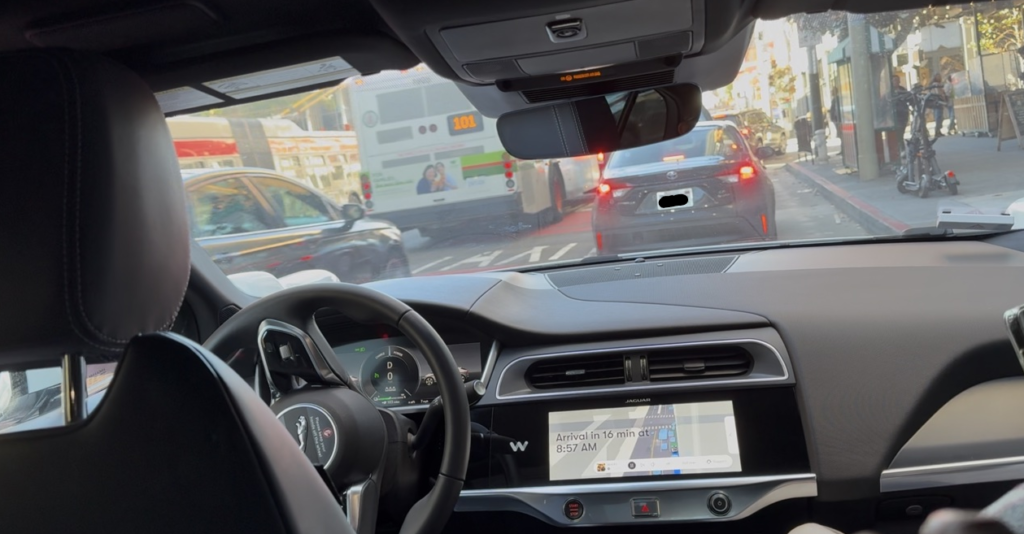
“We hear the playback and it seems so long ago / And you remember the jingles used to go / Oh-a oh / Video killed the radio star.” These lyrics from The Buggles’ 1979 hit “Video Killed the Radio Star” echoed through my Waymo robotaxi as it glided smoothly through San Francisco’s bustling streets in late 2025. The ride was eerily quiet, no small talk with a driver, just seamless navigation powered by AI sensors and algorithms. Feeling safe and comfortable, I couldn’t help but reflect on the song’s prescient theme: technological progress that renders the old obsolete.
Trevor Horn, co-founder of The Buggles, described the inspiration behind the song as emerging from an awareness that “technology was on the verge of changing everything” (Ultimate Classic Rock, 2021). The song captured a pivotal cultural moment when music television was poised to fundamentally alter how artists connected with audiences. When MTV selected this track as its inaugural broadcast on August 1, 1981, it made a prophetic statement about technological disruption that resonates across industries and decades (American Songwriter, 2023).
The ride-sharing industry is experiencing its own “video killed the radio star” moment. The traditional taxi industry, which had remained largely unchanged since the mid-twentieth century, was upended by Uber’s digital platform in the early 2010s. Now, Uber itself faces a similar existential challenge from robotaxi technology. The company built its empire on a network of human drivers using personal vehicles, the very foundation that autonomous vehicles threaten to render obsolete.
The First Disruption: How Uber Killed the Taxi Star
To understand the future, one must analyze the recent past. In the early 21st century, the taxi industry was a classic example of an oligopoly protected by high barriers to entry, specifically the medallion system. In New York City, a single taxi medallion peaked in value at over $1 million in 2013 (Perry, 2015). Research from the National Bureau of Economic Research characterized the traditional taxi industry as “highly regulated and utilizing technology developed in the 1940s” (Cramer & Krueger, 2016). Customers hailed cabs through arm-waving on busy streets, had limited visibility into pricing, and experienced service quality that varied dramatically.
Uber’s innovation paralleled MTV’s transformation of music consumption. As Harvard Business School’s digital innovation analysis observed, “Uber’s unique innovation to create an app in which supply and demand of transportation services could be met through a digital platform embodies how a traditional industry can be disrupted from day to night” (Harvard Digital Innovation, 2020). Uber entered this market not with better cars, but with a superior economic model. By leveraging personal vehicles and treating drivers as independent contractors, Uber engaged in what economists call “regulatory arbitrage.” They bypassed the fixed costs of fleet ownership and the artificial scarcity of medallions. This was a textbook case of Joseph Schumpeter’s “Creative Destruction,” where a new innovation ruthlessly dismantles the old order from within (Perry, 2015).
The impact on incumbent taxi operators was severe. Academic research documented that “taxi drivers experienced a relative earnings decline of about 10 percent subsequent to Uber’s entry into a new market” (Kim et al., 2022). Medallion values in major cities collapsed. In New York City, medallions that had sold for over one million dollars became worth a fraction of that amount. The taxi industry, like radio stars facing MTV, found itself unable to compete with a technologically superior challenger.
Former Uber CEO Travis Kalanick captured the disruptive ethos, acknowledging that “we were going up against entrenched interests, regulations, and a status quo that hadn’t changed in decades” (Bold Narratives, 2024). The company achieved a 75% market share within the U.S. ride-share industry and expanded to over 80 countries worldwide. Uber had become the “video” that killed the taxi industry’s “radio star.”
The Second Disruption: Robotaxis as the New Video
History is repeating itself, but the economic variables have shifted. The “New Video” is the autonomous vehicle (Robotaxi). The primary constraint of the current ride-hailing model is the cost of the human driver, which accounts for approximately 70-80% of the gross fare paid by the rider (Ark Invest, 2020).
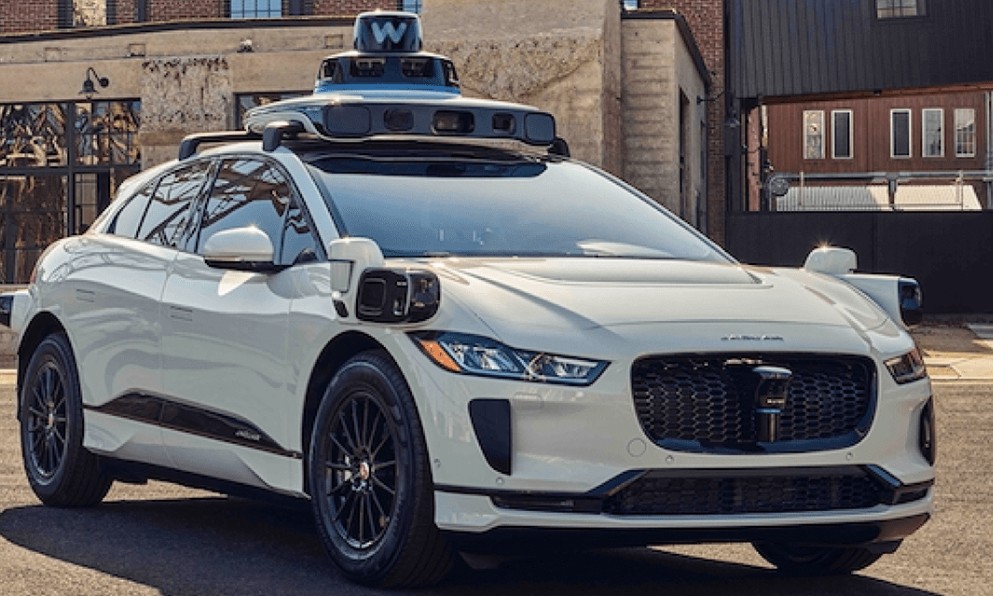
The robotaxi industry has reached an inflection point. Waymo, the Alphabet-owned autonomous vehicle company that traces its origins to Google’s self-driving car project launched in 2009, now operates over 450,000 rides per week across Phoenix, San Francisco, Los Angeles, Atlanta, and Austin (Wikipedia, 2025). The company completed more than 14 million trips in 2025, tripling its previous year’s total (eWeek, 2025). Waymo’s revenue projections suggest growth from $125 million in 2024 to over $1.3 billion by 2027 (EE Times, 2025).
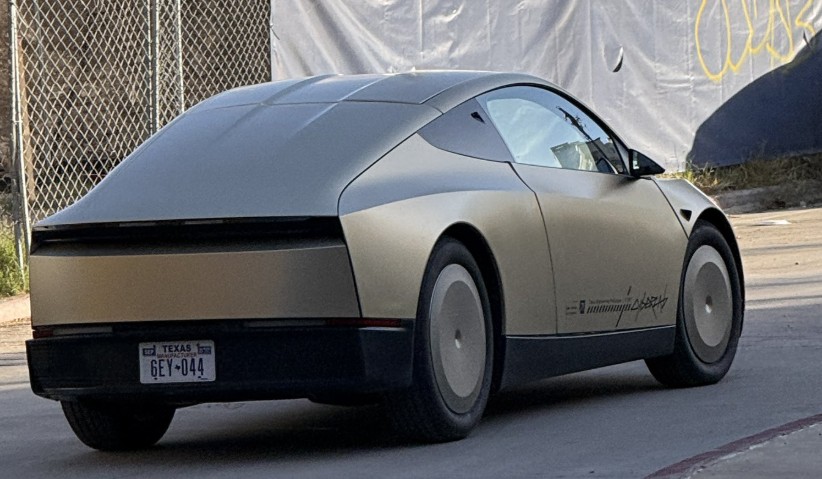
The competitive landscape is intensifying. Tesla unveiled its Cybercab robotaxi concept in October 2024, with CEO Elon Musk announcing production would begin in April 2026 (TechCrunch, 2025). The purpose-built vehicle eliminates steering wheels and pedals entirely, representing Tesla’s bet on a fully autonomous future. Tesla launched a limited robotaxi service in Austin in June 2025 using Model Y vehicles equipped with unsupervised Full Self-Driving software (TechXplore, 2025).
Amazon’s Zoox represents yet another well-funded competitor. The company, acquired by Amazon for $1.3 billion in 2020, launched public robotaxi service in Las Vegas in September 2025 (CNBC, 2025). Unlike competitors who retrofit existing vehicles, Zoox builds purpose-designed robotaxis from the ground up, bidirectional pods without steering wheels or pedals featuring carriage-style seating for four passengers. The company’s new manufacturing facility in Hayward, California can produce up to 10,000 robotaxis annually (Bloomberg, 2025).
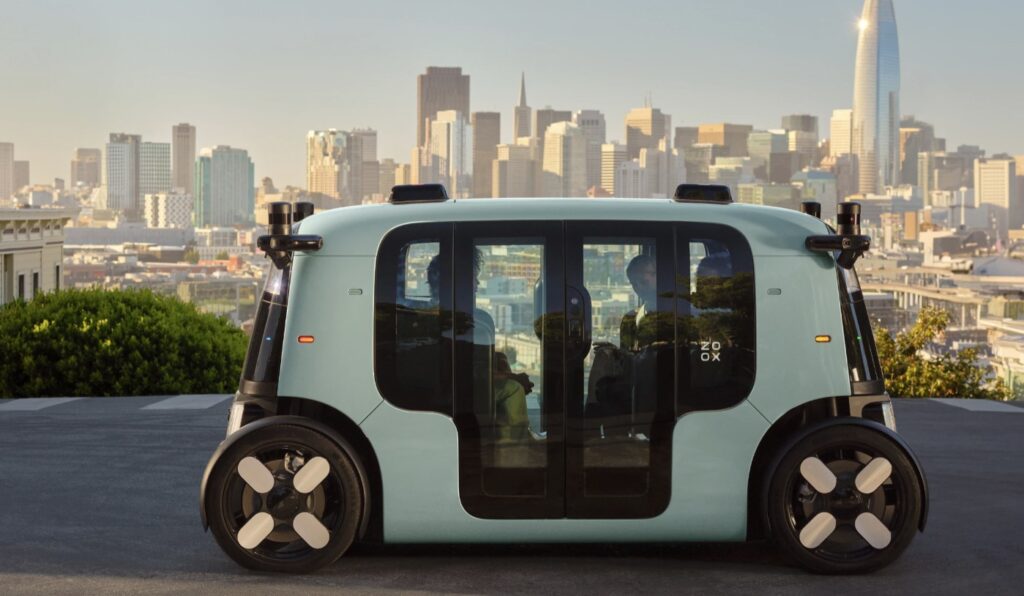
The irony of Uber’s position in 2025 is unmistakable. The company that disrupted an entrenched transportation paradigm now finds itself as the incumbent facing technological obsolescence. Uber’s business model depends fundamentally on human drivers using personal vehicles, in the first quarter of 2025 alone, the company paid out $18.6 billion to drivers (Carbon Credits, 2025). This labor cost represents both Uber’s primary competitive limitation and its greatest vulnerability to autonomous vehicle technology.
Uber’s Strategic Paradox
Uber’s response to the robotaxi threat reveals a profound strategic paradox. The company has aggressively pursued partnerships with autonomous vehicle developers, expanding collaborations from 18 to 20 AV partnerships in recent months and announcing a $300 million investment targeting deployment of more than 20,000 autonomous vehicles by 2032 (Carbon Credits, 2025). The Uber-Waymo partnership, expanded in September 2024, now brings robotaxi service to Austin and Atlanta through the Uber app, with Uber handling fleet management while Waymo operates the autonomous technology (Uber Investor Relations, 2024).
The results have been striking. During Uber’s second-quarter 2025 earnings call, CEO Dara Khosrowshahi revealed that Waymo robotaxis operating on the platform in Austin and Atlanta were more productive than 99% of Uber’s human drivers, completing more daily trips on average (Carbon Credits, 2025). Khosrowshahi acknowledged the partnership had “exceeded expectations,” with plans to scale from approximately 100 robotaxis to several hundred in coming quarters.
Herein lies the oxymoron at the heart of Uber’s strategy. If autonomous vehicle technology succeeds, and the company is investing heavily to ensure it does, Uber effectively eliminates the need for the driver network that enabled its meteoric rise. The same drivers who protested taxi regulations alongside Uber, who provided the flexible labor supply that differentiated Uber from traditional taxi companies, would find themselves rendered obsolete by technology Uber helped deploy.
Uber’s strategic bet appears to be positioning itself as the platform layer, the “app that hails the robot” rather than dying with its driver model. As industry analysts at Counterpoint Research observed, “as technology costs come down, robotaxis will gain a significant cost advantage. This will be the point when Uber and Waymo’s ambitions will converge” (Counterpoint Research, 2025). The question is whether Uber can successfully transition from coordinating human labor to managing autonomous fleets before being displaced by competitors who built autonomous capability from the ground up.
Conclusion
The metaphor of “video killed the radio star” captures something essential about technological disruption: the new medium does not merely compete with the old, it fundamentally restructures the basis of competition. MTV did not simply offer an alternative to radio; it redefined what success meant for musical artists. Uber did not simply compete with taxis; it redefined what customers expected from urban transportation. Now robotaxis threaten to redefine transportation once again, eliminating the human driver from the equation entirely.
Uber’s strategic position is precarious precisely because the company recognizes this dynamic. Its aggressive pursuit of autonomous vehicle partnerships represents an acknowledgment that the driver-based model faces obsolescence. Yet this same pursuit accelerates the very disruption that threatens Uber’s workforce foundation. The company that told taxi drivers “adapt or die” now faces its own adaptation imperative.
Whether Uber successfully navigates this transition or becomes another “radio star” displaced by technological change remains uncertain. What seems clear is that the pattern identified in The Buggles’ prophetic song continues to repeat across industries and decades. Technology creates winners and losers, incumbents become challengers, and yesterday’s disruptors become tomorrow’s disrupted.
References
American Songwriter. (2023, September 1). Remember when: MTV debuts with “Video Killed the Radio Star.” https://americansongwriter.com/video-killed-the-radio-star-mtv-the-buggles/
Ark Invest. (2020, February 19). Autonomous ridehailing could be more profitable than we had modeled. Ark Invest. https://www.ark-invest.com/articles/analyst-research/autonomous-ridehailing-fees
Bloomberg. (2025, June 18). Amazon-owned Zoox opens robotaxi production site in California. https://www.bloomberg.com/news/articles/2025-06-18/amazon-owned-zoox-opens-robotaxi-production-site-in-california
Bold Narratives. (2024). Redefining the category: How Uber disrupted a market and redefined transportation. https://www.boldnarratives.com/blogs/how-uber-disrupted-a-market-and-redefined-transportation
The Buggles. (1979). Video killed the radio star [Song]. On The age of plastic. Island Records.
Carbon Credits. (2025, August 20). Waymo’s sixth-gen robotaxis outperform Uber drivers and expand into Philadelphia. https://carboncredits.com/waymos-sixth-gen-robotaxis-outperform-uber-drivers-and-expand-into-philadelphia/
Carbon Credits. (2025, November). Waymo hits 2,500 robotaxis in US, shaping the future of driverless rides. https://carboncredits.com/waymo-hits-2500-robotaxi-in-u-s-the-future-of-driverless-rides/
CNBC. (2024, December 5). Waymo announces robotaxi expansion to Miami. https://www.cnbc.com/2024/12/05/waymo-announces-robotaxi-expansion-to-miami.html
CNBC. (2025, January 17). Why 2025 is set to be a crucial year for Amazon’s Zoox robotaxi unit. https://www.cnbc.com/2025/01/17/amazon-zoox-plans-commercial-expansion.html
CNBC. (2025, September 10). Amazon’s Zoox jumps into U.S. robotaxi race with Las Vegas launch. https://www.cnbc.com/2025/09/10/amazons-zoox-jumps-into-us-robotaxi-race-with-las-vegas-launch-
Collider. (2025, August 11). MTV’s first broadcast 44 years ago proved “Video Killed the Radio Star.” https://collider.com/mtv-first-broadcast-was-44-years-ago-has-video-killed-the-radio-star/
Counterpoint Research. (2025). Waymo and Uber – Will courtship lead to marriage? https://www.counterpointresearch.com/insight/waymo-and-uber-will-courtship-lead-to-marriage
Cramer, J., & Krueger, A. B. (2016). Disruptive change in the taxi business: The case of Uber. American Economic Review, 106(5), 177-182. https://www.nber.org/papers/w22083
EE Times. (2025, July 3). Waymo’s robotaxi program: Progress and potential. https://www.eetimes.com/waymos-robotaxi-program-progress-and-potential/
Electrek. (2024, October 25). Waymo secures $5.6 billion in new funding before expanding robotaxis to new cities in 2025. https://electrek.co/2024/10/25/waymo-secures-5-6-billion-funding-expanding-robotaxis-new-cities-2025/
eWeek. (2025, December 12). Waymo accelerates: 14M trips, 20 new cities, and a widening lead. https://www.eweek.com/news/waymo-14m-trips-2025/
Fortune. (2025, December 8). Amazon robotaxi service Zoox to start charging for rides in 2026. https://fortune.com/2025/12/08/amazon-robotaxi-service-zoox-plans-fees-vegas-san-francisco/
Grand View Research. (2025, June 12). Robotaxi market size and share | Industry report, 2030. https://www.grandviewresearch.com/industry-analysis/robotaxi-market-report
Harvard Business School. (1997). The innovator’s dilemma: When new technologies cause great firms to fail. https://www.hbs.edu/faculty/Pages/item.aspx?num=46
Harvard Digital Innovation and Transformation. (2020, April 1). Uber vs. Taxi. https://d3.harvard.edu/platform-digit/submission/uber-vs-taxi/
Kim, S., Chintagunta, P. K., & Li, J. (2022). Disruption on the streets: A case study on the impact of Uber’s entry on the taxi business. SSRN Electronic Journal. https://papers.ssrn.com/sol3/papers.cfm?abstract_id=4051063
Motor1. (2025, January 30). Tesla announces robotaxi service for June 2025. https://www.motor1.com/news/749053/tesla-cybercab-service-announcement-2025/
NBC News. (2025, January 17). Why 2025 is set to be a crucial year for Amazon’s Zoox robotaxi unit. https://www.nbcnews.com/business/autos/2025-set-crucial-year-amazons-zoox-robotaxi-unit-rcna188206
Newswise. (2011, June 21). Music experts share how MTV killed the radio star and changed culture forever. https://www.newswise.com/articles/music-experts-share-how-mtv-killed-the-radio-star-and-changed-culture-forever-30-years-after-launch
Perry, M. J. (2015, September 2). Schumpeterian creative destruction — the rise of Uber and the great taxicab collapse. American Enterprise Institute. https://www.aei.org/carpe-diem/schumpeterian-creative-destruction-the-rise-of-uber-and-the-great-taxicab-collapose/
TechCrunch. (2024, September 13). Waymo robotaxis to become available on Uber in Austin, Atlanta in early 2025. https://techcrunch.com/2024/09/13/waymo-robotaxis-will-be-on-the-uber-app-in-austin-atlanta-in-early-2025/
TechCrunch. (2025, November 3). Waymo’s robotaxi expansion accelerates with 3 new cities. https://techcrunch.com/2025/11/03/waymos-robotaxi-expansion-accelerates-with-3-new-cities/
TechCrunch. (2025, November 6). Tesla to begin Cybercab production in April, Musk claims. https://techcrunch.com/2025/11/06/tesla-to-begin-cybercab-production-in-april-musk-claims/
TechCrunch. (2025, December 8). Investor letter reveals skyrocketing growth of Waymo’s robotaxi rides. https://techcrunch.com/2025/12/08/investor-letter-reveals-skyrocketing-growth-of-waymos-robotaxi-rides/
TechXplore. (2025, June 23). Tesla launches long-discussed robotaxi service. https://techxplore.com/news/2025-06-tesla-discussed-robotaxi.html
Uber Investor Relations. (2025, March 4). Ride into the future with Waymo on Uber in Austin. https://investor.uber.com/news-events/news/press-release-details/2025/Ride-Into-the-Future-With-Waymo-on-Uber-in-Austin/default.aspx
Uber Technologies, Inc. (2024, September 13). Uber and Waymo expand partnership to bring autonomous ride-hailing to Austin and Atlanta. https://investor.uber.com/news-events/news/press-release-details/2024/Uber-and-Waymo-Expand-Partnership-to-Bring-Autonomous-Ride-Hailing-to-Austin-and-Atlanta/default.aspx
Ultimate Classic Rock. (2021, August 2). Why MTV launched with a video ‘nobody wanted.’ https://ultimateclassicrock.com/mtv-first-video-killed-the-radio-star/
Washington Post. (2024, October 11). Tesla’s robotaxi, the Cybercab, unveiled by Elon Musk in California. https://www.washingtonpost.com/technology/2024/10/11/tesla-robotaxi-cybercab/
Waymo. (2024, September). Waymo and Uber expand partnership to bring autonomous ride-hailing to Austin and Atlanta. https://waymo.com/blog/2024/09/waymo-and-uber-expand-partnership
Waymo. (2024, September 13). Waymo and Uber expand partnership to bring autonomous ride-hailing to Austin and Atlanta. Waymo Blog. https://waymo.com/blog/2024/09/waymo-and-uber-expand-partnership
