
Executive Summary
Flock Safety operates the largest automated license plate reader (ALPR) network in the United States, passing 100,000 cameras in 2026. In a single week at the end of July 2026, local agencies across at least six states publicly credited the system with rescuing a kidnapped mother and child, locating two missing seniors, recovering a stolen vehicle, arresting a child-abduction suspect, and closing property-crime and elder-fraud cases.
In the same week, a Charlotte-Mecklenburg officer was charged with illegally accessing the Flock system to expose an undercover officer’s plate to a drug investigation target; a running tally of documented ALPR errors reached 28 cases including wrongful detentions at gunpoint; and the count of U.S. jurisdictions cancelling Flock contracts continued to climb following disclosures about federal and out-of-state access to local camera data.
Key finding. Both records are real, and neither refutes the other. The operational case rests on a large volume of specific, verifiable local outcomes. The objections rest not on whether the technology works but on what a working nationwide vehicle-movement database enables when accessed outside its stated purpose. This report presents the documented cases on both sides, separates company-reported statistics from independently verified ones, and identifies where the evidence is genuinely thin.
A mother and her son were recovered from a moving truck near the Tennessee line. A police officer was arrested for querying the same network on behalf of a drug target. Both happened in the last days of July 2026, and both are attributable to the same technology. This report examines what the record actually supports.
What the System Is
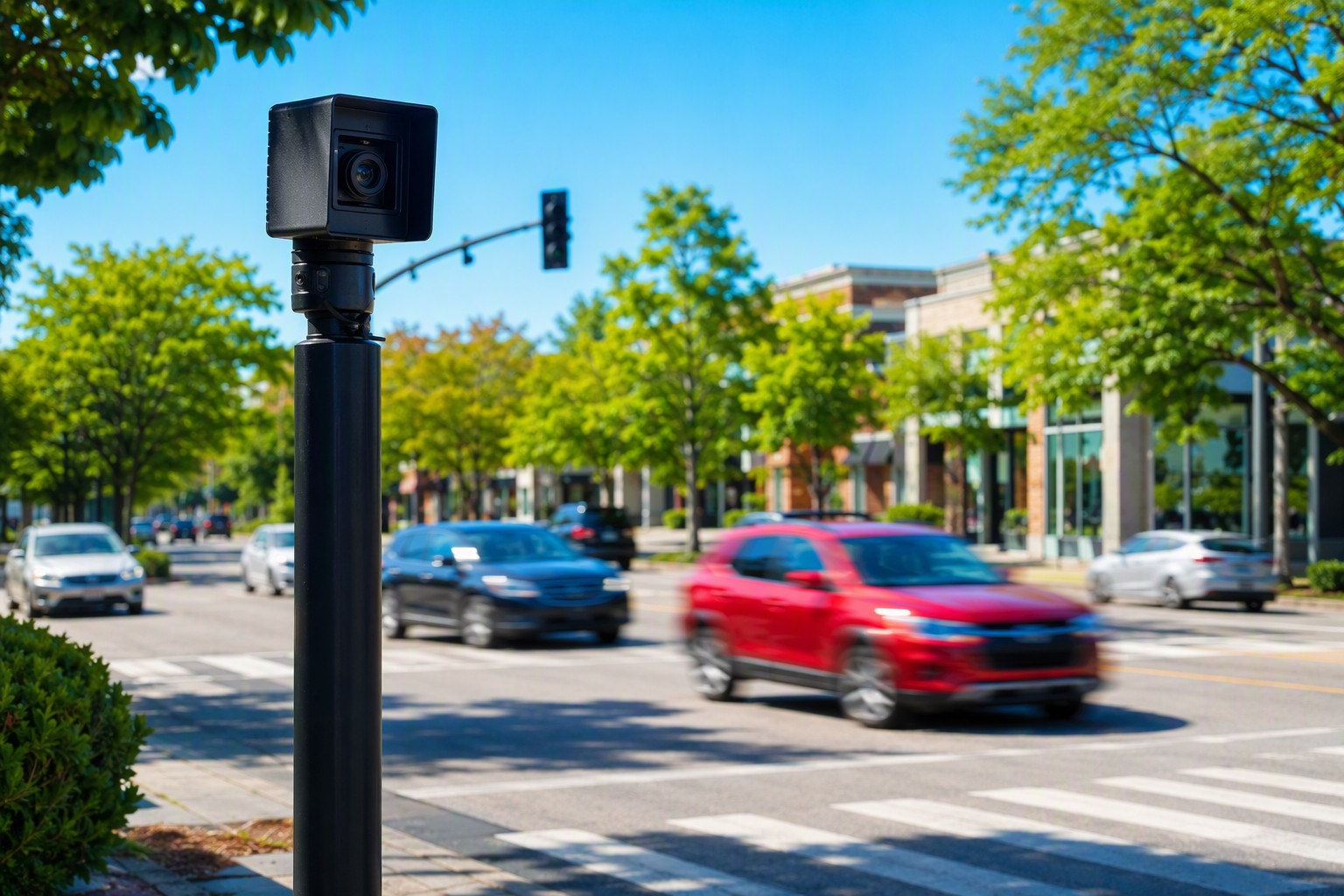
Flock Safety sells fixed automated license plate readers to municipalities, sheriff’s offices, homeowners’ associations, and private businesses. Each camera photographs passing vehicles and converts plates — and, increasingly, vehicle characteristics such as make, colour, and distinguishing features — into searchable records with timestamp and location. Records are retained for a period set by the customer, commonly 30 days.
The operationally significant feature is not the individual camera but the network. Agencies may opt into sharing, allowing a department in one state to query cameras owned by agencies in another. That capability is what makes multi-jurisdictional pursuits possible, and it is also the mechanism at the centre of nearly every controversy examined below. The same architecture produces both records.
The Operational Record: Documented Cases
The following cases were reported by local news outlets in July 2026 and are attributed to statements by the investigating agencies.
| Case | Location | Role of the system |
|---|---|---|
| Kidnapped mother and son recovered | Greenville County, SC → Bristol, TN | Deputies tracked a moving truck across three states after a 911 call; the vehicle was stopped by Cocke County, TN deputies. |
| Child abduction suspect arrested | Henderson → Charlotte, NC | Cameras across multiple counties tracked the suspect vehicle; Vance County and Charlotte-Mecklenburg coordinated the arrest. |
| Interstate child kidnapping suspect | Orlando, FL → Dothan, AL | Florida investigators confirmed the vehicle’s presence in Alabama; drones then located it. Child recovered safely. |
| Two missing seniors located | West Blocton, AL | Provided direction of travel early; the actual location came from OnStar, a citizen tip, and a widely shared Facebook alert. |
| Stolen U-Haul recovered | Clinton Twp., Hunterdon County, NJ | Automated alert on an overdue rental; vehicle stopped, one arrest, undelivered packages returned to recipients. |
| $19,000 school equipment theft | Nassau → Bradford County, FL | Identified the towing vehicle from January 2026; a later alert flagged the trailer in a neighbouring county. Three arrests. |
| Elder fraud, bank impersonation | Georgia | Combined with surveillance video and witness statements to track the suspect vehicle; cash and evidence recovered. |
What this evidence is, and is not. These are agency-attributed accounts reported by local media, not independent evaluations. That does not make them unreliable — the arrests, recoveries, and charges are matters of record. But they establish that the technology contributed to specific outcomes, not how those outcomes compare to what conventional investigation would have produced. The West Blocton case is instructive precisely because the department was candid: the cameras gave direction of travel, and OnStar and a citizen tip closed the case.
The Aggregate Claims, and Who Produced Them
Flock publishes system-wide effectiveness figures. Its 2025 Impact Census reports that the technology supported more than one million investigations, was involved in roughly 20 percent of cleared cases in participating agencies, and plays a role in solving on the order of 10 percent of reported U.S. crime. The company also states its systems help locate approximately 10,000 missing persons annually, and that 42 percent of customers credit Flock with recovering half or more of the stolen vehicles in their jurisdiction (Flock Safety, 2025).
A separate study, validated by criminologists at Texas Christian University and the University of Texas at Tyler, reported that agencies adding one Flock camera per sworn officer could expect roughly a 9.1 percent increase in clearance rate, and that 20 additional Flock customers within 50 kilometres correlated with a 1 percent clearance increase.
These figures should be read with their provenance attached. The Impact Census is a customer survey conducted by the vendor. The clearance study was commissioned by the vendor, with external academic validation of the analysis rather than independent data collection. Neither is fraudulent, and vendor-sponsored research is routine across public safety procurement. But “10 percent of U.S. crime” is a company estimate extrapolated from customer self-reporting, and no peer-reviewed independent evaluation of comparable scope currently exists. Flock also operates public transparency portals for participating agencies, which publish search counts and stated search reasons — a genuine disclosure mechanism, though the data is generated by the same system it documents.
The Case Against: Misuse by Authorised Users
The most concrete criticism does not concern hackers or the company. It concerns officers with legitimate credentials using the system for illegitimate purposes.
On July 29, 2026, the North Carolina State Bureau of Investigation charged Charlotte-Mecklenburg officer Seth Elliott, 25, with illegally accessing a government computer. According to charging documents, a target of a drug investigation contacted Elliott and asked him to look up a plate; Elliott allegedly queried Flock and a state law-enforcement database and returned the registration of a vehicle used by an undercover officer. The SBI discovered the access during an unrelated investigation (WBTV, 2026).
The timing matters for this report: Charlotte-Mecklenburg police are credited in one of the July success cases above and are the subject of this charge in the same week. In a separate Georgia case, a Conyers police dispatcher was arrested for using Flock cameras to track a partner’s vehicle. The Institute for Justice has documented dozens of instances of officers using licence plate readers to track romantic interests.
This is the structural objection in its strongest form. A network valuable enough to track a kidnapper across three states is, by construction, powerful enough to track a spouse, a journalist, or an undercover colleague — and the audit trail catches that use after it happens, not before.
The Case Against: Errors and Wrongful Stops
A running catalogue of reported ALPR errors compiled through July 2026 documents 28 cases spanning 2018 to the present. The consequences in several are severe:
In Aurora, Colorado, a misread plate led to a woman and four children being detained at gunpoint; the city settled for $1.9 million. In San Diego in November 2025, vehicle-appearance matching flagged the wrong car and a passenger spent nearly a month in jail before the error surfaced. In Volusia County, Florida, in April 2026, a driver spent 13 days in jail after being misidentified in connection with a fatal crash. In Sherwood, Arkansas, in February 2026, a couple was ordered out at gunpoint while a six-week-old infant remained in the back seat.
The catalogue identifies two distinct failure modes, and the distinction matters for remedy. The first is machine misreads — optical confusion between similar characters. The second is human error: incorrect data entry, or failure to remove a resolved case from a hotlist so the alert keeps firing. The second category is not a technology defect at all; it is a records-hygiene failure that the technology converts into an armed traffic stop.
Flock’s stated accuracy is approximately 99 percent. At national scale that figure cuts both ways: even a very low error rate applied to hundreds of millions of monthly reads produces a large absolute number of incorrect matches. Whether that translates into harm depends less on the camera than on whether an officer treats an alert as a lead requiring verification or as probable cause on its own.
The Case Against: Access Beyond the Purchasing Community
The objection that has actually moved procurement decisions is jurisdictional. Cities bought cameras to solve local crime and subsequently discovered their data being queried by agencies they had not authorised.
In June 2026, San Francisco’s police chief disclosed that a compliance audit found the regional intelligence centre had queried the city’s Flock network on behalf of federal and out-of-state agencies — 299 improper inquiries over roughly a year. A class action filed in San Francisco Superior Court in February 2026 alleges that out-of-state and federal agencies including ICE, CBP, the FBI, and ATF queried the city’s cameras more than 1.6 million times across seven months. Reporting has documented searches logged with stated reasons such as “ICE” or “immigration,” with more than 4,000 searches attributed to immigration purposes (NPR, 2026; CNN, 2026).
The ACLU’s Chad Marlow frames the systemic concern as a company positioned to record the movements of essentially everyone, with local consent structures unable to contain where the data travels (Democracy Now, 2026). Senator Ron Wyden has written to the Federal Trade Commission regarding the company’s practices.
The procurement response has been substantial, though the exact count is contested. Reporting in mid-2026 placed cancellations or deactivations at 53 cities in one account and at least 80 in another; the discrepancy reflects differing definitions of cancellation versus suspension and different reporting dates, and no authoritative public register exists. Flock has published its own account of why some cities are removing cameras, attributing decisions largely to political and contractual factors rather than system performance (Flock Safety, 2026).
Where the Two Records Meet
Reading the two bodies of evidence together produces three observations that neither side’s advocates emphasise.
The capability that produces the successes is the capability that produces the objections. Cross-jurisdictional sharing is what allowed South Carolina deputies to follow a truck into Tennessee and Florida investigators to place a vehicle in Alabama. It is also what allowed federal agencies to query San Francisco’s cameras. These are not separable features. A policy that eliminates the second necessarily degrades the first, and honest debate should acknowledge the trade rather than pretend it away.
Most documented harms are governance failures, not technical ones. An officer running a plate for a drug target, a dispatcher tracking a partner, a hotlist entry never cleared, a regional centre relaying queries for outside agencies — none of these is a camera malfunctioning. They are access-control, audit, and records-management failures. That is a meaningful finding, because governance failures are addressable through rules, logging, and enforcement in ways that inherent technical limits are not.
The auditability is doing real work. Every misuse case cited here surfaced because the system logs queries: the SFPD audit, the Charlotte charge, the immigration-search tallies. ALPR networks are more accountable in this respect than most policing tools, and the visible record of abuse is partly an artefact of that transparency. This cuts in an uncomfortable direction for both camps — critics rely on logs the vendor built, and defenders cannot claim the logs show nothing.
What the Evidence Does Not Establish
Net crime effect. No independent peer-reviewed study of adequate scope establishes whether ALPR deployment reduces crime overall, as opposed to assisting in clearing specific cases. Clearance assistance and deterrence are different claims, and the available evidence speaks mainly to the former.
Counterfactual attribution. “Flock helped solve this” does not establish that the case would otherwise have gone unsolved. Several of the July cases involved conventional police work, drones, OnStar, and public tips alongside camera data.
Base rates on both sides. The 28 catalogued error cases are the reported ones, drawn from a system performing enormous volumes of reads. The success stories are likewise the reported ones. Neither collection is a random sample, and neither supports a rate.
How much misuse is undetected. Audits find improper queries when someone conducts an audit. The frequency of misuse in jurisdictions that do not audit is unknown and unknowable from the public record.
What to Watch
The San Francisco class action. A ruling on whether out-of-jurisdiction querying of municipally owned camera data creates liability would be the most consequential legal development in this area.
Whether audit becomes mandatory rather than discretionary. The misuse record was produced by voluntary audits. Statutory audit requirements with published results would convert an accountability accident into a standard.
Alert-handling policy. The gunpoint detentions turned on officers treating an automated match as sufficient grounds for a felony stop. Departmental requirements to visually confirm a plate before escalation would address most of the documented harm without touching the technology.
The cancellation trend. Whether the count stabilises or continues climbing will indicate whether this is a discrete reaction to the federal-access disclosures or a durable shift in municipal appetite.
Conclusion. The July 2026 record contains a rescued mother and child, a recovered kidnapped child, two found seniors — and an officer charged with exposing an undercover colleague to a drug target, alongside a documented history of wrongful detentions at gunpoint. Any account that presents only one of these lists is describing half a system. The evidence supports a narrower proposition than either camp usually argues: the technology is operationally effective at what it claims to do, and the substantial majority of documented harm has come from how institutions govern access to it rather than from the cameras themselves. That framing does not settle whether the network should exist at its current scale. It does suggest that the decisions with the largest effect on outcomes are about audit, access control, and alert-handling policy — not about the hardware.
References
CNN. (2026, July 26). Inside the growing police use and misuse of Flock’s license-plate reader cameras. https://www.cnn.com/2026/07/26/us/flock-cameras-surveillance-abuse
Democracy Now. (2026, July 21). “Privacy for profits”: ACLU warns Flock building a nationwide surveillance network. https://www.democracynow.org/2026/7/21/flock_aclu_chad_marlow
Flock Safety. (2025). How effective is Flock? 2025 Impact Census results. https://www.flocksafety.com/blog/how-effective-is-flock
Flock Safety. (2026). Why are some Flock cameras being removed by cities? https://www.flocksafety.com/blog/why-are-some-flock-cameras-being-removed-by-cities
Fox Carolina. (2026, July 31). Kidnapped mother and son rescued with help of Flock cameras, Upstate deputies say. https://www.foxcarolina.com/2026/07/31/
Live 5 News. (2026, July 30). Police department credits Flock cameras in capture of child kidnapping suspect. https://www.live5news.com/2026/07/30/
News4Jax. (2026, July 30). 3 people accused of stealing $19K worth of baseball equipment from West Nassau High School. https://www.news4jax.com/news/local/2026/07/30/
NewsChannel 9. (2026). Flock Safety cameras help locate missing West Blocton seniors. https://newschannel9.com/news/local/flock-safety-cameras-help-locate-missing-west-blocton-seniors
NPR. (2026, February 17). Why some cities are canceling Flock license plate reader contracts. https://www.npr.org/2026/02/17/nx-s1-5612825/
The Daily Hodl. (2026, July 30). Alleged fraudster drains nearly $2,400 from elderly woman’s account after masquerading as JPMorgan Chase representative. https://dailyhodl.com/2026/07/30/
WBTV. (2026, July 29). Charlotte-Mecklenburg police officer accused of running illegal search using Flock Safety, offenders database. https://www.wbtv.com/2026/07/29/
WRAL. (2026, July 30). Wake County woman arrested after Flock cameras identified her vehicle in abduction case. https://www.wral.com/news/local/wake-county-woman-flock-cameras-child-abduction-july-2026/
WRNJ Radio. (2026, July). Flock camera alert leads to recovery of stolen U-Haul van in Hunterdon County. https://wrnjradio.com/flock-camera-alert-leads-to-recovery-of-stolen-u-haul-van-in-hunterdon-county/
Wyden, R. (2026). Letter to the Federal Trade Commission regarding Flock Safety. U.S. Senate. https://www.wyden.senate.gov/imo/media/doc/wyden_letter_to_ftc_on_flockpdf.pdf
Yahoo News. (2026). Case-by-case: Every reported Flock license plate camera error to date. https://www.yahoo.com/news/us/articles/case-case-every-reported-flock-175653036.html
Yahoo News. (2026). Tracking the Flock: A running record of reported license plate camera misuse. https://www.yahoo.com/news/us/articles/tracking-flock-running-record-reported-164420922.html