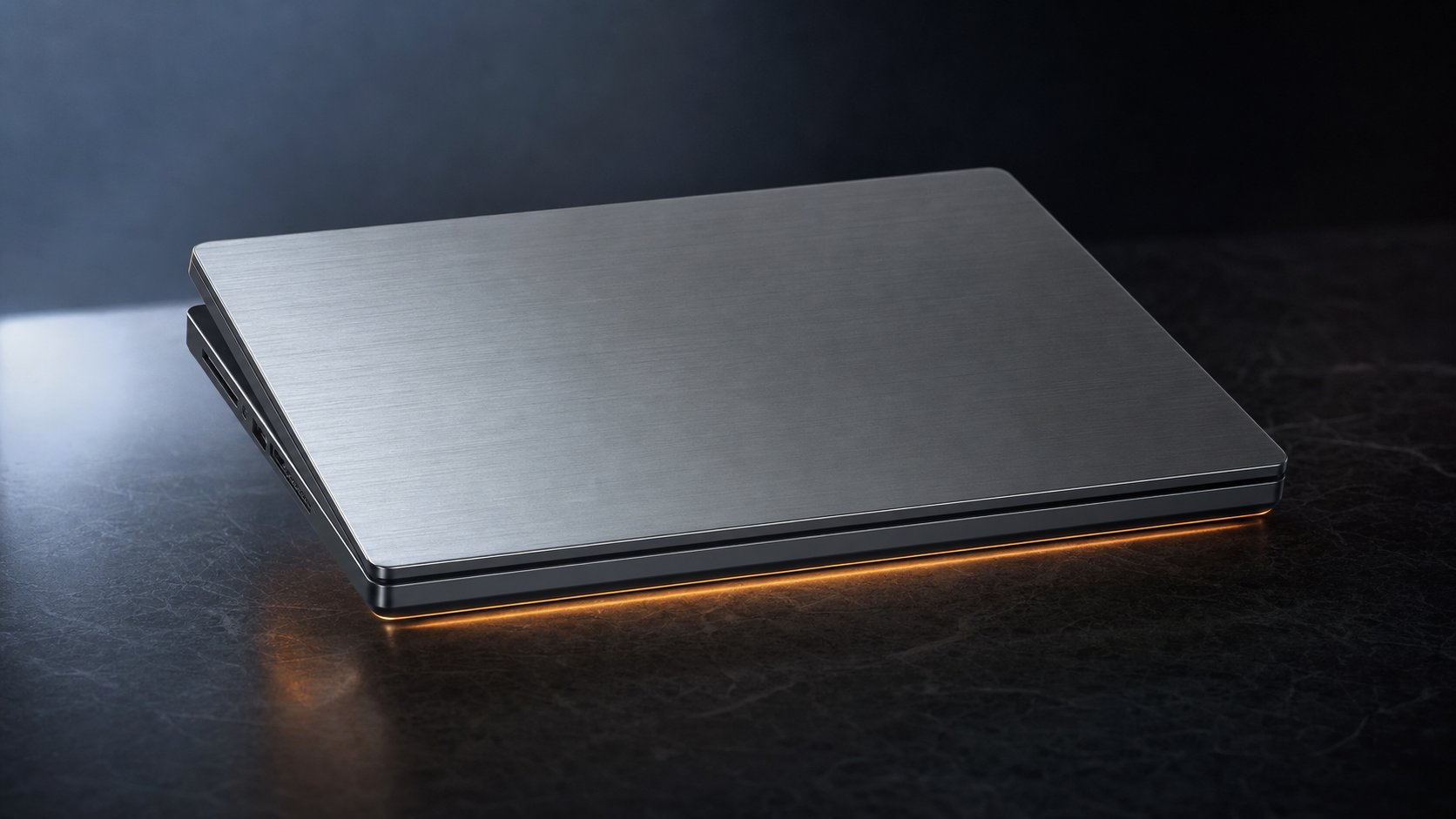
At Computex 2026 in Taipei, Microsoft and Nvidia unveiled the Surface Laptop Ultra and the RTX Spark superchip that powers it. The technical specifications are extraordinary. The economic implications, for Intel, ARM, Apple, and a Windows ecosystem that has spent forty years on x86, may matter more.
On May 31, 2026, at Computex in Taipei, Microsoft and Nvidia introduced a new class of Windows laptop and the silicon platform that makes it possible. The Surface Laptop Ultra is built on Nvidia’s RTX Spark superchip, a 20-core Arm-based CPU paired with a Blackwell-architecture GPU containing 6,144 CUDA cores, up to 128 gigabytes of unified memory, and a stated AI performance of 1 petaflop, equivalent to 1,000 trillion operations per second at FP4 precision (Nvidia, 2026; Microsoft, 2026).
Microsoft Surface corporate vice president Brett Ostrum described the device as a Surface “built for the way ambitious work gets done” (Nvidia, 2026). Nvidia founder and CEO Jensen Huang framed it more expansively: “The PC is being reinvented. For forty years, you launched apps. Click. Type. With RTX Spark and Microsoft Windows, you ask, and the PC does the work” (Nvidia, 2026).
The claims are large. Some are marketing. But beneath them, the joint announcement reflects a genuine and potentially destabilizing shift in the PC industry that deserves to be examined on two distinct dimensions: what the machine actually does, and what its arrival means for the four other companies whose silicon currently powers the world’s personal computers.
The Technical Lens: What the RTX Spark Actually Is
The RTX Spark is not a conventional laptop processor. It is a system-on-chip built around three integrated components: a 20-core Arm-based CPU co-designed with MediaTek and marketed under the Nvidia Grace brand, a Blackwell-architecture GPU with 6,144 CUDA cores and fifth-generation Tensor Cores supporting FP4 precision, and up to 128 gigabytes of unified memory accessible to both the CPU and GPU through Nvidia’s NVLink-C2C chip-to-chip interconnect (Nvidia, 2026; Rubino, 2026).
Three numbers carry most of the technical weight.
The first is the petaflop AI compute figure. At 1,000 TOPS (trillion operations per second) using FP4 precision, the RTX Spark delivers approximately five times the AI throughput of Intel’s most aggressive 2026 laptop chip, the Core Ultra Series 3 (Panther Lake), which reaches 180 total TOPS by combining its 50-TOPS NPU with its integrated Xe GPU (Intel, 2026). It is roughly 20 times the dedicated NPU performance of AMD’s Ryzen AI Max+ 395 (Strix Halo), which delivers approximately 50 TOPS through its XDNA 2 neural engine (Local AI Master, 2026). And it is several multiples beyond Apple’s M5 Max, which Apple describes as delivering “4x the peak GPU compute compared to the previous generation” without disclosing a directly comparable TOPS figure (Apple, 2026).
The chart below shows AI compute and maximum unified memory across the leading 2026 platforms.
The petaflop number requires one caveat. FP4 precision, the data format Nvidia uses to claim the petaflop figure, is a four-bit floating-point representation that has only become broadly viable for inference workloads in the past 18 months. Comparing FP4 to FP16 or INT8 TOPS is not apples-to-apples. But for the specific workload Nvidia and Microsoft are targeting, on-device inference of large language models with up to 120 billion parameters, FP4 is the relevant precision, and the petaflop figure is the relevant benchmark.
The second number is the 128 gigabytes of unified memory. Unified memory architecture, in which CPU and GPU share a single addressable memory pool, is what allows a portable device to run very large AI models locally without offloading to the cloud. Apple pioneered this approach in personal computers with its M-series silicon, beginning with the M1 in 2020. AMD followed with Strix Halo in 2025. Qualcomm offers similar architecture in Snapdragon X. With 128 gigabytes, the RTX Spark, the M5 Max, and Strix Halo are all in the same memory class. Each can hold a 70-billion-parameter model in 16-bit precision entirely in memory without quantization compromise, and each can host a 120-billion-parameter model with appropriate quantization (Local AI Master, 2026).
Where the RTX Spark differs is in the bandwidth that connects memory to compute. Apple’s M5 Max delivers 614 gigabytes per second of memory bandwidth (Apple, 2026). AMD’s Strix Halo provides roughly 256 GB/s (Local AI Master, 2026). Nvidia has not yet published a specific bandwidth number for the RTX Spark, but the NVLink-C2C interconnect on Nvidia’s Grace-Hopper data center platform delivers up to 900 GB/s, suggesting the Spark variant is likely to be highly competitive on this dimension.
The third number is 6,144 CUDA cores, which is identical to the core count on Nvidia’s desktop RTX 5070 graphics card. This is the most consequential specification for one specific audience. A CUDA core is the workhorse of Nvidia’s parallel computing architecture, and CUDA itself is the software ecosystem that has powered fifteen years of AI research and the entirety of frontier model training. Putting 6,144 CUDA cores in a laptop with 128 GB of unified memory means that a developer who has built their workflow around Nvidia’s tooling, which is most AI developers in the world, can now do meaningful local development on a portable device that previously required a desktop workstation or a cloud account.
The Surface Laptop Ultra Itself
The first RTX Spark-powered device, the Microsoft Surface Laptop Ultra, has a 15-inch mini-LED PixelSense Ultra touchscreen at 2880 by 1920 resolution and 262 pixels per inch, with a peak HDR brightness of 2,000 nits. The chassis is all-metal in either Platinum or Nightfall finish, weighs less than 4.5 pounds, and measures less than 18 millimeters thick. The all-new thermal system delivers up to 2.5 times the cooling capacity of the previous Surface Laptop 7th edition, and the device includes HDMI, USB-C, USB-A, a full-size SD card slot, and a headphone jack (Microsoft, 2026; Rubino, 2026).
Microsoft says the device runs Windows on Arm and will be certified as a Copilot+ PC, the AI-first designation Microsoft introduced with its Snapdragon-powered Surface line in 2024. It supports running 120-billion-parameter large language models locally, 1-million-token context windows for inference, 12K 4:2:2 video editing through the Blackwell decoder, and AAA games at 1440p resolution at more than 100 frames per second with ray tracing, DLSS, and Reflex enabled (Nvidia, 2026).
Microsoft has not yet disclosed pricing or a specific ship date, telling Windows Central that the company will discuss pricing closer to availability “later this year” due to volatility in DRAM and NAND prices (Rubino, 2026). Industry analysts have suggested the Surface Laptop Ultra will be priced at the very top of the consumer notebook market, comparable to the 16-inch MacBook Pro M5 Max, which currently starts at roughly $3,500 in equivalent configurations.
The Economic Lens: A Threat on Four Fronts
The technical specifications matter, but they are the means to an economic end. The RTX Spark partnership is not principally about benchmarks. It is about repositioning the PC industry around Nvidia and Microsoft, at the expense of the four companies that currently dominate consumer silicon: Intel, AMD, Apple, and Qualcomm.
Intel: The Most Direct Threat
Intel has spent forty years as the default processor in Windows PCs. Its 2026 strategy is built around the Core Ultra Series 3 (Panther Lake), launched at CES 2026 on Intel’s new 18A process, which delivers up to 180 total TOPS, 16 CPU cores, and up to 27 hours of battery life in reference designs (Intel, 2026). Panther Lake is, by any reasonable measure, an impressive product. It is also approximately five times slower than the RTX Spark on peak AI throughput, and it relies on x86 architecture at a moment when Microsoft is publicly committing to Arm.
The immediate threat is not that Intel loses every laptop socket. It is that Intel loses the premium tier, the part of the market where margin lives. The Surface Laptop Ultra, alongside RTX Spark designs that Nvidia announced from Dell, HP, Lenovo, ASUS, and MSI, will compete directly with Intel’s H-series and HX-series laptop chips that power workstations, gaming laptops, and high-end thin-and-lights. Premium laptops account for a disproportionate share of Intel’s client computing revenue. If Microsoft, Nvidia, and the OEM partners pull even 10 to 15 percent of the premium category over the next two years, Intel’s client computing margins will compress materially.
The deeper threat is reputational. Intel is no longer the obvious choice for the most demanding workloads on Windows. For the first time since the early 2000s, when AMD’s Athlon briefly held the performance crown, Intel faces a competitor that is unambiguously faster, more efficient, and better positioned for the workload, on-device AI inference, that the entire industry is reorienting toward.
ARM and Qualcomm: A Friendly Fire Incident
The relationship between the RTX Spark and ARM is more nuanced. The RTX Spark is, technically, an Arm-architecture chip. The CPU cores use the Arm instruction set, which means Nvidia and MediaTek pay Arm Holdings a royalty on every unit shipped. In a narrow accounting sense, the rise of the RTX Spark is good news for Arm Holdings’ revenue.
The competitive picture is more complicated. Qualcomm has spent the past three years attempting to establish Snapdragon X as the dominant Arm processor in Windows PCs. Microsoft’s 2024 Surface launch positioned Qualcomm as the silicon partner for the AI PC era. According to Canalys, Snapdragon X laptops sold approximately 720,000 units in their first full quarter, capturing less than 1.5% of the Windows market (Canalys via TechRadar, 2024). Qualcomm has since refreshed the line with Snapdragon X2 Elite Extreme, but the Surface Laptop Ultra announcement at Computex 2026 represents Microsoft pivoting its flagship hardware to Nvidia rather than doubling down on Qualcomm.
For Qualcomm, the strategic implication is direct. Microsoft did not choose Snapdragon X2 to power the most premium Surface ever built. It chose RTX Spark. Qualcomm retains its place in mainstream Copilot+ PCs and dominates the smartphone modem and AI-edge markets, but its bid to define the high end of Windows on Arm has been visibly diminished.
For Arm Holdings, the longer-term question is whether Nvidia-MediaTek silicon will continue to use stock Arm cores or whether Nvidia, having built its own Grace CPU designs for data centers, will eventually move toward custom Arm cores that reduce royalty rates. Arm’s stock price has reflected investor uncertainty on this exact question for the past year.
Apple: The Ecosystem Bet
Apple is the most insulated of the four threatened parties, and also the most directly comparable. Apple’s M5 Max, launched in March 2026, is the closest competitor to the RTX Spark on a system-architecture basis. Both are Arm-based superchips with up to 128 gigabytes of unified memory and tightly integrated CPU, GPU, and AI accelerator components. Both target high-end creative and developer workloads (Apple, 2026; Nvidia, 2026).
The differences are also instructive. Apple’s M5 Max delivers 614 GB/s of memory bandwidth, which is the highest in any consumer chip on the market today, and Apple has a four-year head start on the unified memory programming model that developers must adopt. Apple also has the macOS ecosystem, which has become the default development platform for a substantial share of AI engineers and creative professionals.
What Apple does not have is the CUDA ecosystem. CUDA, which has powered fifteen years of AI research, is the central reason a developer might choose RTX Spark over an M5 Max. The Surface Laptop Ultra is the first portable device that combines CUDA, RTX, and 128 gigabytes of unified memory in a 4.5-pound chassis. For developers whose work depends on CUDA libraries, who write code targeting Nvidia’s data center GPUs, or who need to run frontier inference workloads locally, that combination is meaningful in a way that no Apple product can directly match.
The threat to Apple is not that it loses its existing customers. The MacBook Pro M5 Max will continue to be an excellent device for the audiences it has served. The threat is that the next generation of AI developers, who in 2020 might have defaulted to a MacBook for general-purpose engineering, may now choose a Windows-on-Arm device because it runs the CUDA stack natively. That is a structural shift, not a benchmark loss.
AMD: Caught Between Two Doors
AMD is in the most difficult position of the four. Its Ryzen AI Max+ 395 (Strix Halo), released in early 2025, is a genuinely impressive 16-core Zen 5 chip with a 40-CU RDNA 3.5 integrated GPU, a 50-TOPS XDNA 2 NPU, and up to 128 gigabytes of unified memory (Local AI Master, 2026). It is, in 2026, the most credible non-Apple alternative to Nvidia on local AI workloads, and AMD has built real momentum among local-LLM developers.
The problem for AMD is that it now faces pressure from both sides. On Windows desktop and gaming, Intel’s Panther Lake claims a 73% gaming performance advantage and significantly better power efficiency at low TDPs (HotHardware, 2026). On AI-focused premium laptops, the RTX Spark delivers approximately 20 times AMD’s NPU throughput and includes CUDA, which AMD’s ROCm software stack has spent years trying to match without full success. AMD retains a strong position in data center AI accelerators through the MI300 family, but in the consumer laptop segment that the Surface Laptop Ultra targets directly, AMD’s strategic options have narrowed considerably.
The market context. The global AI PC market was valued at $28.4 billion in 2025 and is projected to grow to $167.3 billion by 2034, a compound annual growth rate of 19.8% (Intel Market Research, 2026). IDC projects that AI-capable PCs will cross 50% of global sales in 2026 and reach 94% by 2028. Repositioning the premium tier of that market, even partially, away from x86 and toward Nvidia-Microsoft Arm silicon represents tens of billions of dollars in annual revenue that has historically belonged to Intel, AMD, and Qualcomm.
What Microsoft Gets Out of It
The partnership is not symmetric. Nvidia gains the most visible commercial outlet for its CPU strategy, an immediate showcase for Blackwell at consumer prices, and the credibility of Microsoft’s flagship endorsement. What Microsoft gains is less obvious but equally important.
First, Microsoft gets a clear hardware platform for its evolving vision of Windows as an agentic operating system. Satya Nadella’s statement, “our goal is to deliver unmetered intelligence to every home and every desk with Windows” (Nvidia, 2026), is not a marketing line. It reflects a structural problem Microsoft faces with Copilot: at scale, running AI agents in the cloud for hundreds of millions of Windows users carries a per-query inference cost that compresses Microsoft’s margins. On-device inference, if it can be made performant enough, transfers that cost back to the user’s hardware and frees Microsoft from paying it.
Second, Microsoft gets architectural leverage. By committing its flagship Surface line to Nvidia silicon, Microsoft signals to OEM partners that the future of premium Windows is not necessarily x86. That signal cascades through Dell, HP, Lenovo, ASUS, and MSI, all of whom Nvidia announced as RTX Spark partners on the same day. The collective effect is to make the Arm-based AI PC architecturally legitimate in a way that Snapdragon X alone could not achieve in 2024.
Third, Microsoft gains a security and containment story for Windows. The joint announcement includes new Windows security primitives and Nvidia’s OpenShell runtime that, together, are designed to sandbox AI agents at the operating system level. This is Microsoft’s response to the AI agent security concerns that have grown louder over the past year, particularly around prompt injection, data exfiltration, and the unbounded permissions that early agent frameworks have demanded (Rubino, 2026).
What Could Go Wrong
The technical promise is real. The economic threat to competitors is real. Both are subject to several executional risks worth naming clearly.
The first is software compatibility. Windows on Arm has improved substantially since 2024, and the new Prism emulation layer tuned for RTX Spark microarchitecture is reported to deliver substantially better x86 application performance than previous versions (Westover, 2026). But emulation is still slower than native execution, and the long tail of Windows software that has not been ported to Arm remains a barrier for enterprise deployment.
The second is pricing. The Surface Laptop Ultra is expected to be expensive. If DRAM and NAND markets remain volatile, a 128-gigabyte configuration could push the device into a price tier where the addressable market shrinks dramatically. Hardware sales in the AI PC category are growing, but they remain a small fraction of total Windows shipments.
The third is the gap between announcement and shipment. Microsoft has said the device will ship “later this year.” That ambiguity, combined with the historical record of Surface launches that have slipped or arrived with first-generation hardware bugs, suggests that the practical impact of the Surface Laptop Ultra on the 2026 holiday quarter is likely modest, and the more meaningful market test will arrive in 2027.
The Bottom Line
The Surface Laptop Ultra and the RTX Spark superchip behind it represent the most ambitious technical statement Microsoft has made about Windows hardware in twenty years, and the most direct economic threat to Intel’s grip on premium PC silicon since the original Apple Silicon transition in 2020. The technical specifications justify the attention. One petaflop of FP4 AI compute, 128 gigabytes of unified memory, 6,144 CUDA cores, and a 4.5-pound chassis is a combination no competing product on the market today can match. The economic implications justify even more attention. Intel loses its strongest claim to premium Windows performance. Qualcomm loses its Microsoft flagship. Apple keeps its ecosystem but loses its monopoly on portable Arm-based unified-memory computing. AMD remains technically competitive on local AI but loses ground on the strategic narrative. The PC industry has spent forty years calibrating itself around x86 and the assumption that the smartest computer would always be a desktop or workstation, not a laptop. The RTX Spark does not by itself end that era. But it is the clearest evidence yet that the era is ending, and that the companies positioned to define the next one are increasingly not the ones that defined the last one.
References
Apple. (2026, March 3). Apple debuts M5 Pro and M5 Max to supercharge the most demanding pro workflows. Apple Newsroom. https://www.apple.com/newsroom/2026/03/apple-debuts-m5-pro-and-m5-max-to-supercharge-the-most-demanding-pro-workflows/
Canalys via TechRadar. (2024, November). Only 720,000 Qualcomm Snapdragon X laptops sold since launch. https://www.reddit.com/r/Surface/comments/1h0bur2/only_720000_qualcomm_snapdragon_x_laptops_sold/
HotHardware. (2026, January 5). Intel Panther Lake performance unveiled: Core Ultra Series 3. https://hothardware.com/news/intel-ces-2026-panther-lake-is-a-go
Intel. (2026, January 5). CES 2026: Intel Core Ultra Series 3 debut as first built on Intel 18A. Intel Newsroom. https://newsroom.intel.com/client-computing/ces-2026-intel-core-ultra-series-3-debut-first-built-on-intel-18a
Intel Market Research. (2026, May 20). AI PC market outlook 2026-2034. https://www.intelmarketresearch.com/ai-pc-market-46851
Local AI Master. (2026, May 1). AMD Ryzen AI Max+ 395 (Strix Halo) for local AI 2026. https://localaimaster.com/blog/strix-halo-ai-max-395-guide
Microsoft. (2026, May 31). Surface Laptop Ultra. https://www.microsoft.com/en-us/surface/devices/surface-laptop-ultra
Nvidia. (2026, May 31). NVIDIA and Microsoft reinvent Windows PCs for the age of personal AI agents with RTX Spark. https://nvidianews.nvidia.com/news/nvidia-microsoft-windows-pcs-agents-rtx-spark
Rubino, D. (2026, June 1). Surface Laptop Ultra: Microsoft and NVIDIA reveal the most powerful Surface ever. Windows Central. https://www.windowscentral.com/hardware/surface/microsoft-surface-laptop-ultra-announced-computex-2026
Westover, B. (2026, June 1). Microsoft’s Nvidia-Spark-powered Surface Laptop Ultra signals a raw power revolution. PCMag. https://www.pcmag.com/news/microsoft-announces-nvidia-spark-surface-laptop-ultra-computex-2026
