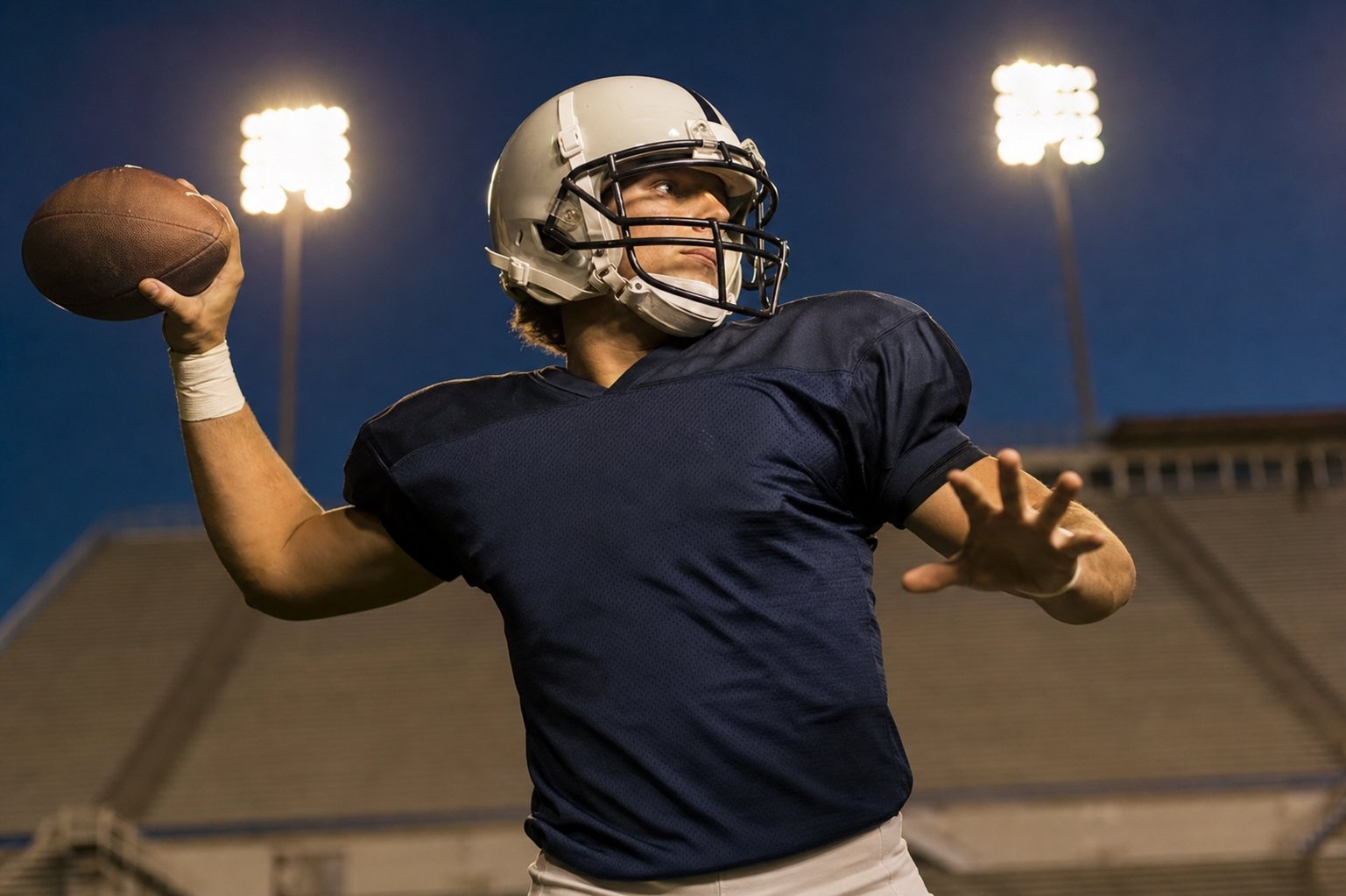

When this essay was first drafted, college athletes earned nothing while their coaches earned millions. In the four years since, two Supreme Court rulings and one $2.8 billion class-action settlement have rewritten the rules. The question is no longer whether college athletes should be paid. The question is whether the new system has actually fixed what was broken.
For more than a century, the National Collegiate Athletic Association built a multibillion-dollar enterprise on a single legal premise: that the young people generating the revenue were amateurs, and that amateur status excluded them from compensation. The argument collapsed in three stages. In June 2021, the U.S. Supreme Court ruled unanimously in NCAA v. Alston that the NCAA could not ban education-related payments to athletes (Maryville University, 2022; ProCon.org, 2023). Within weeks, the NCAA permitted name, image, and likeness (NIL) deals. In June 2025, federal Judge Claudia Wilken granted final approval to a $2.8 billion class-action settlement in House v. NCAA, allowing schools to share revenue directly with athletes for the first time in NCAA history (ESPN, 2025; BakerHostetler, 2025). The 2025-26 academic year is the first to operate under the new revenue-sharing framework. The economic and ethical case for paying college athletes, once contested, is now largely settled. The question that has replaced it is whether the new system, with all its complexity, is delivering on the promise that motivated it.
The Scale of College Athletics in 2026
The number of student-athletes in NCAA championship sports reached an all-time high of 554,298 in the 2024-25 academic year, with Division I participation surpassing 200,000 for the first time since 1982 (NCAA, September 2025). The athletes generate revenue at a scale that has only grown since the original critique. According to The Athletic’s program valuation rankings, 13 college football programs were worth more than $1 billion in 2025. Texas overtook Ohio State as the most valuable program at approximately $1.86 billion (The Athletic via A to Z Sports, December 2025).
Figure 1: Hover over bars for detailed values. Source: The Athletic Program Valuation Rankings (July 2025).
Coaching compensation has accelerated even as athlete compensation has expanded. According to USA Today’s coaching salary database aggregated by CBS Sports, nine college football head coaches now earn more than $10 million annually. Kirby Smart at Georgia leads at approximately $13.28 million, followed by Ryan Day at Ohio State ($12.5 million) and Dabo Swinney at Clemson ($11.13 million) (CBS Sports, October 2025; DIRECTV Insider, 2025). These figures exclude bonuses, contract incentives, and shoe and apparel deals, which can add seven figures more.
Figure 2: Hover for exact salary figures. Source: USA Today coaching salary database via CBS Sports (October 2025).
The New System: NIL and Revenue Sharing
The compensation framework that emerged after Alston and House has two parts. NIL deals, which began in July 2021, allow athletes to monetize endorsements, social media presence, and personal appearances through third parties. Revenue sharing, which began in the 2025-26 academic year under the House settlement, allows schools to pay athletes directly, capped at approximately $20.5 million per school for the 2025-26 year (Economic Policy Institute, April 2026).
The combined market is now in the multi-billion-dollar range. The NIL market alone grew from approximately $917 million in 2022 to $1.67 billion in the 2024-25 cycle, according to Opendorse market data (LinkedIn industry analysis, March 2025). With revenue-sharing payments added in 2025-26, top NCAA Division I quarterbacks are projected to clear $1 million each annually from combined NIL and revenue-share income, with several stars projected well beyond that (Opendorse via LinkedIn analysis, 2025).
Figure 3: Hover for year-by-year values. Source: Opendorse market data via LinkedIn industry analysis (March 2025); Economic Policy Institute (April 2026).
The top of the market is now occupied by individuals whose earnings would have been unimaginable before 2021. According to On3’s NIL Valuation Rankings, Texas quarterback Arch Manning carried an NIL valuation of approximately $5.4 million entering the 2025-26 season, with BYU basketball freshman AJ Dybantsa at $4.2 million and prior-year Duke basketball freshman Cooper Flagg at $4.8 million (On3, May 2026; Fox Sports, June 2025). Bryce Young’s roughly $1 million in 2022 endorsement deals, cited in the original analysis as a landmark, would now place him well outside the top tier.
Figure 4: Hover for individual NIL values. Source: On3 NIL Valuation Rankings (May 2026); Fox Sports NIL Rankings (June 2025).
What the Original Arguments Got Right
The economic and ethical arguments laid out in the original analysis have been substantially validated by the legal record. Justice Neil Gorsuch’s opinion in Alston identified the same exploitation pattern: “Nowhere else in America can businesses get away with agreeing not to pay their workers a fair market rate on the theory that their product is defined by not paying their workers a fair market rate” (ProCon.org, 2023). Judge Wilken’s approval of the House settlement extended that logic to direct revenue sharing.
The economic asymmetry remains stark. NCAA Division I athletes still dedicate approximately 35 hours per week to their sport during the season, equivalent to a full-time job, with limited time for outside employment (NCAA Student-Athlete Time Commitment Survey via NCSA Recruiting, 2022). The Power Five conferences continue to generate billions, the NCAA continues to negotiate billion-dollar television contracts for events like March Madness, and university athletic departments continue to employ executives at six- and seven-figure salaries. The structural facts that made compensation morally necessary in 2021 have not changed in 2026; they have intensified.
Who Is Actually Being Paid
The most important nuance the new system has revealed is who benefits from it. Of the 554,298 NCAA student-athletes in 2024-25, fewer than 25 percent reported any NIL income in the early years of the program, and most reported deals were modest. Reports suggested that by late 2022, nearly 17 percent of NCAA Division I student-athletes had established NIL deals (Wyld, 2025). The aggregate dollar figures are dominated by a small number of high-profile athletes, almost all in football and men’s basketball at Power Five schools.
Figure 5: Hover for division totals. Source: NCAA Sports Sponsorship and Participation Rates Report (September 2025).
The Economic Policy Institute documented the distribution problem in an April 2026 analysis: revenue sharing under House is concentrated at the largest revenue-generating programs, and within those programs, concentrated on football and men’s basketball rosters. Athletes in Olympic and non-revenue sports (track and field, swimming, gymnastics, rowing, soccer in many regions) typically receive minimal direct payments because their sports do not generate the revenue that funds the cap. The original argument was not that all athletes should be paid; it was that athletes who generate revenue should share in it. The new system implements that argument literally, which has produced an outcome that resembles a professional sports labor market more than an amateur college system.
Key Insight
The original critique was structural: a labor market in which workers generated billions but received nothing. The new system has fixed the structural inequity for the highest-earning workers in revenue-generating sports. It has not solved the underlying paradox that most NCAA athletes still are not part of the revenue-generating business model, and the gap between elite NIL earners and the bottom of the roster is now closer to professional sports than to a unified student body.
The Risks That Have Not Gone Away
The health and welfare risks that motivated the original analysis remain. Injury rates have not declined. According to the NCAA Injury Surveillance Program data summarized in a 2025 review, NCAA Division I athletes experienced approximately 1,053,700 injuries across an estimated 176.7 million athletic exposures between 2009 and 2014, an incidence rate of approximately 5.96 injuries per 1,000 exposures across the 24 NCAA championship sports (Wyld, 2025). Football continues to carry the highest concussion risk in college sports, and Boston University CTE Center research published in 2025 confirmed that neurodegeneration can begin in young athletes even before clinical CTE is detectable (Boston University, September 2025).
A 2025 review in MOJ Sports Medicine raised a counterintuitive concern: the new financial incentives may increase injury exposure rather than decrease it (Wyld, April 2025). Athletes who can earn meaningful money from NIL face strong incentives to play through injuries, particularly concussions, that they previously had financial reason to report. The same paper found that college football players have historically underreported concussions for fear of losing scholarships or status, a pattern that NIL income may intensify. The financial stakes of staying on the field are higher than ever for the athletes most exposed to head trauma.
Mental health outcomes remain a concern. The NCAA’s most recent Student-Athlete Health and Wellness Study, conducted in 2023 and analyzed in 2024, found that student-athletes were reporting fewer mental health concerns than during the COVID-19 pandemic peak, but improvements were uneven and population subgroups including athletes of color, those identifying on the queer spectrum, and those identifying as transgender or nonbinary continued to display higher rates of mental distress (NCAA, May 2024). Approximately one in four Division I athletes reported food insecurity in the year preceding the original ProCon analysis, and close to 14 percent reported homelessness during the same period (ProCon.org, 2023).
What an Honest Reform Agenda Looks Like in 2026
The original essay called for compensating college athletes and for reforming the NCAA’s amateurism structure. Both have happened. A more honest 2026 agenda needs to address what the new system has not solved.
Long-term healthcare coverage. Athletes whose careers end with injury or chronic conditions face the same gap they did in 2021. Revenue sharing pays them while they play but does not cover post-career medical expenses, particularly for football-related neurodegenerative disease that may not present until years after college. A portion of revenue-sharing funds should be allocated to long-term medical trusts, structured similarly to professional sports league medical funds.
Floor-level support for non-revenue athletes. The new system concentrates pay at the top of football and men’s basketball rosters. The 35-hour-per-week time commitment, the academic compromise, and the injury risk apply to gymnasts, swimmers, wrestlers, and track athletes too, none of whom typically benefit from NIL or revenue sharing. A guaranteed cost-of-attendance stipend funded from the revenue-sharing cap, separate from NIL income, would address the food insecurity and homelessness data documented in the ProCon analysis.
Genuine academic protection. NIL income does not solve the academic compromise that the original essay identified. Athletes still face coursework, travel, and practice schedules that limit their educational options. The 2024-25 NCAA participation data shows the population at all-time highs, but academic outcomes remain underexamined. The right reform is not to reduce athletic commitments but to require institutions to publish degree completion rates by sport and to tie revenue-sharing eligibility to meeting minimum academic-support thresholds.
Transparency on injury reporting. The 2025 MOJ Sports Medicine analysis identified the financial-pressure injury-underreporting cycle as a structural threat the NIL era could intensify. Mandatory independent medical decision-making on return-to-play, particularly for head injuries, would address the pressure cleanly. The NFL adopted versions of this protocol after CTE litigation; the NCAA has not.
Conclusion: The Reform Worked, and It Did Not
The argument the original essay made, that the system was indefensibly extractive and that compensation was overdue, was correct. The legal record now reflects that argument. The reform that followed has delivered meaningful compensation to athletes who generate the most revenue, has restored some symmetry between what college sports produces and what its labor force receives, and has created economic opportunity at a scale unimaginable five years ago.
The reform has not solved the deeper problem the original analysis pointed to, which was not only that athletes were not paid but that the system as a whole imposed costs (academic, physical, psychological, financial) that no compensation, however generous, fully offsets. The 2026 system is more equitable than the 2021 system. It is also more like a professional sports labor market, with all of that market’s stratification, pressure, and disregard for the long-term health of its workers. The next phase of reform is not about whether to pay college athletes. It is about whether the system that emerged from the legal victories of 2021 and 2025 actually delivers what those victories promised: a more honest, more just, and more humane structure for the people who make college sports possible.
The Bottom Line
College athletes should be paid. They now are, at least the ones who generate the revenue. The original critique has been substantially answered. The remaining work is to ensure the system extends meaningful protection to the 80 percent of NCAA athletes who do not appear on Saturday afternoon broadcasts, and to confront the injury and mental health risks that compensation alone cannot fix. The reform has worked. It just has not finished.
References
A to Z Sports. (2025, December 21). Texas dethrones Ohio State as college sports’ most valuable program; 13 schools now worth over $1 billion. https://atozsports.com/college-football/texas-longhorns-news/texas-dethrones-ohio-state-as-college-sports-most-valuable-program
BakerHostetler. (2025, June 25). House v. NCAA settlement sparks new age of student-athlete compensation. https://www.bakerlaw.com/insights/house-v-ncaa-settlement-sparks-new-age-of-student-athlete-compensation/
Boston University CTE Center. (2025, September 17). BU study of young athletes finds neurodegeneration might begin before CTE. https://www.bumc.bu.edu/camed/news-events/articles/2025/bu-study-of-young-athletes
Buckman, J. F., Yusko, D. A., Farris, S. G., White, H. R., & Pandina, R. J. (2015, January 21). Risk of marijuana use in male and female college student athletes and nonathletes. Journal of Studies on Alcohol and Drugs. https://www.jsad.com/doi/abs/10.15288/jsad.2011.72.586
CBS Sports. (2025, October 8). College football head coach salary rankings 2025. https://www.cbssports.com/college-football/news/college-football-head-coach-salary-rankings-2025/
DIRECTV Insider. (2025, September 3). Highest paid college football coaches in 2025. https://www.directv.com/insider/highest-paid-college-football-coaches/
Economic Policy Institute. (2026, April 13). A snapshot of college athletes: Who are they and how much do they earn? https://www.epi.org/blog/a-snapshot-of-college-athletes-who-are-they-and-how-much-do-they-earn/
ESPN. (2025, June 6). Judge OK’s $2.8B settlement, paving way for colleges to pay athletes. https://www.espn.com/college-sports/story/_/id/45467505/judge-grants-final-approval-house-v-ncaa-settlement
Finn, R. (2006). College athletes risk disability. Internal Medicine News, 39(17), 2.
Fox Sports. (2025, June 7). Top 25 college athletes with highest NIL valuations. https://www.foxsports.com/stories/college-football/top-25-college-athletes-highest-nil-valuations
Kirk, G., Singh, K., & Getz, H. (2011). Risk of eating disorders among female college athletes and nonathletes. Journal of College Counseling. https://onlinelibrary.wiley.com/doi/abs/10.1002/j.2161-1882.2001.tb00192.x
LinkedIn industry analysis. (2025, March 9). NIL (name, image & likeness) market growth in North America (2022-2025). https://www.linkedin.com/pulse/nil-name-image-likeness-market-growth-north-america-20222025-7f8ec
Maryville University. (2022, January 6). Should college athletes be paid? Reasons why or why not. https://online.maryville.edu/blog/should-college-athletes-be-paid/
NCAA. (2024, May 1). How the NCAA is prioritizing mental health. https://www.ncaa.org/news/2024/5/1/media-center-how-the-ncaas-prioritizing-mental-health.aspx
NCAA. (2025, September 15). A record number of NCAA student-athletes participated in 2024-25. https://www.ncaa.org/news/2025/9/15/media-center-a-record-number-of-ncaa-student-athletes-participated-in-2024-25.aspx
NCSA College Recruiting. (2022, December 1). Study: Time demands of D1 student-athletes are excessive. https://www.ncsasports.org/blog/2016/06/03/study-time-demands-d1-studentathletes-excessive
On3 NIL. (2026, May 25). On3 NIL valuations. https://www.on3.com/nil/rankings/player/nil-valuations/
ProCon.org. (2023, March 27). Paying college athletes: Top 3 pros and cons. https://www.procon.org/headlines/paying-college-athletes-top-3-pros-and-cons
Wyld, D. C. (2025, April 22). Will the new NIL era in college sports also bring about a new emphasis on injury prevention for college athletes? MOJ Sports Medicine, 8(1), 12-16. https://medcraveonline.com/MOJSM/will-the-new-nil-era-in-college-sports-also-bring-about-a-new-emphasis-on-injury-prevention-for-college-athletes.html